

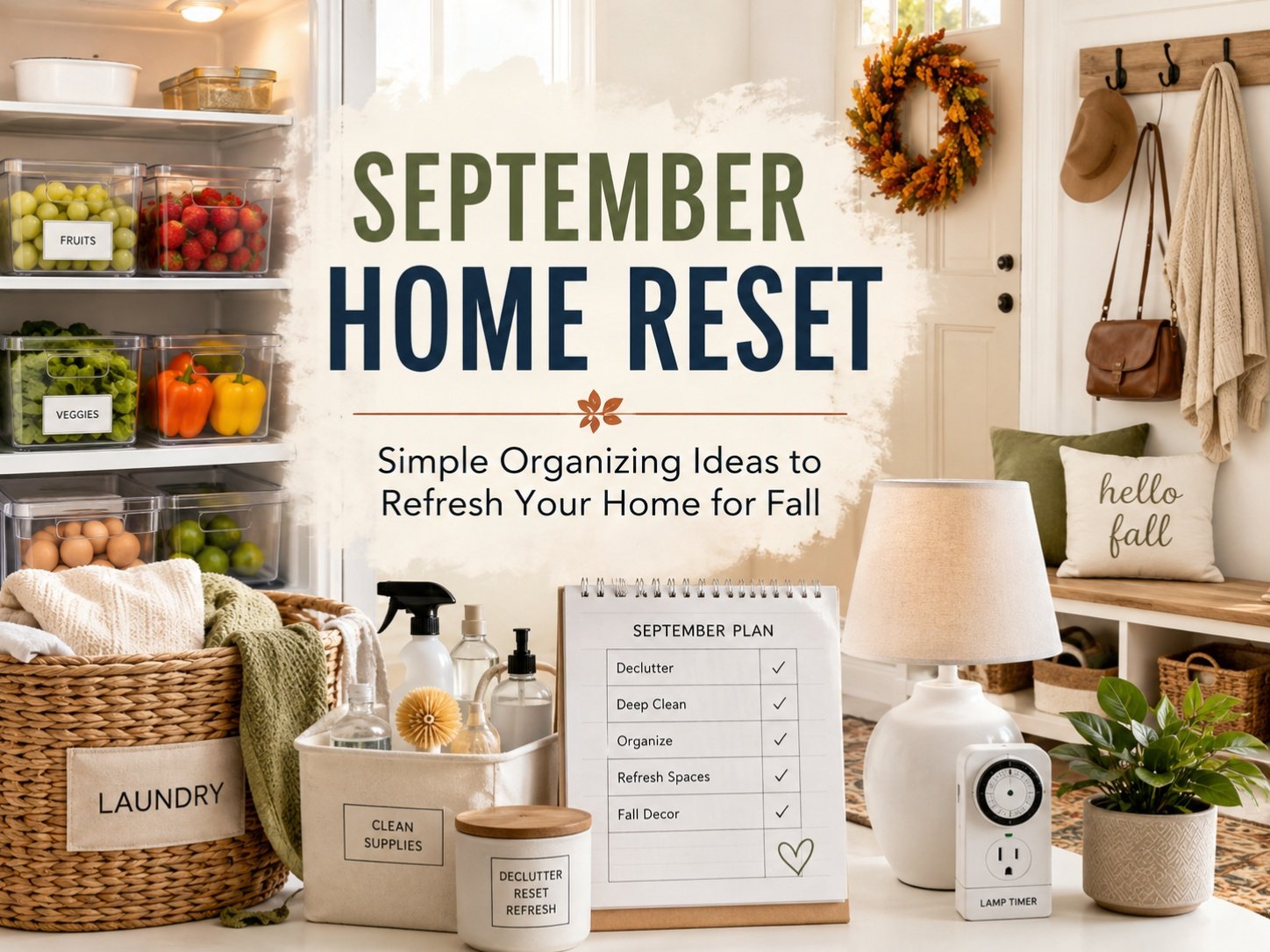
The September home reset is not just about cleaning the house after summer. It is about gently moving your home, schedule, and everyday habits into a new season.
After summer, the house often still runs on relaxed routines. The refrigerator is full of half-used condiments and quick snacks. Laundry piles are mixed with beach towels, swimsuits, and lightweight sheets. Lights turn on later than you need them. Pantry staples run low. Weeknight meals feel improvised. School, work, and evening routines may all need more structure again.
That is why I like to think of the September home reset as a rhythm reset, not a deep-cleaning project. You are not trying to scrub every corner. You are helping your home work better for cooler nights, busier mornings, earlier evenings, and more regular routines.
In this guide, I will walk through 12 things people often forget to reset after summer, including refrigerator habits, laundry flow, lighting schedules, household supplies, meal routines, sleep rhythms, and seasonal transitions.
Why the September Home Reset Matters
The September home reset matters because summer changes how a home functions.
People eat differently, stay up later, travel more, use different clothes, leave outdoor gear by the door, and rely on quick meals. By September, small habits can start feeling messy even if the house is not actually dirty.
A good September home reset helps you:
- Rebuild smoother morning and evening routines
- Use food before it goes bad
- Restock supplies before schedules get busier
- Adjust lighting for shorter days
- Make laundry easier to manage
- Transition bedding, clothing, and entryway items
- Prepare the home for cooler weather
This is not about perfection. It is about removing friction from everyday life.
1. Reset Your Refrigerator Habits
The refrigerator is one of the most overlooked parts of the September home reset.
After summer, the fridge may be full of picnic leftovers, sauces, drink bottles, fruit containers, grill items, and random snacks. The problem is not only clutter. It is that old habits can make weeknight meals harder.
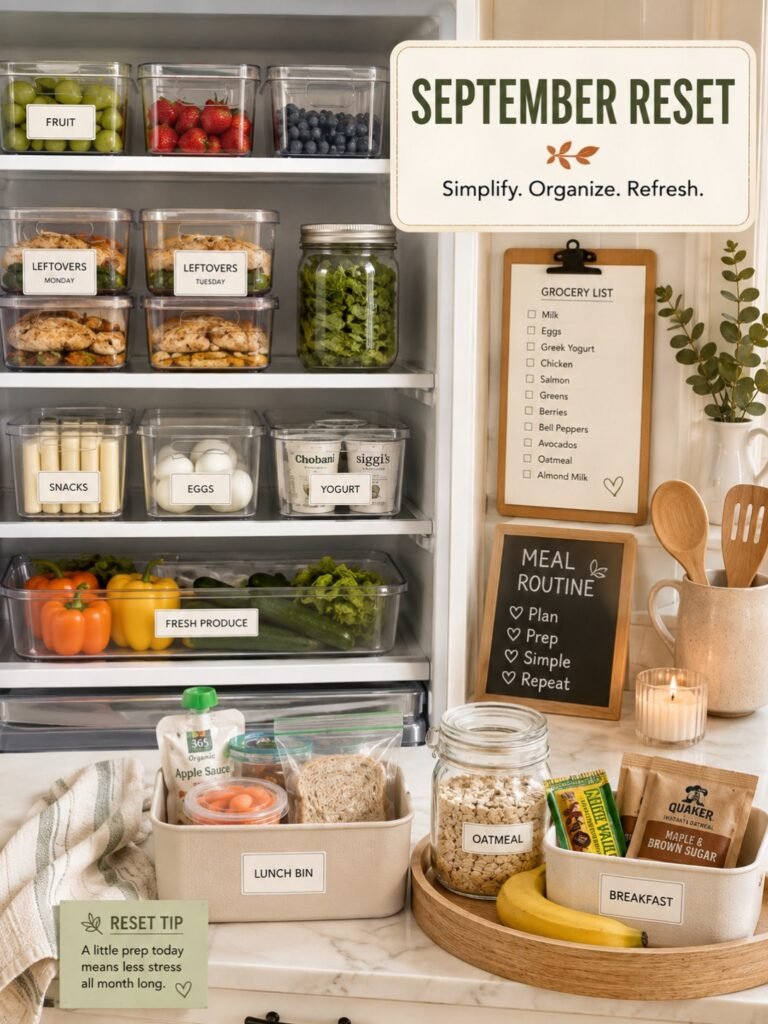
The FoodSafety.gov four steps to food safety guide recommends keeping the refrigerator at 40°F or below and the freezer at 0°F or below. The USDA leftovers and food safety guidance also says leftovers can be kept in the refrigerator for 3 to 4 days or frozen for 3 to 4 months.
I recommend using September to reset the way the fridge supports your week.
What to Reset
Start with these simple habits:
- Check the refrigerator and freezer temperature.
- Toss expired or questionable leftovers.
- Create one clear shelf for lunch ingredients.
- Keep easy breakfast items together.
- Move older food to the front.
- Use a small bin for snacks, yogurt, cheese sticks, or fruit.
- Choose one day each week to check leftovers.
The goal is not a perfect fridge photo. The goal is a fridge that helps you feed yourself and your household without digging around every night.
2. Reset Your Leftover System
Summer leftovers can be casual. September leftovers need a better system.
When routines get busier, leftovers can either save dinner or become mystery containers in the back of the fridge.
The USDA refrigeration and food safety guide says refrigerator temperature should be 40°F or below and gives a general refrigerator storage rule of 4 days for cooked leftovers. That makes a visible leftover system useful.
Simple Leftover Reset
I recommend labeling leftovers with the date before they go into the fridge.
You can use:
- Masking tape and marker
- Dry-erase labels
- Glass containers with date labels
- A “use first” bin
- A small fridge notepad
This small habit can reduce food waste and help you make faster decisions on busy nights.
3. Reset Weeknight Meal Defaults
The September home reset should include meal defaults, not just meal plans.
A meal plan can be helpful, but if it feels too strict, it often falls apart. I prefer setting default meal categories that make decisions easier.
For example:
- Monday: simple pasta or grain bowl
- Tuesday: tacos, wraps, or quesadillas
- Wednesday: soup, salad, or leftovers
- Thursday: sheet pan meal
- Friday: easy freezer meal or takeout night
This gives the week structure without making every meal feel like a project.
Why This Works
Decision fatigue is real in September. Schedules start filling up again, and dinner can become one more thing to figure out. A few default meals help the kitchen feel calmer.
4. Reset Laundry Zones
Laundry changes after summer.
By September, you may have beach towels, sports clothes, swimsuits, lightweight bedding, picnic blankets, camp clothes, and regular laundry all mixed together. If you do not reset the categories, laundry can feel heavier than it really is.
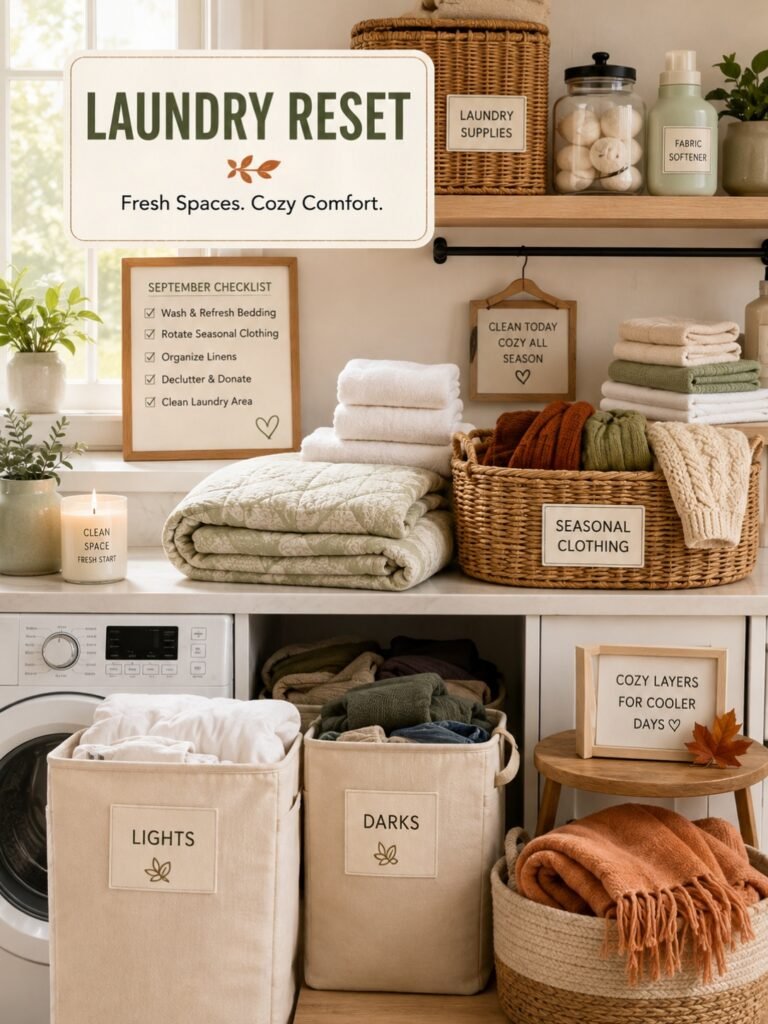
I recommend creating simple laundry zones again:
- Everyday clothes
- Towels
- Bedding
- Sports or school clothes
- Delicates
- Seasonal items to wash and store
This is also a good time to wash summer items before storing them, especially beach towels, swimsuits, picnic blankets, and lightweight throws.
Small Laundry Habit That Helps
Choose one laundry day for bedding and towels.
When these bulky items have their own rhythm, they stop crowding the rest of the week. A September home reset is really about making home maintenance feel predictable again.
5. Reset Bedding for Cooler Nights
September often brings a mix of warm afternoons and cooler nights, so bedding can feel confusing.
You may not need winter bedding yet, but summer sheets and lightweight blankets may start feeling too thin.
The CDC sleep guidance recommends keeping the bedroom quiet, dark, relaxing, and at a comfortable temperature. Bedding is part of that comfort.
Bedding Reset Ideas
Try this:
- Keep breathable sheets on the bed.
- Add a light quilt or blanket.
- Place a warmer throw at the foot of the bed.
- Wash and store summer-only bedding.
- Check pillow protectors and mattress covers.
- Move extra blankets somewhere easy to reach.
This gives you flexibility without changing the whole room overnight.
6. Reset Lighting Schedules
Lighting is one of the easiest things to forget after summer.
During summer, longer daylight can make lighting feel less important. By September, evenings start feeling darker sooner, and your home may need a new lighting rhythm.
The CDC NIOSH guidance on light and circadian rhythms explains that the light and dark cycle has a strong effect on the body’s circadian clock, sleep, and alertness.
That is why I recommend resetting lighting in layers.
What to Reset
Update:
- Smart bulb schedules
- Outdoor light timers
- Entryway lights
- Lamp timers
- Porch lighting
- Motion lights
- Bedroom evening lighting
- Morning wake-up lighting
If you use smart plugs or timers, set them for your actual September routine, not your summer routine.
I also like adding one small lamp to the kitchen, living room, or hallway for softer evening light. It makes the house feel warmer without relying only on overhead lights.
7. Reset the Thermostat Routine
The thermostat routine often lags behind the season.
In September, you may not be fully heating the house yet, but you may need to adjust cooling, fan settings, and daily temperature schedules.
The U.S. Department of Energy Energy Saver thermostat guidance explains that programmable thermostats can store multiple daily temperature settings and help match heating and cooling to your schedule.
September Thermostat Reset
Check:
- Cooling schedule
- Fan settings
- Bedroom temperature at night
- Work-from-home hours
- School or office departure times
- Weekend schedule
- Air filter condition
I recommend setting the thermostat around your real routine, not around what worked in July.
8. Reset Household Supplies
A September home reset should include household supplies because routines usually get busier after summer.
This is not about stockpiling. It is about making sure the basics are not running out at the worst time.
Supplies to Check
Look at:
- Toilet paper
- Paper towels
- Dish soap
- Dishwasher detergent
- Laundry detergent
- Hand soap
- Trash bags
- Batteries
- Light bulbs
- First aid basics
- Pet supplies
- Lunch bags or containers
- Food storage bags
- Cleaning cloths
- Toothpaste and personal care basics
I recommend making a small “low stock” note on your phone or fridge. When something is almost gone, add it immediately.
9. Reset the Entryway Drop Zone
Summer entryways collect different things than fall entryways.
After summer, the drop zone may still be full of sandals, sunscreen, hats, pool bags, bug spray, beach towels, and outdoor toys. By September, that same space may need to handle backpacks, jackets, umbrellas, lunch bags, work bags, sports gear, and reusable water bottles.
Entryway Reset Ideas
Create zones for:
- Bags
- Shoes
- Jackets
- Keys
- Water bottles
- Umbrellas
- Sports gear
- Items that need to leave the house tomorrow
A small basket or hook system can make mornings much easier.
The entryway does not need to look perfect. It needs to help people leave the house with less stress.
10. Reset Smoke Alarm and Safety Checks
This is one of the most important things people forget during seasonal transitions.
September is a good time to check smoke alarms, carbon monoxide alarms, flashlights, batteries, and emergency basics before cooler weather and holiday cooking seasons arrive.
The National Fire Protection Association smoke alarm guidance recommends testing smoke alarms at least once a month and replacing smoke alarms when they are 10 years old or no longer respond when tested.
Safety Reset Checklist
Check:
- Smoke alarms
- Carbon monoxide alarms
- Flashlights
- Extra batteries
- Fire extinguisher location
- Emergency contacts
- First aid supplies
- Power outage supplies
- Medication backups where appropriate
This is a small reset that can matter a lot.
11. Reset Digital and Paper Routines
September often brings more forms, schedules, calendars, appointments, school papers, bills, and household reminders.
A home can feel chaotic when information has no place to land.
What to Reset
Choose one simple system for:
- Receipts
- School papers
- Work papers
- Appointment reminders
- Bills
- Meal plans
- Grocery lists
- Family calendar
- Password or account reminders, stored securely
This can be a wall calendar, a shared digital calendar, a paper planner, a small inbox tray, or a command center. I recommend using the simplest system you will actually maintain.
12. Reset Evening and Morning Routines
The most important September home reset is not a closet or cabinet. It is the rhythm of the day.
Summer routines are often looser. September usually needs clearer mornings and calmer evenings.
The CDC sleep hygiene guidance recommends going to bed and waking up at the same time every day, including weekends, and keeping the bedroom quiet, dark, relaxing, and at a comfortable temperature.
Evening Routine Reset
Try a short evening routine:
- Check tomorrow’s calendar.
- Set out clothes or bags.
- Start the dishwasher.
- Reset the kitchen counter.
- Pack lunch basics.
- Turn on softer lighting.
- Charge devices away from the bed if possible.
- Choose a realistic bedtime.
Morning Routine Reset
Make mornings easier by deciding:
- What time lights turn on
- Where keys and bags go
- What breakfast options are ready
- What needs to leave the house
- When laundry or dishes will be handled
A routine does not need to be strict. It just needs to reduce the number of decisions you make while tired.
Product and Home Setup Pieces to Consider
This is not a cleaning checklist, but a few simple organizing pieces can make the September home reset easier. Before buying anything, check the current price, size, features, material, shipping details, and return policy.
Fridge Bins
Best for: Leftovers, lunch items, snacks, and breakfast zones.
Problem they solve: They keep food categories visible so the fridge supports your routine.
What to check before buying: Size, depth, handle style, dishwasher safety, and whether the bins fit your shelves.
Laundry Hampers
Best for: Separating towels, clothing, bedding, and sports gear.
Problem they solve: They stop every type of laundry from landing in one pile.
What to check before buying: Capacity, handles, ventilation, shape, and whether it fits your laundry area.
Smart Plugs or Light Timers
Best for: Resetting lamps, porch lights, and morning or evening lighting.
Problem they solve: They help lighting match shorter September days and evening routines.
What to check before buying: App compatibility, outlet type, schedule options, voice assistant compatibility, and whether you need indoor or outdoor rating.
Stackable Supply Bins
Best for: Household supplies, backup toiletries, batteries, and pantry overflow.
Problem they solve: They keep essentials organized without taking up too much floor space.
What to check before buying: Lid style, stack stability, label area, size, and weight when full.
Family Calendar or Command Center
Best for: Homes with school, work, appointments, sports, and shared schedules.
Problem they solve: They give household information one clear place to land.
What to check before buying: Wall space, writing surface, layout, size, and whether your household prefers paper or digital systems.
Common September Home Reset Mistakes to Avoid
Treating It Like a Deep Clean
A September home reset is not the same as spring cleaning. Focus on routines, supplies, and transitions first.
Buying Organizers Before Choosing the Habit
Do not buy bins before you know what they need to hold. Build the habit first, then choose the container.
Resetting Too Many Things in One Day
Pick three areas first: fridge, laundry, and lighting. Then continue from there.
Forgetting the People Who Live There
The best routine is the one your household can actually follow. Make systems simple enough for everyone.
Ignoring Seasonal Safety Checks
Smoke alarms, batteries, flashlights, and basic supplies are easy to forget, but they belong in a seasonal reset.
Quick September Home Reset Plan
If you want a simple starting point, try this over one week:
Day 1: Reset the refrigerator and leftovers.
Day 2: Reset laundry categories and bedding.
Day 3: Update lighting and thermostat schedules.
Day 4: Check household supplies.
Day 5: Reset the entryway.
Day 6: Check safety items and batteries.
Day 7: Set morning, evening, and calendar routines.
This keeps the September home reset manageable instead of overwhelming.
FAQ
What is a September home reset?
A September home reset is a seasonal routine reset after summer. It focuses on restoring household rhythms, refrigerator habits, laundry flow, lighting schedules, supplies, safety checks, and morning and evening routines.
Is a September home reset the same as cleaning?
No. A September home reset is not just cleaning. It is more about making your home work better for fall routines, shorter days, cooler nights, school schedules, work routines, and everyday household habits.
What should I reset first after summer?
Start with the areas that affect daily life most: the refrigerator, laundry, lighting, household supplies, and morning or evening routines.
How do I reset my fridge after summer?
Check the temperature, remove old leftovers, group breakfast and lunch items, move older food forward, and create a simple leftover labeling habit. The FoodSafety.gov food safety guide recommends keeping the refrigerator at 40°F or below.
How do I reset lighting for fall?
Update smart bulbs, lamp timers, porch lights, and outdoor lights so they match earlier evenings. Add soft lamps where you need warmer light and adjust schedules based on your real September routine.
How long should a September home reset take?
It can take one afternoon if you keep it simple, but I prefer spreading it over a week. Resetting one routine at a time makes the process easier to maintain.
Conclusion
The September home reset is not about making your house spotless. It is about helping your home support the season you are actually entering.
I recommend starting with the routines people forget most after summer: refrigerator habits, leftovers, weeknight meals, laundry, bedding, lighting, thermostat settings, household supplies, entryway storage, safety checks, paper systems, and morning and evening rhythms.
When those pieces work better, the whole home feels calmer. You are not just cleaning up after summer. You are setting up your home to carry you into fall with less friction.