

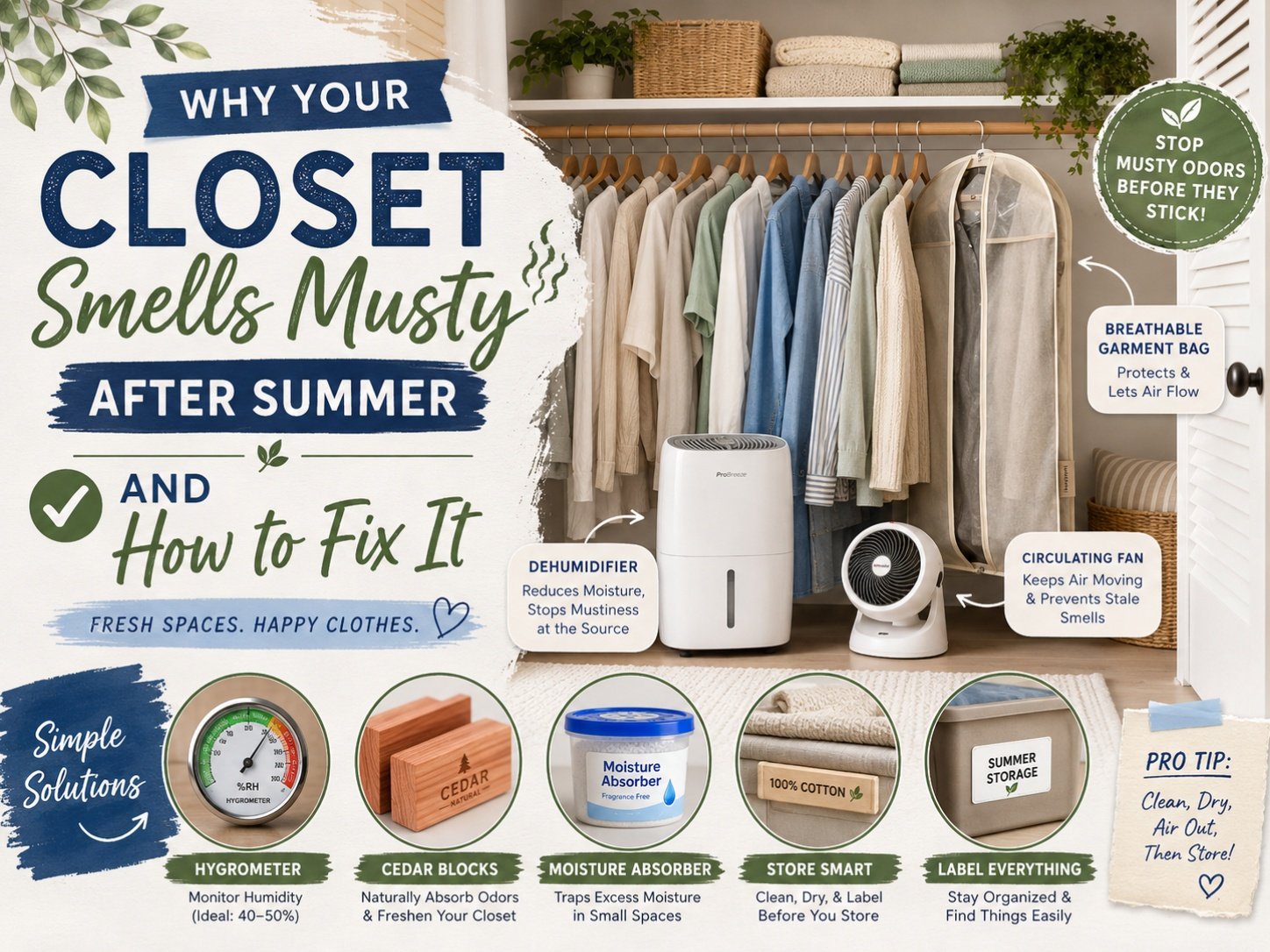
Why your closet smells musty after summer and how to fix it usually comes down to trapped humidity, stale air, damp clothing, overpacked shelves, and poor airflow. I recommend treating the cause first because fragrance alone will not solve a closet that is holding too much moisture.
After summer, closets can smell stale, sour, earthy, or damp because warm weather, wet towels, sweaty clothes, rain jackets, swimsuits, and humid indoor air all add moisture. Once that moisture gets trapped behind closed doors, your clean clothes can start smelling musty even when they were washed properly.
In this guide, I’ll explain why your closet smells musty after summer and how to fix it, including how to use hygrometers, cedar blocks, moisture absorbers, breathable garment bags, and closet fans in a practical way.
This article is for general home-care education only. If you see visible mold, smell a strong mold odor, have water damage, or have breathing symptoms that worsen indoors, I recommend addressing the moisture source and checking current guidance from a qualified mold professional, landlord, building maintenance team, or health professional.
Why Your Closet Smells Musty After Summer and How to Fix It at the Source
Understanding why your closet smells musty after summer and how to fix it starts with moisture. A closet is often dark, closed, packed with fabric, and short on airflow. That makes it an easy place for stale odors to build after a humid season.
The CDC says mold grows where there is moisture and recommends keeping indoor humidity as low as possible, no higher than 50 percent all day long. CDC mold guidance is useful if your closect smells damp, earthy, or moldy.
The EPA also explains that indoor mold growth should be prevented or controlled by controlling moisture indoors. If mold is a problem, the EPA says to clean up the mold and fix the excess water or moisture problem. EPA mold cleanup guidance explains this clearly.
The reason I like starting with humidity is simple: you cannot spray your way out of a damp closet. A good plan for why your closet smells musty after summer and how to fix it should measure moisture, improve airflow, dry clothing fully, and stop damp items from sitting in closed storage.
Common Reasons Your Closet Smells Musty After Summer
Trapped Humidity
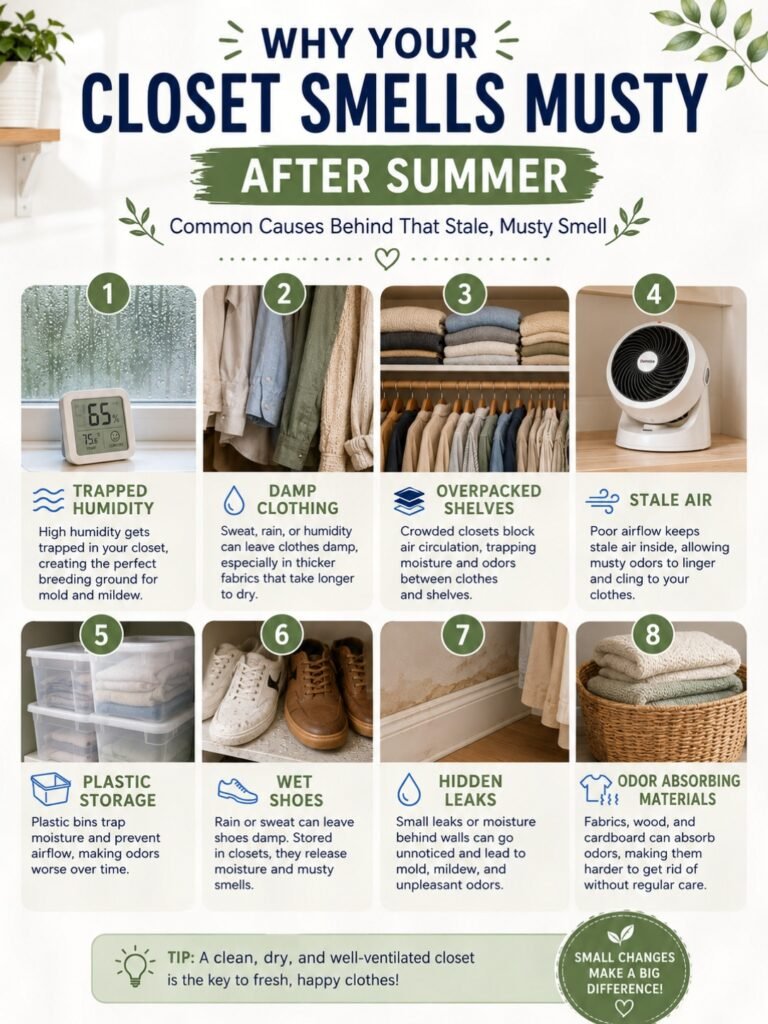
The biggest reason why your closet smells musty after summer and how to fix it matters is trapped humidity. Summer air can be humid, and closets often stay closed for long periods. If the closet shares a wall with a bathroom, laundry room, exterior wall, basement, or poorly ventilated area, moisture can linger even longer.
Mitchelle tip:
Do not guess. Use a hygrometer first. If your closet regularly reads above 50% relative humidity, moisture control should be your first fix.
Damp Clothing Stored Too Soon
Clean clothes can still smell musty if they go into the closet before they are fully dry. Thick fabrics, jeans, hoodies, towels, swimsuits, and workout clothes can hold hidden moisture.
Iowa State University Extension recommends making sure clothing is completely dry before storing it because damp storage can lead to mildew. Iowa State Extension clothing storage guidance is a good reminder that dryness matters before storage.
Mitchelle tip:
If clothing feels cool to the touch after drying, give it extra air time before putting it away.
Overpacked Shelves and Hanging Rods
A crowded closet traps stale air. When clothing is packed tightly, moisture and odors do not move out easily.
This is one reason why your closet smells musty after summer and how to fix it often includes decluttering. You do not have to become a minimalist, but clothes need breathing room.
Mitchelle tip:
Leave space between hangers when possible. If your clothes cannot move at all, air cannot move well either.
Plastic Storage That Traps Moisture
Airtight plastic can be useful in some storage situations, but it can also trap moisture if fabrics are not perfectly dry.
The Smithsonian advises that textile fibers need some air movement and should not be sealed in airtight plastic bags or containers because moisture condensation can damage fabrics. Smithsonian textile storage guidance also notes that a relative humidity range around 40 to 50 percent is ideal for textile storage.
Mitchelle tip:
For seasonal clothing, I prefer breathable garment bags for hanging pieces and breathable fabric storage where airflow matters.
A Hidden Moisture Source
Sometimes the closet is not the real problem. The moisture may be coming from a roof leak, plumbing leak, bathroom steam, damp basement wall, air conditioning issue, or wet exterior wall.
The EPA says water-damaged areas and items should be dried within 24 to 48 hours to help prevent mold growth. EPA mold guidance is especially important if you suspect a leak.
Mitchelle tip:
If the musty smell keeps returning after cleaning, look for a moisture source behind the odor.
9 Practical Fixes for a Musty Closet After Summer
1. Empty the Closet and Find the Odor Source
The first step in why your closet smells musty after summer and how to fix it is removing everything. I know this feels inconvenient, but it is the fastest way to find the real source.

Check clothing, shoes, handbags, storage bins, shelves, walls, corners, baseboards, carpet, and ceiling areas.
Look for:
- Damp clothes
- Mildew spots
- Musty shoes
- Wet umbrellas
- Sweaty gym bags
- Cardboard boxes
- Leaks or stains
- Mold on walls or shelves
- Overpacked corners
Mitchelle tip:
Smell the empty closet before putting anything back. If the closet still smells musty when empty, the problem is likely humidity, walls, flooring, shelving, or poor ventilation.
2. Measure Humidity With a Hygrometer
A hygrometer is one of the best products for why your closet smells musty after summer and how to fix it because it tells you whether moisture is actually the problem.
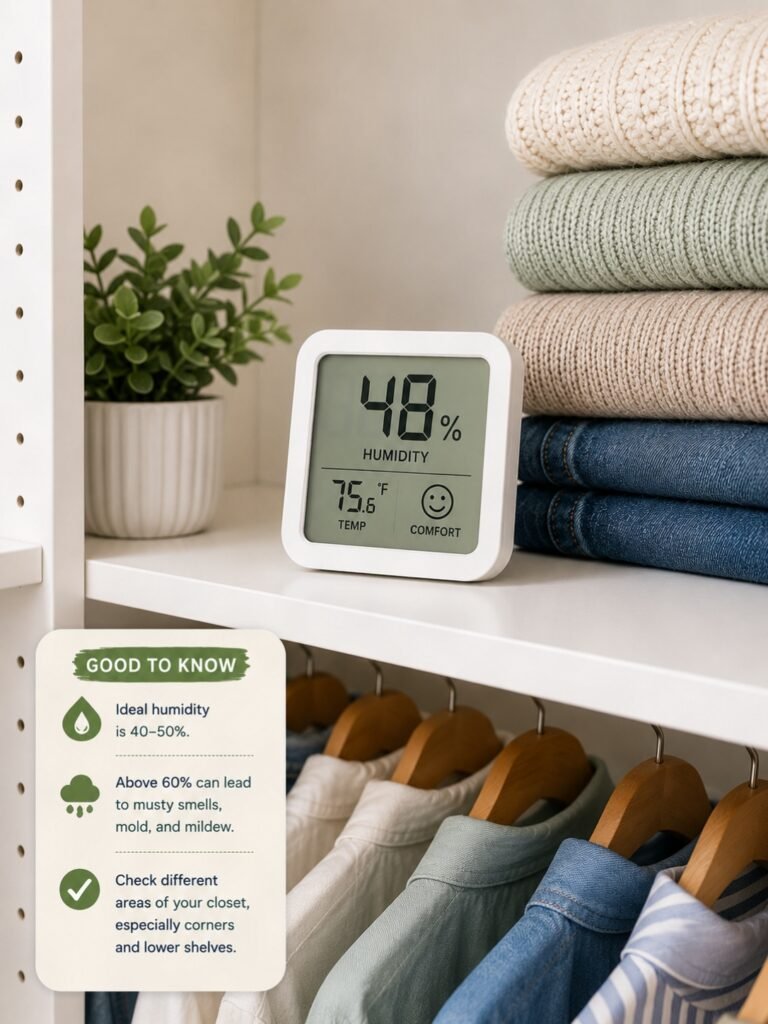
The CDC recommends keeping home humidity no higher than 50 percent all day long to help control mold. CDC mold guidance supports using moisture control as a prevention step.
Best for: humid homes, walk-in closets, closets near bathrooms, basements, laundry rooms, seasonal storage.
What to check before buying:
- Digital display
- Relative humidity reading
- Temperature reading
- Small size for shelves
- Battery life
- Easy reset button
- High and low humidity memory if available
Mitchelle tip:
Place the hygrometer near the back of the closet, not only by the door. The back corners are often where air feels the stalest.
3. Remove Damp Clothing and Rewash What Smells Musty
If clothing smells musty, wash it before putting it back. For delicate items, check the care label or use professional cleaning if needed.
For washable clothing, I recommend drying everything completely before storage. Musty odor can come back if fabric holds moisture.
Best for: stale shirts, summer dresses, gym clothes, towels, denim, hoodies, linens.
What to do:
- Sort musty items from fresh items
- Wash washable clothing according to care labels
- Dry fully before storing
- Air out delicate items
- Do not return damp items to the closet
Mitchelle tip:
Do not mix musty clothing back into fresh clothing. One damp or stale item can make the whole closet smell worse.
4. Clean Closet Surfaces Before Restocking
Once the closet is empty, clean the shelves, floor, walls, rods, and corners. Dust, body oils, shoe debris, and stale lint can all hold odor.
If you see visible mold, follow proper mold-cleanup guidance and fix the moisture problem. The CDC says painting or caulking over mold will not prevent mold from growing, and the water problem must be fixed first. CDC mold cleanup tips are helpful if mold is present.
Best for: stale closets, dusty shelves, musty corners, shoe areas.
What to clean:
- Shelves
- Hanging rods
- Baseboards
- Closet floor
- Storage bins
- Shoe racks
- Door tracks
- Corners
Mitchelle tip:
Let the closet dry fully after cleaning. Putting clothes back too soon can trap more moisture.
5. Add Moisture Absorbers in Problem Areas
Moisture absorbers can help small closets, closed cabinets, and corners that feel damp. They are useful for why your closet smells musty after summer and how to fix it, but they should support moisture control, not replace fixing leaks or major humidity problems.
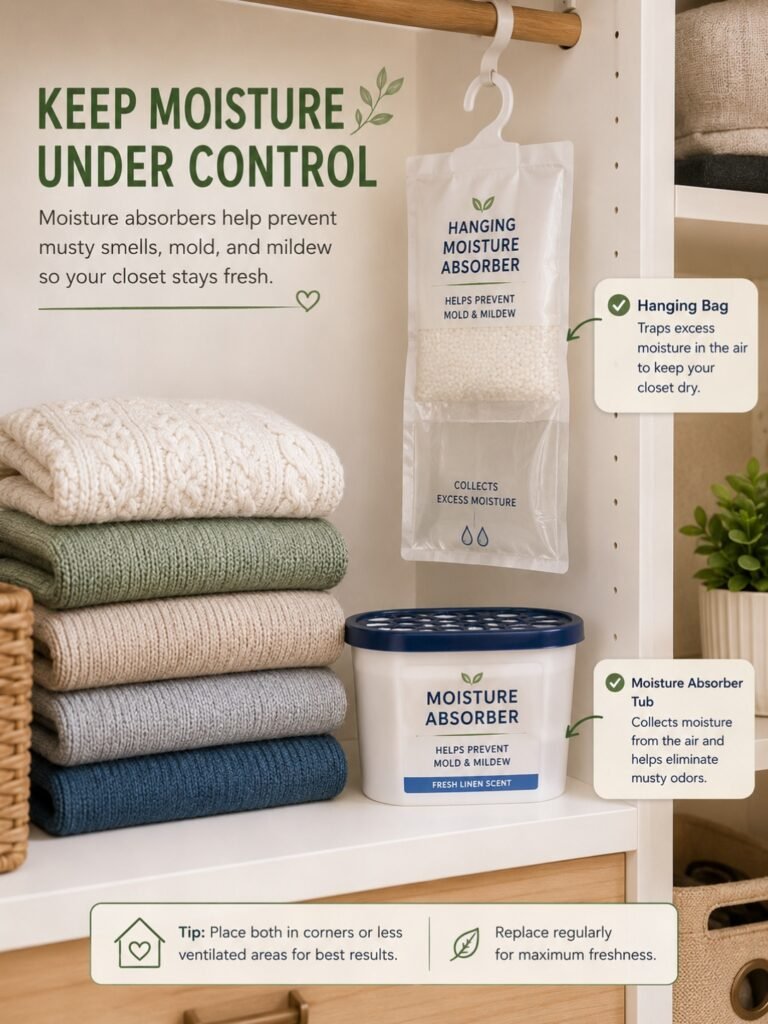
Common closet moisture absorbers include calcium chloride tubs, hanging moisture bags, silica gel packs, and refillable desiccant containers.
Best for: small closets, seasonal wardrobes, linen closets, shoe areas, humid corners.
What to check before buying:
- Closet size coverage
- Spill-resistant design
- Hanging or shelf format
- Replacement schedule
- Refill availability
- Fragrance-free option
- Child and pet safety instructions
Mitchelle tip:
Moisture absorbers collect liquid or hold moisture, so check them often. Do not place them where they can spill onto shoes, leather, wood, or fabric.
6. Use Cedar Blocks for Freshness, Not as the Whole Fix
Cedar blocks can make a closet smell cleaner and may help discourage some fabric pests, but they are not a complete answer to why your closet smells musty after summer and how to fix it.
I like cedar blocks as a finishing touch after the closet is dry, clean, and ventilated. They should not be used to cover a damp odor.
Best for: drawers, sweater shelves, coat closets, linen closets, seasonal storage.
What to check before buying:
- Real cedar wood
- Sandable surface to refresh scent
- No oily residue
- Enough blocks for the space
- Placement away from delicate fabrics if scent transfer worries you
Mitchelle tip:
If the closet smells musty and the cedar smells strong, you may end up with musty cedar instead of a fresh closet. Fix moisture first.
7. Switch to Breathable Garment Bags
Breathable garment bags are helpful when you want to protect clothing without trapping moisture. They are especially useful for coats, dresses, suits, and seasonal pieces.
The Smithsonian advises against sealing textiles in airtight plastic because fabrics need some air movement and moisture condensation can damage them. Smithsonian textile storage guidance supports using breathable storage when possible.
Best for: coats, suits, dresses, seasonal clothing, delicate items, long-term hanging storage.
What to check before buying:
- Cotton, linen, canvas, or breathable fabric
- Zipper quality
- Length for coats and dresses
- Clear label window if helpful
- Washability
- No strong chemical smell
- Enough width so garments are not crushed
Mitchelle tip:
Avoid storing slightly damp clothing in any garment bag, even a breathable one. Breathable helps, but dry clothing is still the rule.
8. Improve Airflow With a Closet Fan or Ventilation Habit
Airflow is a major part of why your closet smells musty after summer and how to fix it. A closet fan can help move stale air, especially in walk-in closets or closets with no windows.
ENERGY STAR notes that ventilation fans help control moisture and remove objectionable odors. ENERGY STAR ventilation fan guidance is a useful reference when thinking about airflow and moisture control.
Best for: walk-in closets, humid bedrooms, closets near bathrooms, packed wardrobes, stale air.
What to check before buying:
- Battery or plug-in design
- Noise level
- Timer setting
- Airflow strength
- Size for closet shelf
- Safe placement
- Easy cleaning
- Power cord safety if plug-in
Mitchelle tip:
A fan moves air, but it does not remove moisture the way a dehumidifier does. If the hygrometer stays high, improve humidity control too.
9. Use a Dehumidifier if the Room Stays Humid
If your closet humidity stays high even after cleaning and airflow changes, you may need a room dehumidifier. This is especially true in basements, humid climates, poorly ventilated rooms, or closets near bathrooms.
ENERGY STAR says certified dehumidifiers use more efficient components to remove moisture and can help improve indoor comfort. ENERGY STAR dehumidifier guidance is helpful when comparing dehumidifier options.
Best for: larger rooms, walk-in closets, basements, humid climates, repeat musty odor.
What to check before buying:
- Room size rating
- Pint capacity
- ENERGY STAR certification
- Drain hose option
- Auto shutoff
- Washable filter
- Noise level
- Bucket size
- Warranty and return policy
Mitchelle tip:
For an affiliate-style product angle, I would guide readers to check current price, room-size rating, replacement needs, shipping, return details, and safety instructions before buying.
Product Guide: What Actually Helps a Musty Closet
Hygrometers
A hygrometer helps you confirm whether humidity is causing the odor. For why your closet smells musty after summer and how to fix it, this is the first product I would buy because it gives you a number instead of a guess.
Best for: diagnosing the problem.
Look for: digital RH reading, compact size, battery life, high and low memory.
Moisture Absorbers
Moisture absorbers help small closed areas where air gets damp. They are useful in closets, but they need regular replacement.
Best for: small closets and shelf corners.
Look for: spill-resistant tubs, hanging bags, fragrance-free options, replacement schedule.
Cedar Blocks
Cedar blocks add a natural closet scent and may help with pests, but they do not fix high humidity.
Best for: finishing freshness after moisture is controlled.
Look for: real cedar, sandable blocks, easy placement.
Breathable Garment Bags
Breathable garment bags protect clothing while allowing more airflow than sealed plastic.
Best for: coats, suits, dresses, and seasonal hanging items.
Look for: cotton, linen, canvas, washable fabric, sturdy zipper.
Closet Fans
Closet fans help move stale air. They are useful if the closet stays closed most of the time.
Best for: walk-in closets and stale air.
Look for: quiet operation, timer, safe placement, easy cleaning.
Dehumidifiers
A room dehumidifier is the stronger option when humidity is high beyond the closet.
Best for: repeat humidity problems.
Look for: ENERGY STAR rating, proper room size, auto shutoff, drain option.
Simple Step-by-Step Closet Reset After Summer
Here is the easiest way to apply why your closet smells musty after summer and how to fix it.
Day 1: Empty and Inspect
- Remove all clothing, shoes, bags, and bins.
- Check for damp items.
- Look for stains, mold, leaks, or wet walls.
- Smell the empty closet.
- Place a hygrometer inside.
Day 2: Wash, Dry, and Clean
- Wash musty clothing.
- Dry everything fully.
- Clean closet shelves and floors.
- Let the closet air out.
- Use a fan to speed drying if safe.
Day 3: Restock Smarter
- Put only fully dry clothing back.
- Leave breathing room between items.
- Add moisture absorbers if needed.
- Use cedar blocks for freshness.
- Store special pieces in breathable garment bags.
- Add a closet fan if air feels stale.
- Monitor humidity with the hygrometer.
Mitchelle tip:
Do not restock a damp-smelling closet. If the empty closet smells musty, fix the space before blaming the clothes.
What to Do If You See Mold
A musty smell can be a warning sign. EPA explains that moldy odors may come from microbial volatile organic compounds, and if mold is a problem, the mold and the moisture source should be addressed. EPA’s mold smell guidance explains why musty odor should not be ignored.
Take mold seriously if you notice:
- Black, green, white, or fuzzy growth
- Musty odor that returns quickly
- Water stains on walls
- Damp carpet
- Soft drywall
- Mold on leather, shoes, or bags
- Allergy or asthma symptoms indoors
What I recommend:
- Stop covering the smell with sprays
- Remove affected items carefully
- Fix leaks or moisture sources
- Follow EPA or CDC cleanup guidance
- Get professional help for larger areas, hidden moisture, or recurring mold
Mitchelle tip:
If the closet has mold because of a leak or structural moisture problem, products like cedar blocks and moisture tubs are not enough.
Common Mistakes to Avoid
Spraying Fragrance Over a Musty Smell
Fragrance can make the closet smell better for a few hours, but it does not remove trapped humidity or damp fabric odor.
Putting Clothes Away Slightly Damp
This is one of the fastest ways to bring musty odor back.
Overpacking the Closet
Tightly packed clothing blocks airflow and traps stale odors.
Using Airtight Plastic for Everything
Airtight storage can trap moisture if clothing is not completely dry. Breathable garment bags are better for many hanging items.
Ignoring the Humidity Reading
If the closet stays above 50 percent relative humidity, odor may keep coming back.
Forgetting Shoes and Bags
Shoes, gym bags, handbags, and storage boxes can hold odor too.
Using Cedar Blocks as a Moisture Fix
Cedar can help the closet smell fresher, but it cannot solve a humidity problem by itself.
Product Types I Recommend
You do not need every product here, but these are the categories I would consider for why your closet smells musty after summer and how to fix it.
- Digital hygrometer
- Hanging moisture absorber
- Moisture absorber tub
- Cedar blocks
- Breathable garment bags
- Small closet fan
- ENERGY STAR dehumidifier for the room
- Fragrance-free laundry detergent
- Soft cleaning cloths
- Shelf liners that can be cleaned
- Shoe deodorizing inserts if shoes hold odor
FAQ
Why does my closet smell musty after summer?
Your closet may smell musty after summer because warm weather, humidity, damp clothing, poor airflow, crowded storage, wet shoes, chlorine or sweat odors, and hidden moisture can get trapped in a closed space.
How do I fix a musty closet smell fast?
To fix a musty closet smell fast, empty the closet, remove damp clothing, wash musty items, clean shelves and floors, air out the space, measure humidity with a hygrometer, and add airflow or moisture absorbers before putting clothes back.
What humidity should a closet be?
The CDC recommends keeping indoor humidity no higher than 50 percent to help control mold. For textile storage, the Smithsonian notes that around 40 to 50 percent relative humidity is ideal.
Do cedar blocks remove musty closet smells?
Cedar blocks can add a fresh woody scent and may help with pests, but they do not fix high humidity, damp clothing, leaks, or mold. Use cedar after the closet is clean and dry.
Are moisture absorbers good for closets?
Yes, moisture absorbers can help small closets and damp corners. They should be checked and replaced regularly, and they should not be used as a substitute for fixing leaks or major humidity problems.
Should I use plastic garment bags in a musty closet?
Avoid sealing clothing in airtight plastic if moisture is a concern. The Smithsonian advises that textiles need some air movement and should not be sealed in airtight plastic because condensation can damage fabric.
Do closet fans help musty smells?
Closet fans can help move stale air and reduce odor buildup, especially in closed walk-in closets. If humidity is high, you may also need a dehumidifier or moisture control.
Why do my clean clothes smell musty in the closet?
Clean clothes can smell musty if they were stored slightly damp, packed too tightly, placed in a humid closet, or stored near items that already hold odor.
Can a musty closet mean mold?
Yes, a musty odor can be related to mold or moisture. EPA says moldy odors may come from microbial volatile organic compounds, and mold problems should be cleaned up while fixing the moisture source.
What is the best product for a musty closet?
The best first product is usually a hygrometer because it tells you whether humidity is the issue. After that, moisture absorbers, breathable garment bags, cedar blocks, closet fans, or a dehumidifier may help depending on the cause.
Conclusion
Why your closet smells musty after summer and how to fix it usually comes down to moisture and airflow. Summer humidity, damp clothing, packed shelves, sealed storage, and stale air can make clean clothes smell old even when your laundry routine is fine.
I recommend starting with a full closet reset: empty it, inspect it, wash musty clothing, clean the surfaces, dry everything fully, measure humidity with a hygrometer, and improve airflow before restocking.
The best product angle is practical. Use a hygrometer to diagnose, moisture absorbers for small damp areas, cedar blocks for freshness, breathable garment bags for seasonal clothing, closet fans for airflow, and a dehumidifier if the whole room is too humid. Once you understand why your closet smells musty after summer and how to fix it, the closet becomes easier to keep fresh all year.
Sources
- CDC: Mold
- CDC: 8 Tips to Clean Mold
- EPA: How Do I Get Rid of Mold?
- EPA: What Does Mold Smell Like?
- ENERGY STAR: Ventilation Fans
- ENERGY STAR: Dehumidifiers
- Smithsonian Institution: How Do I Store Antique Textiles at Home?
- Smithsonian Museum Conservation Institute: Climate and Textiles Storage
- Iowa State University Extension: Storing Clothing
- University of Florida IFAS Extension: Mildew Removal
- North Dakota State University Extension: Care Required in Closets and Storage Areas to Prevent Mold Growth