
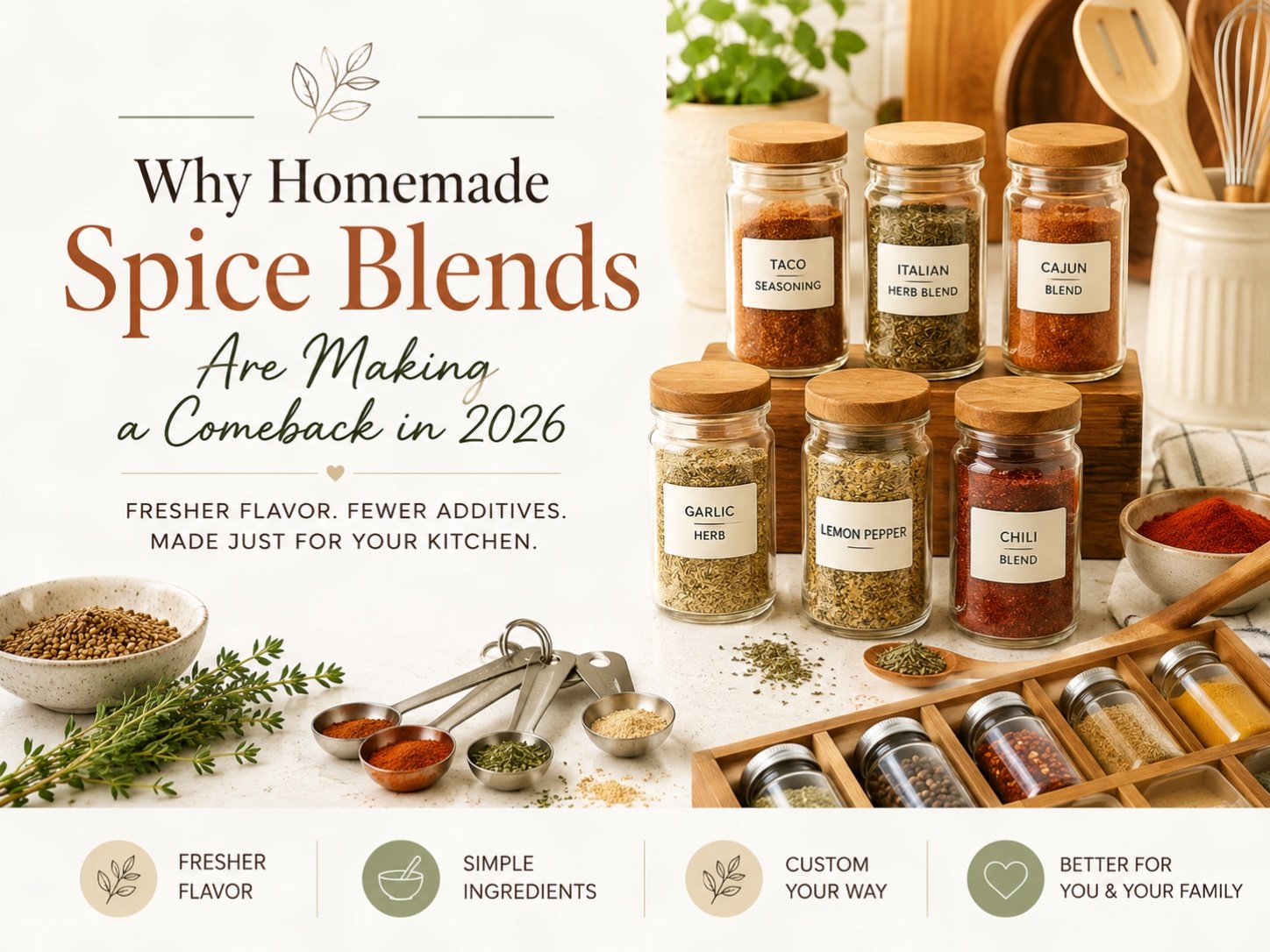
Homemade spice blends are making a comeback in 2026 because people want fresher flavor, simpler pantry shelves, and more control over what goes into their food.
I understand the appeal. Store-bought spice mixes are convenient, but they can pile up fast. One jar for tacos, one for chicken, one for vegetables, one for grilling, one for ranch, one for chili, and suddenly the spice cabinet is crowded with blends you only use a few times a year.
The problem is not only clutter. Spices lose aroma and flavor over time. Some store-bought mixes also contain ingredients you may not need in every recipe, such as extra salt, sugar, fillers, or flavorings. Homemade spice blends let you make smaller amounts, adjust the flavor, and use the spices you already have.
In this guide, I will explain why homemade spice blends are trending again in 2026, how they solve common pantry problems, and how to make simple blends that actually fit the way you cook.
Why Homemade Spice Blends Are Trending in 2026
Homemade spice blends are part of a larger return to hands-on kitchen habits.
The Pinterest Hobbies Trend Report 2026 includes homemade spice blends under its “Kitchen Witch” trend and reports that searches for “homemade spice blends” are up 209%. Pinterest describes this trend as a move toward slow, sensory kitchen projects like spice blending, herbal infusions, gentle ferments, and small pantry rituals.
That tells me this is not just about seasoning food. It is about people wanting their kitchens to feel more personal, useful, and intentional.
At the same time, the McCormick Flavor Forecast continues to highlight how global flavors, heat-forward seasonings, and creative flavor combinations are shaping the way people cook. That kind of flavor curiosity makes homemade spice blends feel more natural. Instead of buying a new jar every time a recipe calls for a different flavor profile, people can start building their own.
1. Homemade Spice Blends Help Reduce Pantry Clutter
One reason homemade spice blends are coming back is simple: spice cabinets are getting overcrowded.
Store-bought spice mixes can accumulate quickly because each blend sounds useful when you buy it. But after a while, you may have several jars that contain many of the same base ingredients: garlic powder, onion powder, paprika, oregano, cumin, chili powder, black pepper, and salt.
Instead of keeping ten half-used blends, you can keep a smaller set of core spices and mix what you need.
A Better Pantry Approach
I recommend keeping versatile single spices first, then making blends in small batches.
Useful basics include:
- Garlic powder
- Onion powder
- Paprika
- Smoked paprika
- Cumin
- Chili powder
- Oregano
- Basil
- Thyme
- Black pepper
- Cinnamon
- Ginger
- Turmeric
- Cayenne
- Mustard powder
This gives you more flexibility and less cabinet clutter.
2. Spices Lose Freshness Over Time
Another reason homemade spice blends make sense is freshness.
The USDA AskUSDA guidance on spices beyond their expiration date explains that ground spices lose aroma and flavor more quickly and recommends buying them in small quantities.
That is exactly why I prefer smaller homemade spice blends. A large store-bought jar may look like a better value, but it is not always practical if you only use it a few times a year.
Simple Freshness Test
Before making a blend, smell each spice.
If the aroma is faint, dusty, or flat, the blend will probably taste flat too. A homemade seasoning blend is only as good as the spices you put into it.
If a spice has lost its smell, I would rather replace that one spice than keep using a full blend that no longer adds much flavor.
3. Homemade Blends Let You Control Salt
Many store-bought seasoning blends include salt. That can be helpful, but it can also make cooking less flexible.
When the salt is already mixed in, you have less control. You may want more cumin, paprika, or herbs, but adding more blend also adds more salt.
The North Dakota State University Extension do-it-yourself spice mixes guide gives a clear example: 1 teaspoon of garlic salt adds about 970 milligrams of sodium to a recipe, while 1 teaspoon of garlic powder adds only 2 milligrams.
That difference matters when you want flavor without automatically increasing salt.
My Preferred Method
I like making most homemade spice blends without salt.
Then I season the food with salt separately. This gives better control over soups, roasted vegetables, meats, beans, eggs, and sauces.
A salt-free blend also works better for households where different people have different preferences.
4. You Can Avoid Ingredients You Do Not Need
Homemade spice blends are useful because you decide what goes in the jar.
Some store-bought mixes may include sugar, starches, anti-caking ingredients, natural flavors, preservatives, or a salt level that does not match your cooking. These are not automatically bad, but they may not be necessary for every kitchen or every recipe.
When you make your own blend, the ingredient list can stay simple.
Example
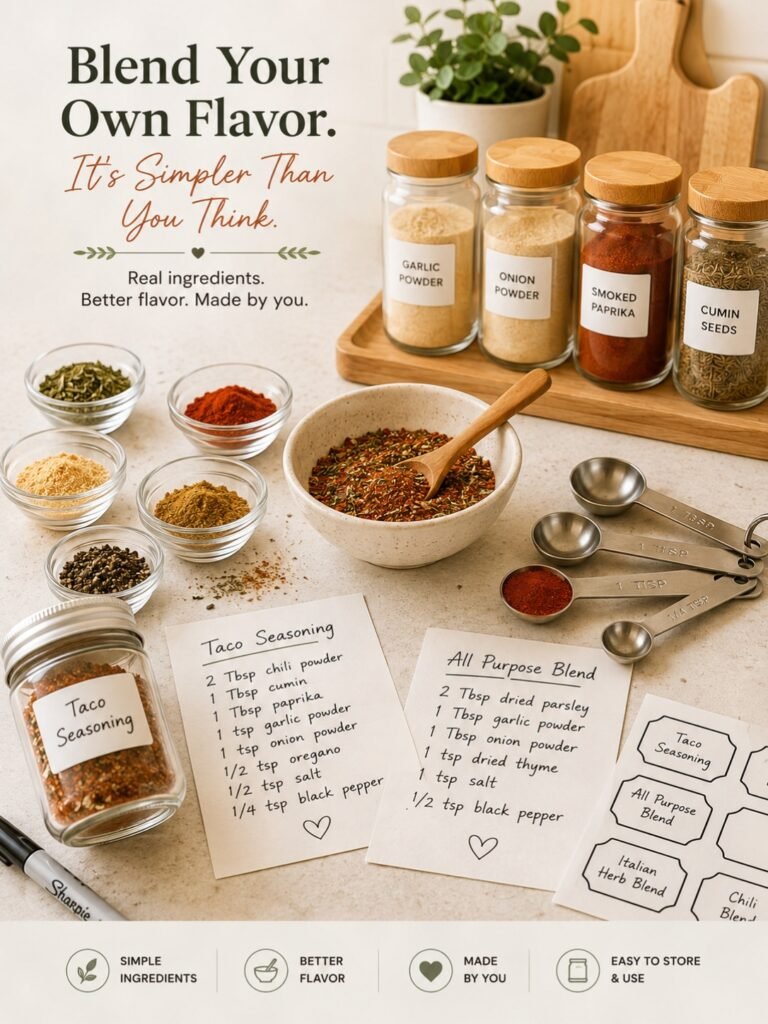
A basic taco-style blend can be as simple as:
- Chili powder
- Cumin
- Smoked paprika
- Garlic powder
- Onion powder
- Oregano
- Black pepper
- Cayenne if you want heat
You can add salt when you cook instead of building it into the jar.
5. Homemade Spice Blends Make Cooking Faster
Homemade spice blends are not just a slow hobby. They can also make weeknight cooking faster.
If you already have a house taco blend, roasted vegetable blend, soup blend, or chicken seasoning ready, you do not have to pull out six jars every night.
That is the part I find most practical. You spend a few minutes blending once, then cooking becomes easier for weeks.
Blends That Save Time
Good everyday blends include:
- Taco seasoning
- Chili seasoning
- Italian-style herb blend
- Greek-inspired seasoning
- Roasted vegetable seasoning
- Poultry seasoning
- Curry-style blend
- BBQ dry rub
- Breakfast potato seasoning
- Cinnamon baking blend
A small jar of the right blend can make plain ingredients taste more intentional.
6. Small-Batch Blends Fit the Way People Cook Now
In 2026, people are cooking in more personalized ways.
Some people meal prep. Some cook for one or two. Some want lower-salt meals. Some want more global flavors. Some cook mostly vegetarian meals. Some make quick air fryer dinners. Some want cozy, from-scratch habits without spending all day in the kitchen.
Homemade spice blends fit that because they are easy to adjust.
How to Make a Blend Fit Your Kitchen
Ask yourself:
- What do I cook every week?
- Do I like smoky, spicy, herby, warm, or bright flavors?
- Do I want this blend salt-free?
- Will I use it within a month or two?
- Does this blend work on more than one food?
If a blend only works for one specific recipe, make a tiny amount. If it works on chicken, potatoes, vegetables, beans, eggs, and rice, make a larger batch.
7. Homemade Spice Blends Support Global Flavor Exploration
Homemade spice blends also make it easier to explore flavor without buying a whole new seasoning mix every time.
The McCormick Flavor Forecast highlights global flavor influences and evolving seasoning trends, including heat-forward profiles and regionally inspired flavors. That matches what I see in home kitchens: people want more interesting food, but they also want control and simplicity.
You can experiment with inspiration from different flavor profiles while still keeping the pantry manageable.
Flavor Profiles to Try
Start with familiar directions:
- Smoky and warm: smoked paprika, cumin, garlic, black pepper
- Herby and bright: oregano, basil, thyme, parsley, lemon pepper
- Sweet and spiced: cinnamon, ginger, nutmeg, allspice
- Savory and earthy: cumin, coriander, turmeric, black pepper
- Spicy and bold: chili powder, cayenne, paprika, garlic
I recommend learning the flavor direction first before trying to copy a complicated blend.
8. They Make Homemade Food Taste More Consistent
One reason people like store-bought spice mixes is consistency.
Homemade spice blends can give you that same benefit if you write down your formula. Once you find a taco blend or roasted vegetable blend you like, keep the recipe somewhere easy to find.
My Simple Ratio Method
For many savory blends, I start with this basic structure:
- 2 parts main flavor
- 1 part supporting flavor
- 1 part herb or warmth
- 1/2 part heat or strong spice
- Salt separately
For example, a simple smoky vegetable blend could be:
- 2 tablespoons smoked paprika
- 1 tablespoon garlic powder
- 1 tablespoon onion powder
- 1 teaspoon cumin
- 1/2 teaspoon black pepper
- Optional cayenne
This is easy to adjust after you use it once or twice.
9. Homemade Blends Feel Personal and Giftable
Homemade spice blends are also making a comeback because they feel personal.
A little jar of house seasoning, cinnamon sugar, taco blend, or BBQ rub can feel more thoughtful than something store-bought. It is practical, pretty, and easy to customize.
Pinterest’s 2026 Hobbies Trend Report describes the “Kitchen Witch” trend as practical, cozy, old-world, and giftable, with pantry projects that people can stockpile, display, or share.
That is exactly the charm of homemade spice blends. They turn everyday cooking into something that feels a little more intentional.
How to Make Homemade Spice Blends Without Overcomplicating It
Homemade spice blends do not need special equipment.
You only need dry spices, a clean bowl, measuring spoons, a small jar, and a label.
Step 1: Choose One Blend You Will Actually Use
Start with one blend that solves a real cooking problem.
Good beginner options include:
- Taco seasoning
- Roasted vegetable seasoning
- Chicken seasoning
- Chili seasoning
- Italian-style herb blend
- Cinnamon sugar blend
Do not make six blends on the first day. That creates the same clutter problem you are trying to solve.
Step 2: Use Fresh, Dry Spices
Use spices that still smell strong.
The Penn State Extension guide to storing staple ingredients notes that spice racks above the stove can reduce spice quality quickly and that whole spices and herbs maintain quality longer than ground ones. It also recommends replacing herbs or spices when the characteristic aroma has faded.
This is a good reminder to check your spice cabinet before making a new blend.
Step 3: Keep the First Batch Small
Make a small amount first, usually 2 to 4 tablespoons.
A small batch lets you test the flavor before committing to a full jar. If you love it, you can make more. If it needs more heat, smoke, sweetness, or herbs, adjust the next batch.
Step 4: Mix and Taste Thoughtfully
You cannot fully taste a dry spice blend by eating it from a spoon. The flavor changes when it hits heat, oil, vegetables, meat, beans, or sauce.
To test a blend, stir a pinch into:
- A spoonful of plain yogurt
- Warm oil
- Roasted vegetables
- Cooked beans
- Scrambled eggs
- A small portion of soup
This gives you a better idea of how it will taste in real cooking.
Step 5: Label the Jar
Label the jar with:
- Blend name
- Date mixed
- Whether it contains salt
- Best uses
- Heat level if needed
A label keeps the blend from becoming another mystery jar.
How to Store Homemade Spice Blends
Storage matters because flavor fades faster when spices are exposed to heat, light, air, and moisture.
The University of Delaware Extension guide to using herbs and spices recommends keeping herbs and spices in a cool, dry place and not storing them over the range.
The North Dakota State University Extension spice mix guide also recommends storing spices in a cool, dry, dark place away from the oven, stovetop, microwave, and dishwasher.
Best Storage Tips
Use these habits:
- Store blends in airtight jars.
- Keep them away from the stove.
- Avoid damp spoons.
- Keep jars out of direct sunlight.
- Label the date.
- Make smaller batches more often.
- Smell before using.
A spice drawer or closed cabinet is usually better than a spice rack sitting beside the stove.
Food Safety Notes for Homemade Spice Blends
Dry spice blends are simple, but food safety still matters.
The USDA FSIS shelf-stable food guidance includes spices among shelf-stable foods, meaning they do not require refrigeration until opening unless the product label says otherwise.
However, dry spice blends should stay dry. Do not add fresh garlic, fresh herbs, citrus zest, oil, water, or other wet ingredients to a jar you plan to store at room temperature.
The CDC botulism prevention guidance specifically recommends refrigerating homemade oils made with garlic or herbs. That is why dry spice blends and herb oils should be treated as different projects.
Safe Homemade Spice Blend Habits
I recommend:
- Use only dry ingredients for shelf-stable blends.
- Use clean, dry measuring spoons.
- Store in clean, dry jars.
- Keep moisture out of the jar.
- Do not shake spices directly over steaming pots.
- Refrigerate or follow tested guidance for oil-based herb or garlic mixtures.
This keeps homemade spice blends practical and safer.
5 Easy Homemade Spice Blends to Try
These are simple starting points. Adjust them based on your taste.
1. Everyday Taco Blend
- 2 tablespoons chili powder
- 1 tablespoon cumin
- 1 tablespoon smoked paprika
- 1 teaspoon garlic powder
- 1 teaspoon onion powder
- 1 teaspoon oregano
- 1/2 teaspoon black pepper
- 1/4 teaspoon cayenne, optional
Use for tacos, beans, rice bowls, roasted vegetables, and ground meat.
2. Roasted Vegetable Blend
- 2 tablespoons smoked paprika
- 1 tablespoon garlic powder
- 1 tablespoon onion powder
- 1 teaspoon thyme
- 1 teaspoon black pepper
- 1/2 teaspoon cumin
Use for potatoes, carrots, cauliflower, chickpeas, squash, and sheet pan dinners.
3. Simple Italian-Style Herb Blend
- 2 tablespoons oregano
- 2 tablespoons basil
- 1 tablespoon thyme
- 1 tablespoon parsley
- 1 teaspoon garlic powder
- 1/2 teaspoon black pepper
Use for pasta, pizza, soups, roasted tomatoes, chicken, and bread dipping oil made fresh.
4. Warm Breakfast Blend
- 2 tablespoons cinnamon
- 1 teaspoon ginger
- 1 teaspoon nutmeg
- 1/2 teaspoon allspice
- 1/4 teaspoon cloves
Use for oatmeal, pancakes, French toast, apples, smoothies, and baked goods.
5. Smoky BBQ-Style Dry Blend
- 2 tablespoons smoked paprika
- 1 tablespoon paprika
- 1 tablespoon garlic powder
- 1 tablespoon onion powder
- 1 teaspoon mustard powder
- 1 teaspoon black pepper
- 1/2 teaspoon cayenne, optional
- Optional brown sugar, added only if you plan to use it soon
Use for chicken, roasted vegetables, beans, tofu, burgers, and grilled foods.
Common Mistakes to Avoid
Making Too Many Blends at Once
If you make too many homemade spice blends at the same time, you can create the same clutter problem as store-bought mixes. Start with one or two.
Making Huge Batches
Small batches taste fresher and help you avoid waste.
Forgetting to Label Salt-Free Blends
If a blend has no salt, label it clearly so you remember to season the food separately.
Storing Jars Above the Stove
Heat and steam can reduce quality. Use a cabinet or drawer away from heat.
Adding Wet Ingredients
Fresh herbs, garlic, oil, citrus zest, or moisture change the storage rules. Keep shelf-stable blends dry.
Copying a Blend Without Thinking About Your Food
A blend should match what you actually cook. Do not make a complicated spice mix just because it looks pretty in a jar.
A Simple Homemade Spice Blend Reset Plan
If your spice cabinet feels crowded, try this reset.
Day 1: Pull Everything Out
Check every jar. Group duplicates together.
Day 2: Smell and Sort
If a spice has no aroma, replace it or use it quickly in low-stakes cooking.
Day 3: Choose Your Core Spices
Keep the spices you use often. Move rarely used spices to a back row or small bin.
Day 4: Make One Blend
Start with taco seasoning, roasted vegetable seasoning, or a breakfast spice blend.
Day 5: Cook With It
Use the blend in a real meal and adjust the recipe.
Day 6: Label and Store
Write the date and best uses on the jar.
Day 7: Decide What to Make Next
Only add another homemade spice blend if the first one earns its space.
FAQ
Why are homemade spice blends making a comeback in 2026?
Homemade spice blends are making a comeback in 2026 because people want fresher flavor, less pantry clutter, more ingredient control, and simple hands-on kitchen habits. The Pinterest Hobbies Trend Report 2026 reports that searches for “homemade spice blends” are up 209%.
Are homemade spice blends better than store-bought?
Homemade spice blends can be better if you want smaller batches, fresher flavor, less salt, and more control over ingredients. Store-bought blends are convenient, but they can accumulate and lose flavor before you finish them.
How long do homemade spice blends last?
Homemade spice blends are best when used while the spices still smell strong. The USDA AskUSDA spice guidance explains that ground spices lose aroma and flavor more quickly, so smaller batches are usually smarter.
Should homemade spice blends include salt?
I usually recommend making homemade spice blends without salt, then salting the food separately. This gives you more control and keeps the blend useful for more recipes.
Where should I store homemade spice blends?
Store homemade spice blends in airtight jars in a cool, dry, dark place away from the stove, oven, microwave, dishwasher, sunlight, and steam. The NDSU Extension spice mix guide recommends this kind of storage to help maintain flavor.
Can I add fresh garlic or oil to homemade spice blends?
Not for a dry shelf-stable blend. Keep homemade spice blends dry if you plan to store them at room temperature. The CDC botulism prevention guidance recommends refrigerating homemade oils made with garlic or herbs, so oil-based mixtures need different safety handling.
Conclusion
Homemade spice blends are making a comeback in 2026 because they solve real kitchen problems.
They help reduce pantry clutter, use spices while they still have flavor, control salt, avoid ingredients you do not need, and make everyday cooking faster. They also fit the bigger return to hands-on kitchen routines, where people want food to feel personal without making cooking complicated.
I recommend starting with one homemade spice blend you will use every week. Keep it small, label it clearly, store it well, and adjust it after cooking with it.
A better spice cabinet does not need more jars. It needs the right jars.
Sources
- Pinterest Hobbies Trend Report 2026
- McCormick Flavor Forecast
- USDA AskUSDA: Will spices used beyond their expiration date be safe?
- North Dakota State University Extension: Do-It-Yourself Spice Mixes
- Penn State Extension: Storing Staple Ingredients in the Kitchen
- University of Delaware Extension: Using Herbs and Spices
- USDA FSIS: Shelf-Stable Food Safety
- CDC: Botulism Prevention