
End-of-summer flowers can look tired before they are truly finished.
By late summer, the garden often starts to fade. Petals brown at the edges, stems lean, blooms get smaller, and some plants stop looking as fresh as they did in June or July. It is easy to assume the best thing to do is pull everything out and move on.
I do not recommend rushing that step. Many end-of-summer flowers can still be enjoyed, preserved, reused, composted, or saved for next year’s garden. Even fading flowers can become dried arrangements, pressed art, seed collections, natural decor, or garden material when you handle them the right way.
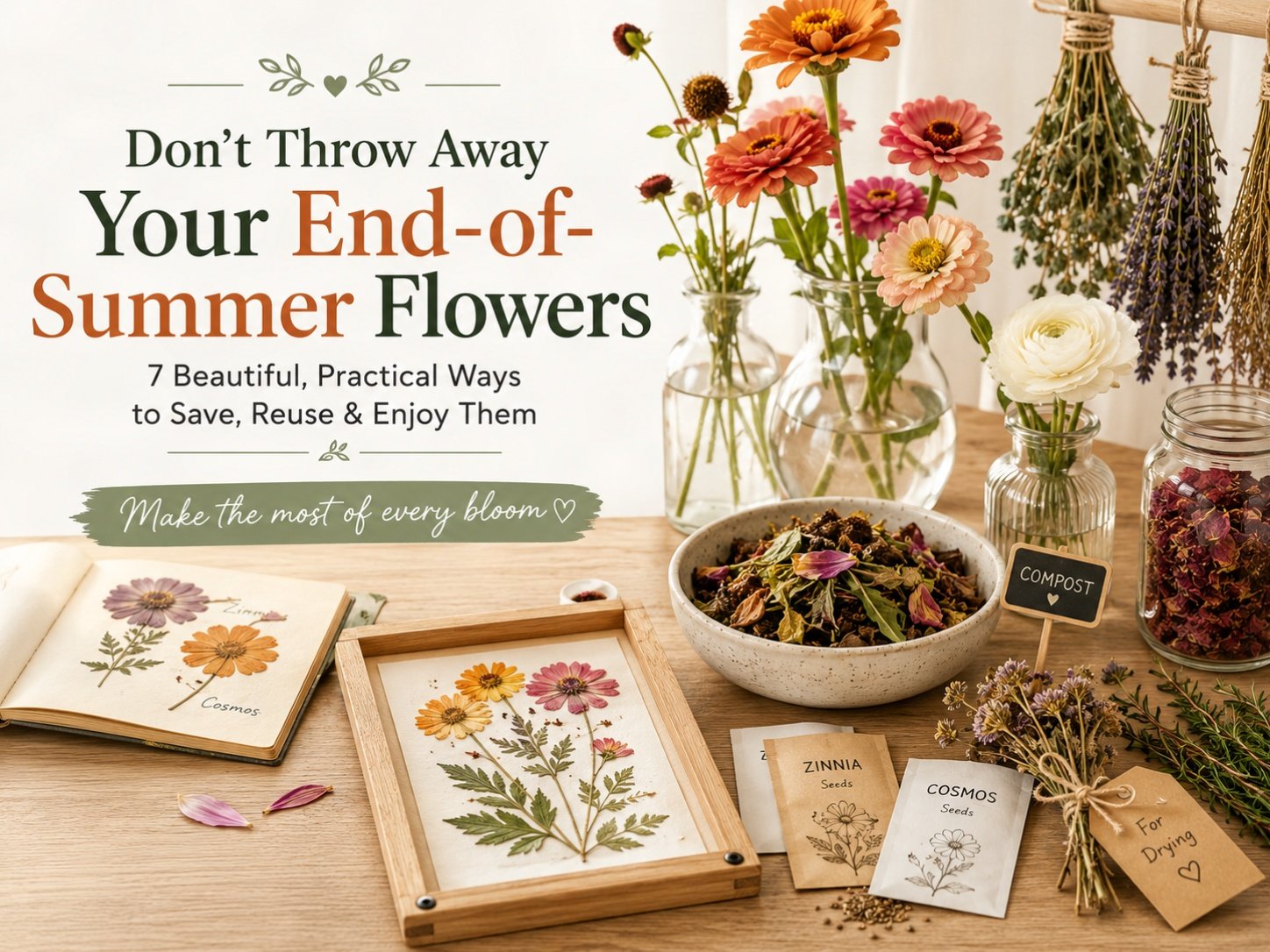
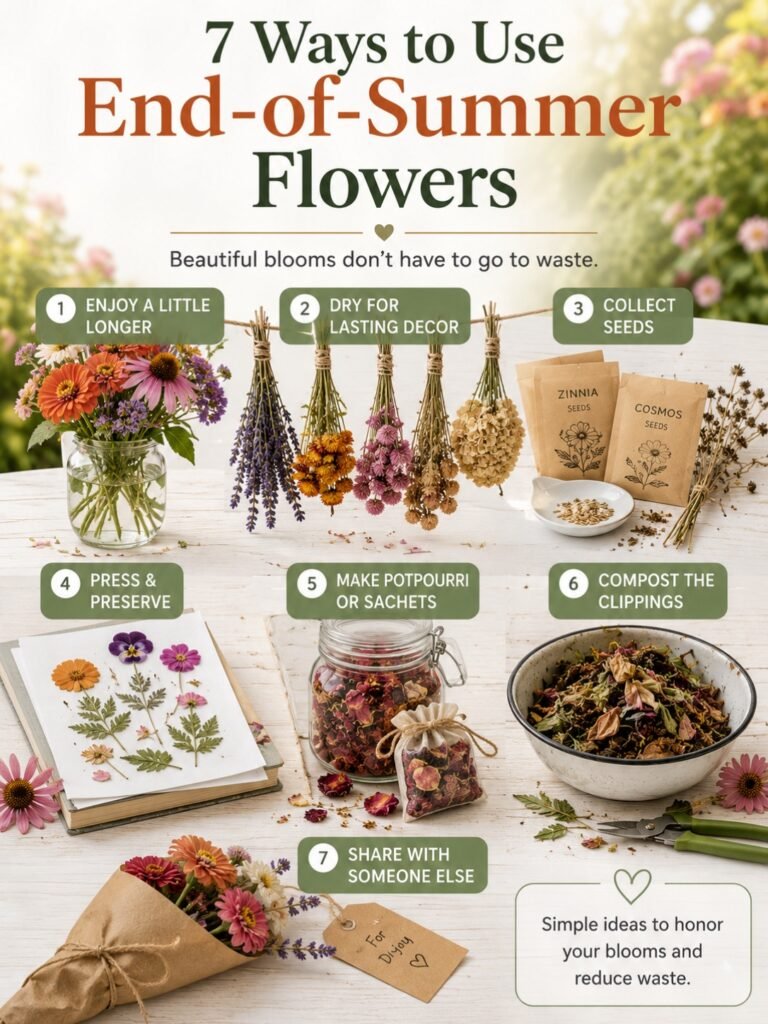
In this guide, I will walk through seven practical things you can do with end-of-summer flowers before you throw them away.
Why You Should Not Throw Away End-of-Summer Flowers Too Quickly
End-of-summer flowers still have value.
Some blooms are still pretty enough for small indoor arrangements. Others are past their peak but perfect for drying. Some have seed heads that can be collected. Some healthy plant material can go into compost. And some flowers can become simple craft pieces, gift tags, bookmarks, or natural seasonal decor.
The key is knowing what condition the flowers are in before deciding what to do with them.
The University of California Agriculture and Natural Resources guide to preserving flowers explains that flowers with lower moisture content, especially “everlasting” flowers with papery bracts, often dry successfully. The University of Missouri Extension guide to drying flowers and foliage also notes that flower preservation methods include air drying, pressing, drying with desiccants, and preserving foliage with glycerin.
That means fading flowers do not always belong in the trash. They may just need a different purpose.
1. Make One Last Fresh Arrangement
Before you dry or compost anything, look for flowers that still have a few good days left.
Even if the garden looks messy outside, you may be able to cut enough decent blooms for one last small vase. I like this idea because it lets you enjoy the season indoors before the garden fully transitions.
You do not need a perfect bouquet. A loose jar arrangement with a few zinnias, marigolds, cosmos, dahlias, hydrangeas, herbs, or greenery can still feel beautiful.
How to Make Fading Flowers Look Better Indoors
Cut stems in the morning after dew has dried. Remove damaged petals and lower leaves. Use a clean vase and fresh water. Keep the arrangement away from direct sun and heat.
A small arrangement often looks better than trying to force every faded flower into one big bouquet. If a bloom is too far gone, skip it and use only the best pieces.
Best Flowers for a Last Arrangement
Good candidates include:
- Zinnias
- Cosmos
- Marigolds
- Dahlias
- Hydrangeas
- Sunflowers
- Snapdragons
- Celosia
- Herbs with flowers
- Ornamental grasses
If the flowers are wilting badly, dropping petals, or showing disease, they are usually better suited for another use or disposal.
2. Air-Dry Stems for Simple Fall Decor
Air drying is one of the easiest ways to reuse end-of-summer flowers.
The University of Missouri Extension flower drying guide explains that flowers and foliage can be preserved by air drying, pressing, desiccant drying, and other methods. Air drying works especially well for flowers that naturally hold their shape.
I like air drying because it does not require complicated equipment. You only need flowers, string, and a dry place with good air flow.
How to Air-Dry Flowers
Gather flowers before they are completely falling apart. Remove extra leaves from the stems. Tie small bundles with string or rubber bands. Hang them upside down in a dark, dry, well-ventilated area.
A closet, pantry, shed, or spare room can work as long as it is not damp.
Keep bundles small. Large bundles can trap moisture and dry unevenly.
Flowers That Often Dry Well
The University of Vermont Extension article on dried flowers mentions dried annual flowers such as globe amaranth, statice, strawflower, bunny tails, and Craspedia as good candidates for dried flower projects.
Other good options often include:
- Celosia
- Strawflower
- Statice
- Globe amaranth
- Yarrow
- Lavender
- Hydrangea
- Baby’s breath
- Ornamental grasses
- Seed heads
Once dry, use them in vases, wreaths, shelf arrangements, or tied bundles.
3. Press Flowers for Cards, Frames, and Bookmarks
Pressed flowers are a beautiful way to preserve the softer side of the garden.
The University of Missouri Extension guide notes that flat flowers, such as pansies, press especially well. The Mississippi State University Extension pressed floral design guide also explains that large, thick flowers can hold too much moisture and may create conditions for mold, which is why thinner flowers and petals are usually easier to press.
This is a good option for flowers that are too delicate for air drying but still have pretty color or shape.
How to Press End-of-Summer Flowers
Choose flowers that are not wet. Remove thick stems if needed. Place blooms between absorbent paper, then press them inside a flower press or heavy book. Change the paper if it becomes damp.
Let the flowers dry fully before using them.
What to Make With Pressed Flowers
Pressed flowers can become:
- Handmade cards
- Gift tags
- Framed art
- Bookmarks
- Journal pages
- Place cards
- Scrapbook details
- Simple wall decor
I recommend labeling the flower name and date if the blooms came from your own garden. It turns a small craft into a seasonal memory.
4. Use Petals and Small Blooms for Natural Decor
Not every end-of-summer flower needs to become a full bouquet.
Sometimes the petals are the best part. Dried petals and small blooms can be used in bowls, jars, seasonal trays, craft projects, and gift wrapping.
The University of Florida IFAS Gardening Solutions guide to preserving flowers describes pressed flowers and leaves as useful for crafts such as homemade papers and cards.
Simple Ways to Reuse Petals
Try:
- Filling a small glass jar with dried petals
- Adding petals to handmade paper
- Decorating gift tags
- Making pressed flower cards
- Creating a dried flower frame
- Tucking tiny dried flowers into a wreath
- Filling a shallow bowl with dried petals and seed heads
I would avoid using petals for food, tea, or bath products unless you are completely sure the flower is edible, pesticide-free, and safe for that use.
The Colorado State University Extension edible flowers guide warns that many flowers are edible, but not all, and says not to eat flowers from florists, garden centers, or nurseries because they may have been treated with chemicals that are not safe to eat.
5. Save Seeds From Healthy Flowers
Some end-of-summer flowers are worth saving for next year.
Seed saving is one of the most practical ways to reuse fading flowers because it turns the end of one season into the beginning of the next.
The Oregon State University Extension guide to collecting and storing seeds recommends gathering mature, dry seed pods or seed clusters and finishing the drying process at room temperature when needed. The University of Illinois Extension seed-saving guidance also recommends saving seeds from healthy, disease-free plants and collecting seeds when the flower head is completely dry.
Flowers That Are Often Good for Seed Saving
Good beginner flowers may include:
- Marigolds
- Zinnias
- Cosmos
- Calendula
- Sunflowers
- Nasturtiums
- Poppies
- Morning glories
- Coneflowers
- Cleome
Seed saving can be unpredictable if the plant is a hybrid. The next generation may not look exactly like the parent plant. I still think it is worth trying if you enjoy experimenting in the garden.
How to Save Flower Seeds
Wait until seed heads are mature and dry. Cut the seed heads into a paper bag or tray. Let them dry fully indoors if needed. Separate seeds from chaff. Store them in a labeled paper envelope in a cool, dry place.
Label the envelope with:
- Flower name
- Color if known
- Date collected
- Garden location
- Any notes about plant height or performance
This small habit makes spring planting much easier.
6. Compost Healthy Plant Material
Some flowers are too faded to preserve, and that is okay.
Healthy plant material can often be composted instead of thrown away. Composting returns plant material to the garden cycle, which is a better use than sending everything to the trash.
The University of Maryland Extension composting guide says backyard composting is best suited for plant-based materials, excluding diseased materials, seeded weeds, and materials that attract pests.
What Flower Material Can Go Into Compost
You can usually compost:
- Healthy flower stems
- Leaves without disease
- Spent annuals
- Faded blooms
- Small plant trimmings
- Dried flower scraps
- Disease-free deadheaded flowers
Chop larger stems into smaller pieces so they break down more easily.
What Not to Compost
Do not compost flowers or plants that show disease, heavy pest infestation, mildew, blight, or suspicious spots.
The Penn State Extension guidance on powdery and downy mildew advises against composting diseased plant material because many home compost piles do not get hot enough to kill spores.
When in doubt, keep diseased plant material out of the compost pile.
7. Leave Some Seed Heads for Birds and Winter Interest
You do not have to cut every end-of-summer flower right away.
Some flowers can stay in the garden a little longer as seed heads. This can add texture to the fall garden, create natural winter interest, and provide food for birds.
The University of Illinois Extension seed-saving article notes that annual flowers produce lots of seed and that seeds missed by gardeners may reseed the garden the next year.
Leaving some seed heads can also make the garden feel less bare as summer fades.
Flowers You May Want to Leave Standing
Consider leaving:
- Coneflowers
- Sunflowers
- Black-eyed Susans
- Ornamental grasses
- Sedum
- Zinnias if healthy
- Cosmos if healthy
- Marigolds if healthy
This does not mean leaving a messy or diseased garden. Remove anything unhealthy. Keep what looks intentional and useful.
How to Decide What to Do With Each Flower
When you walk through the garden, sort end-of-summer flowers into four groups.
Keep Fresh
Use blooms that still look good in small vases.
Preserve
Dry or press blooms that still have good color, shape, or sentimental value.
Save
Collect seeds from healthy plants that have mature seed heads.
Compost or Dispose
Compost healthy plant material. Dispose of diseased or heavily pest-damaged material according to your local guidance.
This simple sorting method keeps the process from feeling overwhelming.
Best End-of-Summer Flowers to Preserve
Some flowers naturally preserve better than others.
Good drying and pressing candidates include:
- Strawflower
- Statice
- Celosia
- Globe amaranth
- Yarrow
- Lavender
- Hydrangea
- Baby’s breath
- Pansies
- Violets
- Cosmos petals
- Marigold petals
- Ornamental grasses
- Seed heads
If a flower is thick, fleshy, or very watery, it may be harder to dry without browning or molding. Try pressing petals instead of the whole flower.
Common Mistakes to Avoid
Waiting Too Long
Flowers that are already mushy, moldy, or falling apart are harder to preserve. Pick them while they still have structure.
Drying Flowers in a Damp Room
Moisture can cause mold. Choose a dry, ventilated space.
Pressing Flowers That Are Too Thick
Thick flowers may hold moisture. Press petals or smaller blooms instead.
Saving Seeds From Diseased Plants
Only save seeds from healthy plants. Disease can carry over or weaken your next garden.
Composting Diseased Flowers
Do not compost diseased plant material in a typical home compost pile. Many piles do not stay hot enough long enough to reliably kill pathogens.
Eating Flowers Without Checking Safety
Never assume a flower is edible. Use reliable edible flower guidance and avoid flowers treated with pesticides or purchased from florists, nurseries, or garden centers.
Quick End-of-Summer Flower Plan
If your garden is fading and you do not know where to start, use this simple plan.
Day 1: Cut the best blooms for one last vase.
Day 2: Choose flowers to air-dry in small bundles.
Day 3: Press flat blooms and pretty petals.
Day 4: Collect seeds from healthy, dry seed heads.
Day 5: Compost healthy plant material.
Day 6: Dispose of diseased plants properly.
Day 7: Leave a few strong seed heads for birds and garden texture.
This helps you reuse what you can without turning the process into a large project.
FAQ
What can I do with end-of-summer flowers?
You can use end-of-summer flowers in fresh arrangements, air-dry them, press them, reuse petals for crafts, save seeds, compost healthy plant material, or leave some seed heads for birds and winter interest.
Can I dry flowers from my garden?
Yes, many garden flowers can be dried. The University of Missouri Extension flower drying guide explains several methods, including air drying, pressing, and using desiccants.
What flowers are best for drying?
Flowers with lower moisture content often dry best. Good choices can include strawflower, statice, celosia, globe amaranth, yarrow, lavender, baby’s breath, ornamental grasses, and some hydrangeas.
Can I save seeds from fading flowers?
Yes, you can save seeds from healthy flowers when the seed heads are mature and dry. The Oregon State University Extension seed-saving guide recommends collecting mature, dry seed pods or clusters and finishing drying at room temperature when needed.
Can I compost old flowers?
You can compost healthy flowers and stems, but avoid composting diseased or heavily pest-infested material. The University of Maryland Extension composting guide says backyard composting is best suited for plant-based materials, excluding diseased materials.
Can I use garden flowers in food or tea?
Only use flowers you know are edible, pesticide-free, and safe for consumption. The Colorado State University Extension edible flowers guide warns that not all flowers are edible and advises against eating flowers from florists, garden centers, or nurseries.
Conclusion
End-of-summer flowers do not have to go straight into the trash.
Even when the garden starts to fade, those flowers can still become fresh arrangements, dried bouquets, pressed art, handmade cards, saved seeds, compost, or natural garden texture. The key is choosing the right use for the condition of each flower.
I recommend starting with one simple walk through the garden. Cut what still looks fresh, preserve what still has color, save seeds from healthy plants, compost what is clean, and dispose of anything diseased.
Your summer flowers may be fading, but they can still give you one more season of beauty, usefulness, and memory.
Sources
- University of California Agriculture and Natural Resources: From the Garden, Preserving Flowers
- University of Missouri Extension: Drying Flowers and Foliage for Arrangements
- University of Vermont Extension: Experiment With Dried Flowers
- University of Florida IFAS Gardening Solutions: Plant Craft, Preserving Flowers
- Mississippi State University Extension: Creating a Pressed Floral Design
- Oregon State University Extension: Collecting and Storing Seeds From Your Garden
- University of Illinois Extension: Cherish Favorite Flowers With Seed Saving
- University of Maryland Extension: Composting
- Penn State Extension: Addressing Downy Mildew and Powdery Mildew in the Home Garden
- Colorado State University Extension: Edible Flowers