

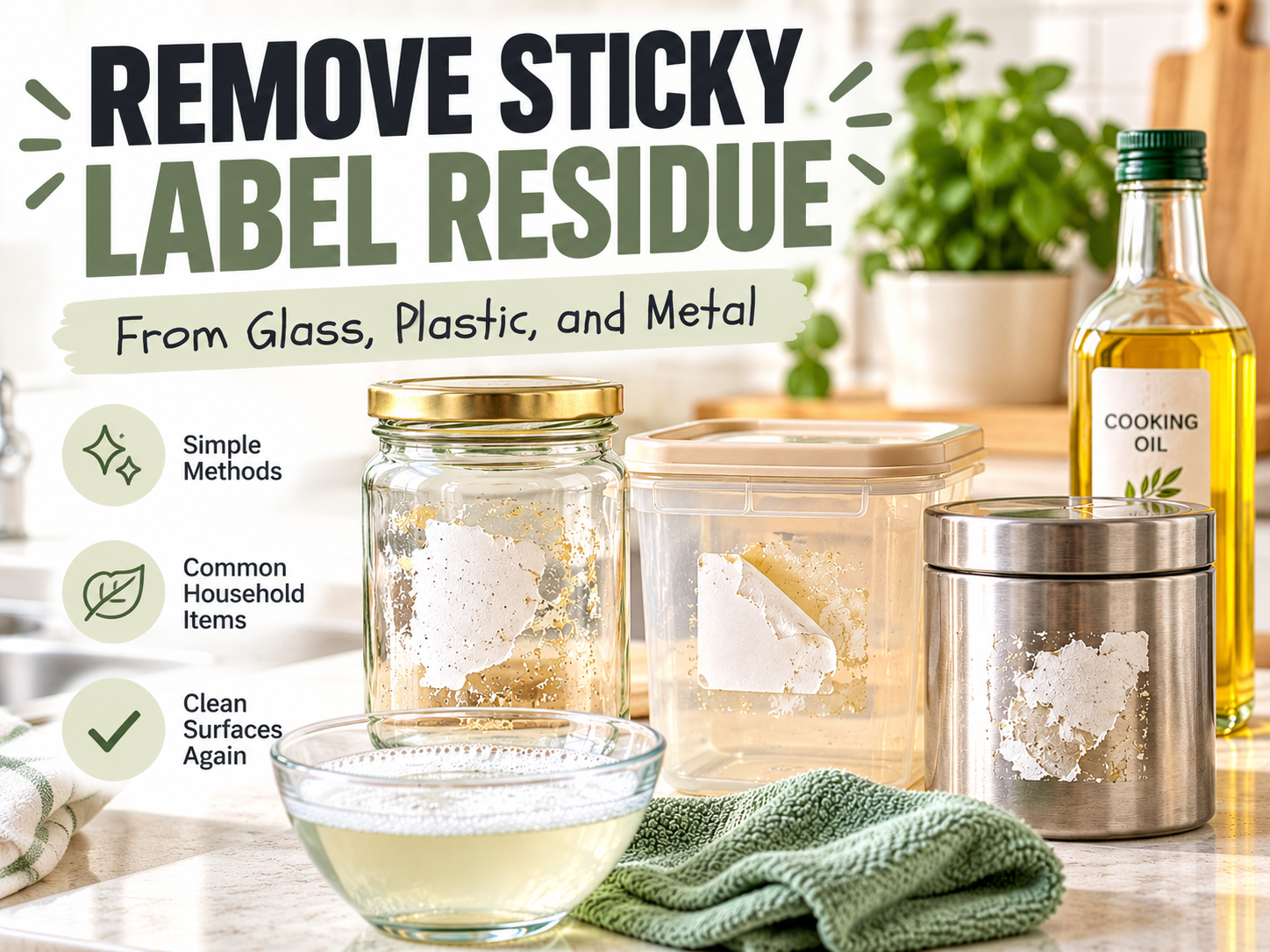
Removing price tags, product stickers, and labels should be simple, but the sticky glue left behind can be surprisingly difficult to clean. Whether it is a glass jar, plastic container, or stainless steel appliance, stubborn adhesive can make an otherwise clean surface look messy.
If you are wondering how to remove sticky label residue without scratching or damaging your belongings, the good news is that several household items can help.
I recommend starting with gentle cleaning methods before trying stronger adhesive removers. In this guide, I will explain how to safely remove sticker glue from glass, plastic, and metal using simple, affordable solutions.
What Removes Sticky Label Residue?
Sticky label residue is the adhesive that remains after removing a sticker or product label. Some adhesives wipe away easily, while others become stubborn after sitting on a surface for a long time.
Fortunately, you probably already have several useful cleaning supplies at home.
- Warm, soapy water: Helps soften paper labels and some adhesives.
- Cooking oil: Can help loosen sticky glue without harsh scrubbing.
- White vinegar: May help with certain adhesive residues.
- Rubbing alcohol: Useful for removing stubborn glue from compatible surfaces.
- Baking soda: Can be combined with oil to create a gentle cleaning paste.
- Commercial adhesive remover: Helpful when ordinary household methods are not enough.
The right method depends on the material. Always test unfamiliar cleaners on a small, hidden area first.
How to Remove Sticky Label Residue From Glass
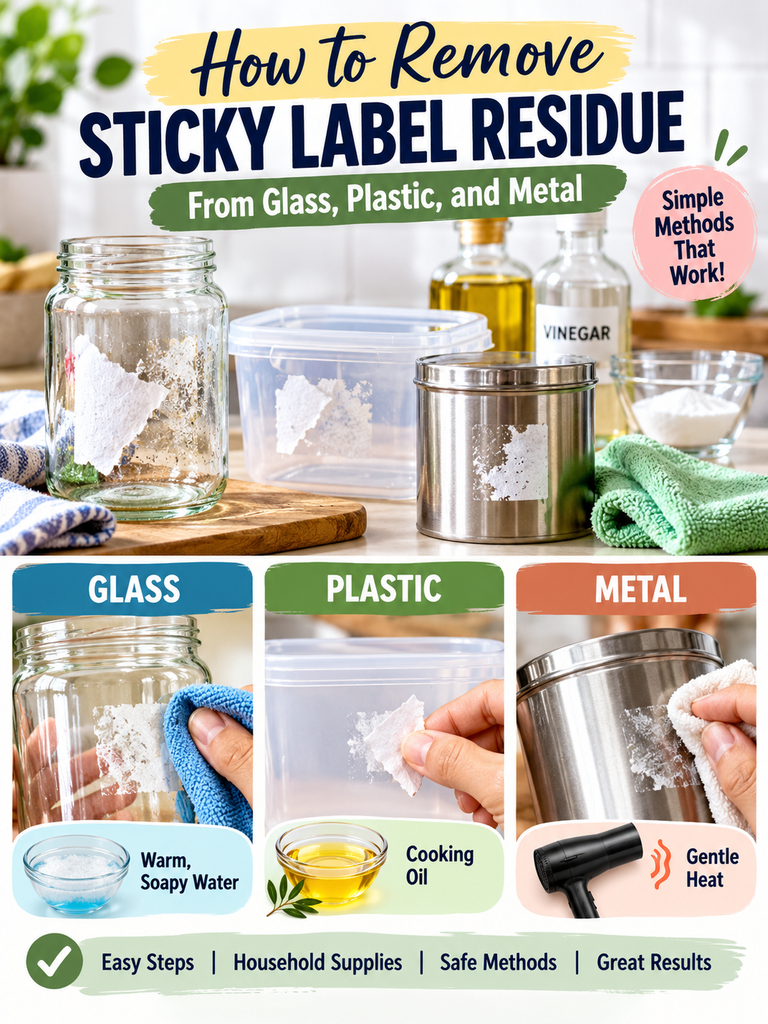
Glass jars, bottles, mirrors, and windows often collect sticky residue from labels and stickers.
For ordinary, uncoated glass, warm water and cooking oil are practical starting points.
Method 1: Use Warm, Soapy Water
- Fill a bowl or sink with warm water and add a few drops of dish soap.
- Soak the glass item for 10 to 15 minutes, if it is safe to immerse.
- Gently peel away the softened label.
- Rub the remaining adhesive with a soft sponge or microfiber cloth.
- Rinse and dry thoroughly.
This method works particularly well for reusable food jars and glass bottles.
Method 2: Apply Cooking Oil
For stubborn adhesive, spread a small amount of cooking oil over the sticky area.
Leave it for approximately 10 minutes, then gently rub with a soft cloth. Repeat if needed before washing with dish soap.
According to Goo Gone’s glass sticker removal guide, adhesive removers can also help loosen difficult labels. However, I suggest starting with household solutions.
Avoid sharp scraping tools on coated, tinted, or decorative glass.
How to Remove Sticky Label Residue From Plastic
Plastic containers, storage bins, and packaging require extra care because some cleaning products can discolor or damage their surfaces.
I recommend avoiding harsh solvents and metal scrapers when cleaning plastic.
Method 1: Try Cooking Oil
- Apply a few drops of vegetable or olive oil to the glue.
- Let it sit for 10 to 15 minutes.
- Gently rub the adhesive using your fingers or a soft cloth.
- Lift loosened residue with an old plastic card if necessary.
- Wash with warm, soapy water.
This approach is especially useful for plastic storage containers.
Method 2: Use Warm Water and Dish Soap
If the label is relatively fresh, soak a cloth in warm, soapy water and place it over the adhesive.
After several minutes, gently wipe away the softened residue. Repeat instead of scrubbing aggressively.
Loctite’s guide to removing sticky residue from plastic also recommends gentle scraping with a plastic card rather than sharp metal tools.
Avoid acetone or nail polish remover on plastic unless the manufacturer specifically confirms compatibility.
How to Remove Sticky Label Residue From Metal
Metal surfaces such as stainless steel appliances, cooking utensils, and storage tins can develop stubborn adhesive patches.
Although metal may appear durable, abrasive cleaning can scratch polished or painted finishes.
Method 1: Use Vegetable Oil
Apply a little vegetable oil to the sticky area and allow it to soften the residue.
Gently wipe with a microfiber cloth, following the direction of the metal’s grain when applicable.
Finish with warm, soapy water and dry immediately to prevent water spots.
Method 2: Use Gentle Heat
A hair dryer on a low or warm setting can help soften particularly stubborn adhesive.
Keep it moving rather than concentrating heat on one spot. Once the glue softens, lift it with a plastic scraper or soft cloth.
Loctite recommends vegetable oil and gentle heat for removing sticker residue from metal.
Avoid using heat near flammable cleaners, electrical components, or heat-sensitive coatings.
How to Remove Extremely Stubborn Sticker Glue
Sometimes, ordinary cleaning methods leave behind a thin, sticky film.
For these situations, I recommend trying one method at a time rather than mixing several cleaning products.
A small amount of rubbing alcohol on a cloth may help remove residue from compatible, uncoated surfaces. Always spot-test first, particularly on plastic and painted metal.
Alternatively, use a commercial adhesive remover labeled for your specific material. Follow the manufacturer’s directions, provide adequate ventilation, and wash away any remaining cleaner.
Goo Gone lists glass, metal, and many plastics among the compatible surfaces for its Original Adhesive Remover, but still advises testing before use.
For food containers, clean all treated surfaces thoroughly before using them again.
Common Mistakes to Avoid
Even simple cleaning tasks can damage household items when the wrong tools are used.
Here are mistakes I recommend avoiding:
- Scraping plastic with razor blades or metal knives.
- Using acetone on plastic without checking compatibility.
- Applying excessive heat to delicate materials.
- Scrubbing polished metal with steel wool.
- Mixing cleaning chemicals unnecessarily.
- Leaving oily cleaners on surfaces without washing afterward.
The safest approach is to soften the adhesive first and remove it gradually.
Frequently Asked Questions
Does vinegar remove sticky label residue?
White vinegar may help loosen certain adhesives. Apply a little to a cloth, test a hidden area, and gently rub the residue. It may not work on every type of glue.
Can baking soda remove sticker glue?
Yes, baking soda mixed with cooking oil can help loosen residue. However, the mixture can be mildly abrasive, so avoid it on glossy plastic, polished metal, and delicate finishes.
What is the safest way to remove sticker residue from plastic?
Warm, soapy water and a soft cloth are good starting options. Cooking oil can help when the adhesive remains stubborn.
Can rubbing alcohol damage surfaces?
Yes. Rubbing alcohol may affect certain plastics, paints, and protective coatings. Always check material compatibility before applying it.
Conclusion
Learning how to remove sticky label residue from glass, plastic, and metal does not require expensive supplies or aggressive cleaning.
Warm, soapy water is an excellent first step, while cooking oil can help with more stubborn adhesive. For difficult residue, carefully selected commercial cleaners may provide additional help.
I recommend choosing the gentlest suitable method, allowing the glue time to soften, and cleaning the surface afterward. With a little patience, you can restore your household items without unnecessary scratches or damage.