

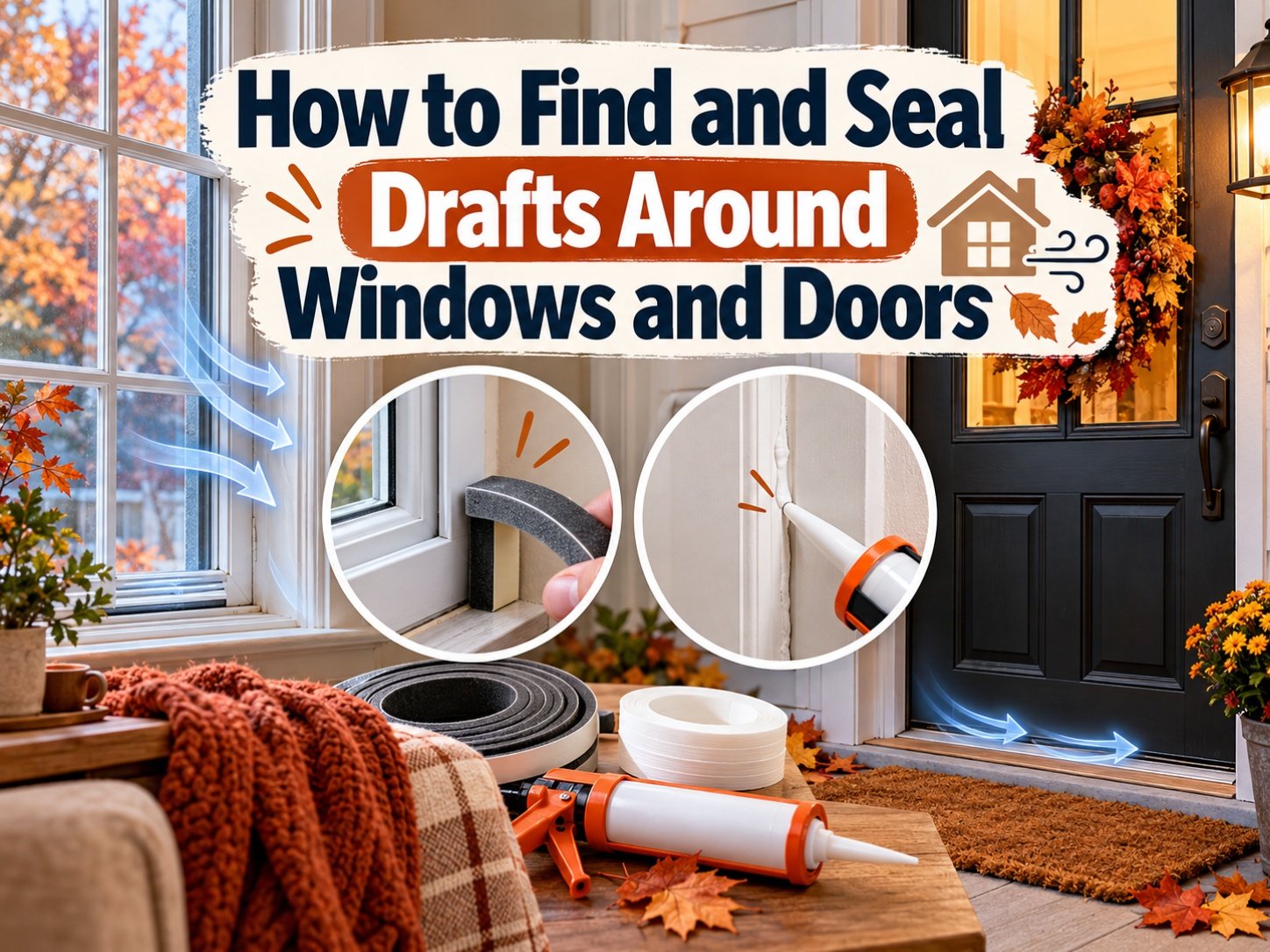
Learning how to seal drafts around windows and doors can make your home feel warmer, reduce cold spots, and help your heating system work more efficiently. If your rooms feel chilly even when everything is closed, small air leaks around frames, trim, and moving parts may be the reason.
I recommend checking these problem spots before winter, or anytime a room starts feeling uncomfortable. Most window and door drafts can be found with simple tests and sealed with basic materials like caulk, weatherstripping, or low-expansion foam.
Why You Should Seal Drafts Around Windows and Doors
Drafts do more than make a room feel cold. They can also let heated air escape and outdoor air move inside. ENERGY STAR explains that sealing air leaks and adding insulation can improve comfort and help lower energy costs.
ENERGY STAR also estimates that homeowners can save an average of 15% on heating and cooling costs by air sealing their homes and adding insulation in key areas. You can review their savings method for more detail.
How to Find Drafts Around Windows and Doors
1. Feel for Moving Air
Start with the simplest test. On a cool or windy day, slowly move your hand around window and door edges.
Check these areas:
- Window frames
- Door frames
- The edges where the sash meets the frame
- The bottom of exterior doors
- Trim and casing
If you feel cold air moving, you likely have a draft.
2. Try the Paper Test
For windows or doors that open and close, shut one on a piece of paper. If the paper slides out too easily, the seal may not be tight enough.
ENERGY STAR recommends the paper test as a quick way to check whether a window could seal more tightly.
3. Use Incense or Smoke
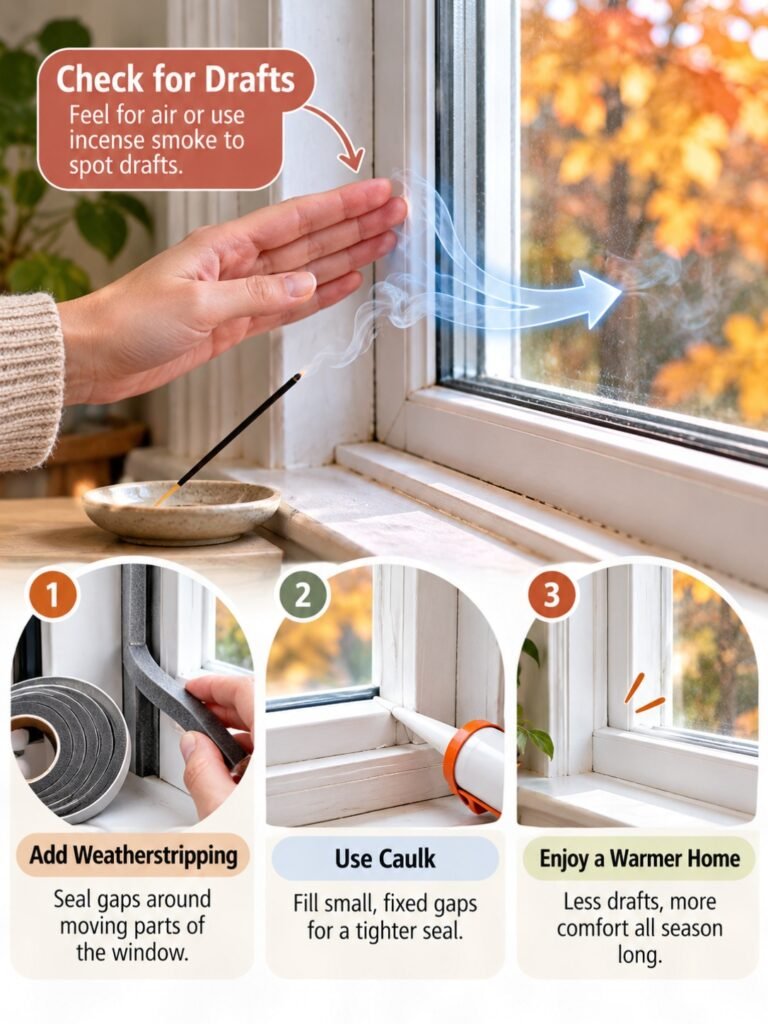
Light an incense stick and hold it near the seams of a closed window or door. If the smoke bends or moves sharply, air is likely leaking through that area.
ENERGY STAR also lists the smoke test as a helpful way to locate leaks around windows and doors.
4. Look for Visible Signs
Some draft clues are easy to miss. Look for:
- Cracked caulk
- Gaps in weatherstripping
- Light showing under a door
- Peeling paint around trim
- Dust buildup near gaps
- Insects or outdoor smells coming inside
ENERGY STAR includes drafts, visible gaps, dust, pests, odors, and peeling paint as possible leak signs around window and door trim.
How to Seal Drafts Around Windows
Use Caulk for Fixed Gaps
Caulk works best on areas that do not move, such as:
- The outside edge of window trim
- Gaps between the frame and wall
- Small cracks around casing
As a simple rule, use caulk for fixed gaps and weatherstripping for parts that open and close. The U.S. Department of Energy recommends caulking gaps, applying weatherstripping to movable parts, and using window attachments to help reduce heat loss through windows.
Use Weatherstripping for Moving Parts
Weatherstripping is the better choice for window sashes and other moving parts. If the seal looks flattened, torn, brittle, or loose, replace it.
I recommend checking:
- Double-hung window sashes
- Sliding windows
- Casement window edges
- Exterior door edges
If the paper test fails, thicker or newer weatherstripping may help create a tighter seal.
Seal Larger Gaps Behind Trim
If drafts are coming from around the trim, the leak may be deeper between the jamb and wall framing. ENERGY STAR explains that larger gaps behind window or door trim may be sealed with foam sealant, backer rod, fiberglass, or caulk depending on the gap.
For this type of project, use products made for windows and doors. Too much expanding foam can affect how the frame fits and operates.
How to Seal Drafts Around Doors
Replace Door Weatherstripping
Exterior doors often leak around the sides and top when the weatherstripping wears out. Replace it if it is cracked, compressed, torn, or missing.
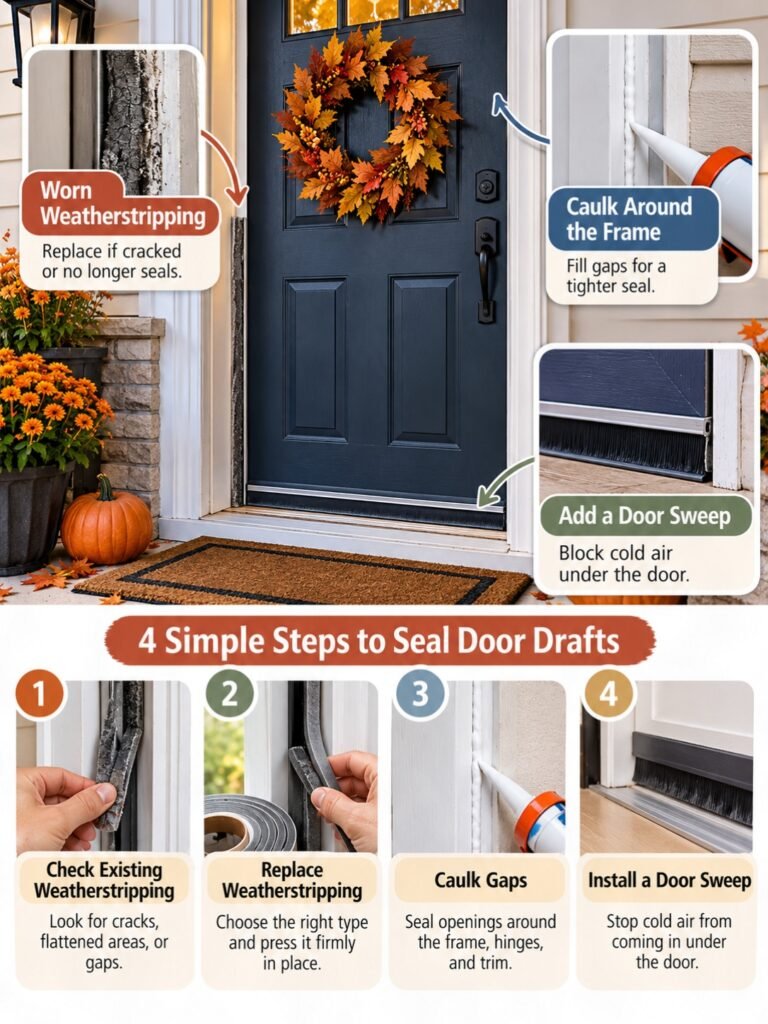
Choose weatherstripping that fits your door type. A good seal should close gaps without making the door difficult to shut.
Install or Replace a Door Sweep
If you see light under the bottom of the door, a door sweep is usually the simplest fix. A door sweep helps block cold air, dust, insects, and outdoor debris from entering under the door.
Caulk the Door Frame
Use caulk around the exterior door frame where it meets the siding, brick, or wall surface. This helps seal fixed gaps that weatherstripping does not cover.
Clean the surface first, remove loose old caulk, and let the new caulk cure according to the product directions.
Common Mistakes to Avoid When You Seal Drafts Around Windows and Doors
Using the Wrong Material
Do not use caulk on areas that need to move. It can crack or make the window or door harder to open. Use weatherstripping for moving joints and caulk for fixed gaps.
Ignoring Hidden Gaps Behind Trim
Sometimes the visible frame looks fine, but the real leak is behind the casing. If you still feel cold air after sealing the surface, the trim area may need closer attention.
Using Expanding Foam Carelessly
For windows and doors, choose low-expansion or non-expanding foam made for these openings. ENERGY STAR recommends non-expanding foam for larger gaps because too much pressure can affect the window or door fit.
Skipping Safety Checks in Older Homes
If your home was built before 1978 and you need to disturb painted trim, check for lead paint safety first. ENERGY STAR warns that repair work in older homes can create hazardous lead dust if lead-based paint is present.
When to Call a Professional
I usually recommend DIY sealing for obvious, easy-to-reach gaps. But it may be better to call a professional if:
- Drafts are severe and hard to trace
- Trim removal feels too advanced
- Window or door frames look damaged
- You suspect larger insulation problems
- Your home is older and may have lead paint concerns
A professional can also help if you want a more complete home energy assessment.
FAQ
What is the easiest way to find a window draft?
The easiest methods are using your hand to feel for moving air, doing the paper test, or using incense smoke near the seams.
Should I use caulk or weatherstripping?
Use caulk for fixed cracks and gaps. Use weatherstripping for window sashes, exterior doors, and other moving parts.
Can sealing drafts lower energy costs?
Yes. ENERGY STAR says sealing air leaks and adding insulation can improve comfort and reduce wasted energy. Their estimate shows average savings of 15% on heating and cooling costs when air sealing is combined with insulation improvements.
What should I seal first?
Start with the areas you can feel or see: gaps around window trim, worn weatherstripping, loose door sweeps, and cracks around exterior door frames.
Conclusion
When you seal drafts around windows and doors, you can make your home feel warmer without starting with major repairs. Begin with simple draft tests, seal fixed gaps with caulk, replace worn weatherstripping, and check behind trim if cold air keeps coming through.
In my experience, small fixes in the right places often make a bigger difference than people expect.
Sources
- ENERGY STAR, “Why Seal and Insulate?”
https://www.energystar.gov/saveathome/seal_insulate/why-seal-and-insulate - ENERGY STAR, “Methodology for Estimated Energy Savings”
https://www.energystar.gov/saveathome/seal_insulate/methodology - ENERGY STAR, “Sealing Behind Window & Door Trim Project”
https://www.energystar.gov/saveathome/seal_insulate/sealing-window-door - U.S. Department of Energy, “5 Tips to Help You Save on Energy Bills this Winter”
https://www.energy.gov/articles/5-tips-help-you-save-energy-bills-winter