
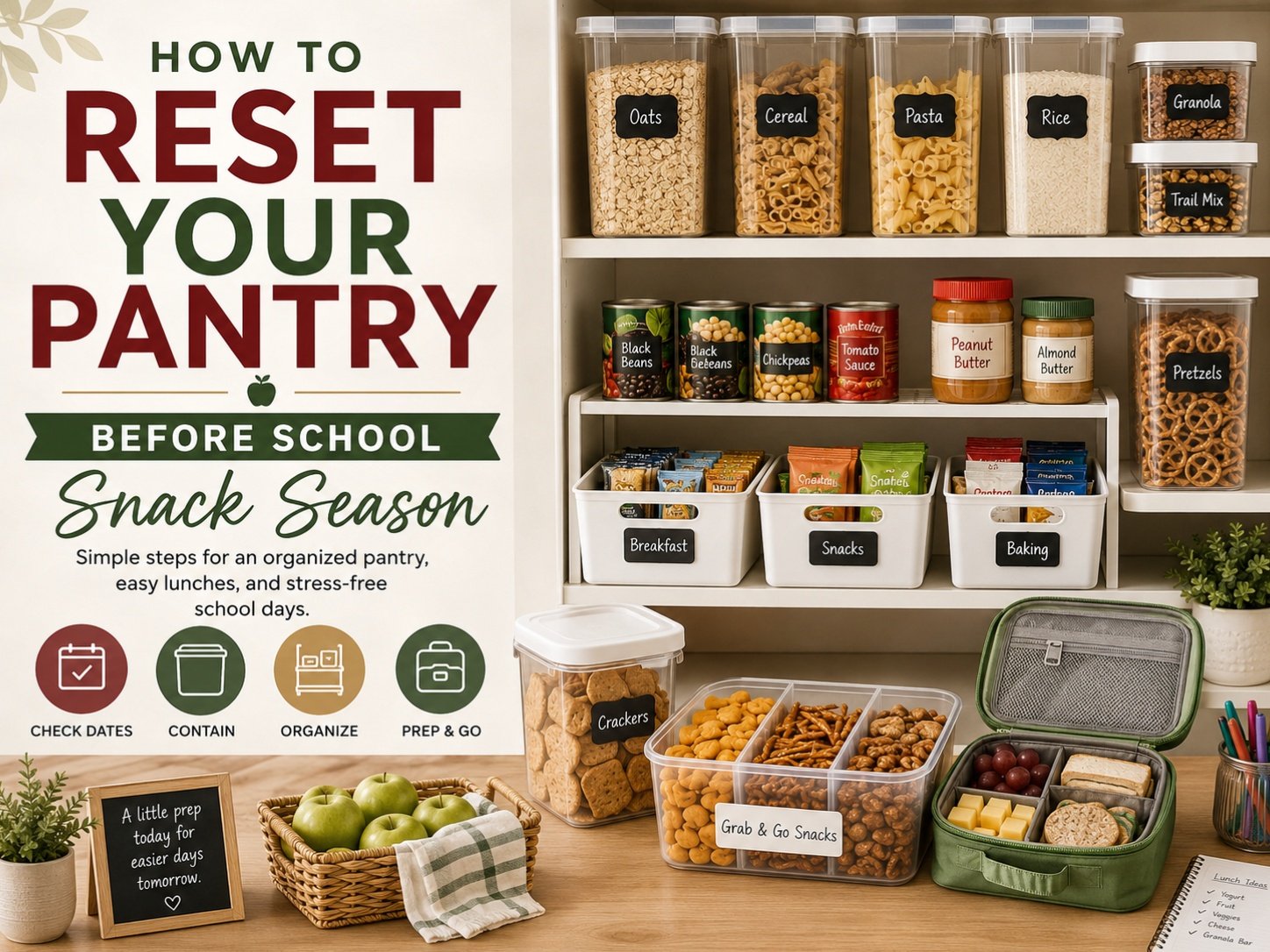
A pantry reset before school can make busy mornings feel much easier. When snacks are grouped clearly, expired food is removed, and duplicates are easy to see, you can pack lunchboxes faster without digging through messy shelves.
I recommend doing this reset before school snack season starts because that is when granola bars, crackers, applesauce pouches, fruit cups, snack packs, cereal bars, and after-school snacks begin taking over the pantry.
In this GloMiaFinds guide, I’ll show you how to reset your pantry before school snack season using a simple cleanout, date labels, divided bins, shelf risers, airtight containers, and snack zones that are practical for real family routines.
This article is for general home organization and food-storage guidance only. Always follow food labels, school allergy policies, food-safety guidance, and manufacturer instructions for storage containers, bins, and pantry supplies.
Why a Pantry Reset Before School Makes Mornings Easier
A pantry reset before school is really about visibility. When you can see what you have, you are less likely to buy another box of snacks you already own. You are also less likely to find stale crackers, expired bars, or mystery bags hiding behind cereal boxes.
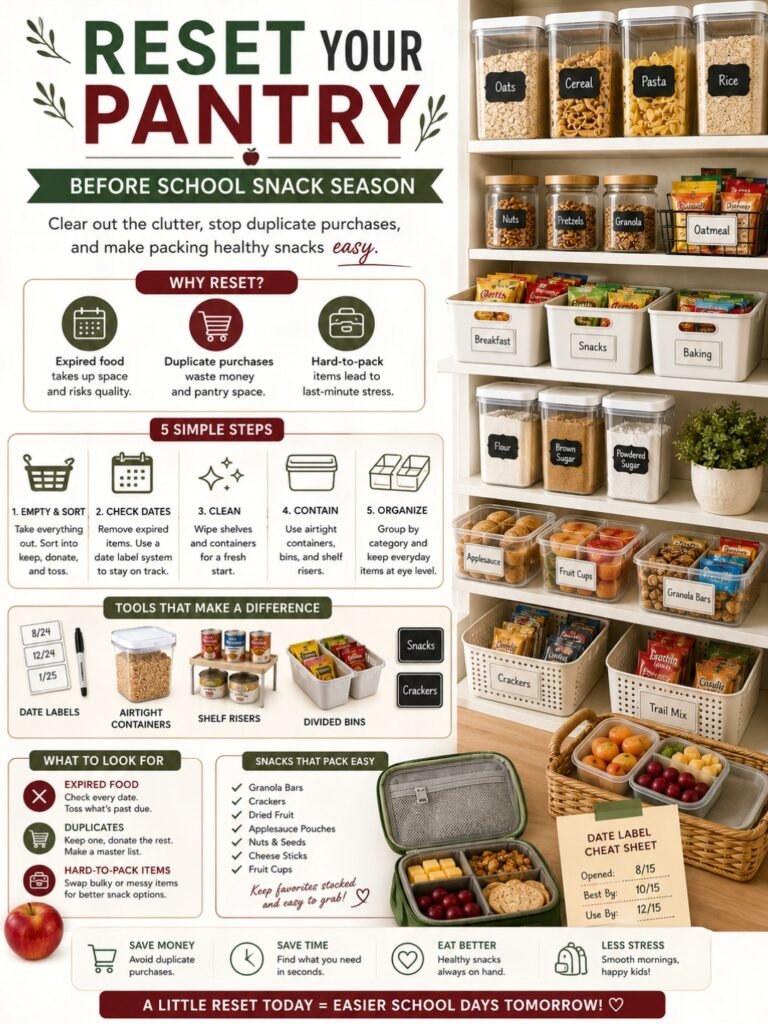
School snack season usually brings more small packaged items into the house, including:
- Granola bars
- Crackers
- Applesauce pouches
- Fruit cups
- Pretzels
- Popcorn packs
- Cereal bars
- Dried fruit
- Classroom-safe snacks
- After-school snacks
- Backup breakfast items
The FDA explains in its guide to cutting food waste and maintaining food safety that confusion over food date labels can contribute to food waste. FDA also supports “Best if Used By” as a standard phrase to show when a food is expected to be at its best flavor and quality.
USDA FSIS explains in its food product dating guidance that, except for infant formula, if a date passes during home storage, a product should still be safe and wholesome if handled properly until spoilage is evident.
That is why this reset should not be only about tossing food. It should help you understand what needs to be used first, what should not be repurchased yet, and what needs to be removed because it looks unsafe, stale, damaged, or no longer useful.
GloMiaFinds tip:
The goal is not a perfect pantry. The goal is a snack shelf that helps you pack faster and shop smarter.
Pantry Reset Before School: Start With One Zone
1. Empty One Snack Area at a Time
The first step in a pantry reset before school is to avoid pulling everything out at once. If you empty the entire pantry, the project can become overwhelming fast.
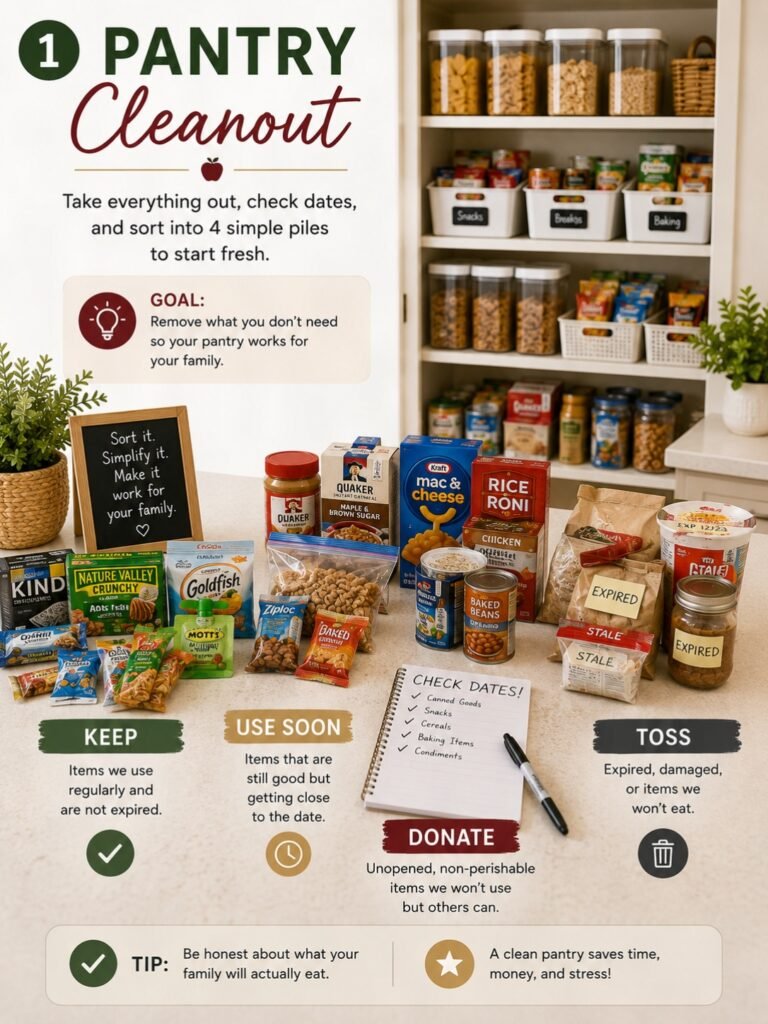
Start with one area:
- School snack shelf
- Lunchbox shelf
- After-school snack shelf
- Breakfast backup shelf
- Baking and treat shelf
- Pantry drawer
- Snack cabinet
Take everything from that one area and place it on the counter. Then sort it into four simple groups:
- Keep
- Use soon
- Donate if unopened and accepted locally
- Toss
Check dates, packaging, freshness, and whether your family still eats the item. USDA FSIS explains in its shelf-stable food safety guidance that shelf-stable foods can be stored safely at room temperature, but packaged foods still need proper storage and handling.
GloMiaFinds tip:
Start with the shelf that frustrates you most. For school mornings, that is usually the lunchbox snack shelf.
2. Check Dates and Packaging Carefully
A pantry reset before school should include a date check, but dates are only part of the decision. You also need to look at the package, smell, texture, and storage conditions.
USDA FSIS notes in its food product dating guidance that many product dates relate to quality, not automatic safety. Still, you should remove anything that looks spoiled, smells wrong, has pest signs, or has damaged packaging.
For canned goods, USDA FSIS says in its canned goods guidance to discard cans that are dented, rusted, or swollen. It also warns against using food from containers that are leaking, bulging, badly dented, cracked, loose-lidded, foul-smelling, or spurting liquid when opened.
Toss or inspect carefully if you find:
- Swollen cans
- Deeply dented cans
- Rusted cans
- Leaking packages
- Open bags with stale smells
- Boxes with pest signs
- Food exposed to moisture
- Snacks your child cannot take because of school allergy rules
- Items nobody in your home will realistically eat
GloMiaFinds tip:
If a food looks unsafe, smells off, or has damaged packaging, do not keep it just because the pantry feels less full.
3. Use Date Labels So Snacks Are Easier to Rotate
Date labels are one of the simplest tools for a pantry reset before school because they make it easier to use older snacks first. You do not need fancy labels. A simple sticker, marker, or tape label can work.
Use date labels for:
- Opened crackers
- Opened cereal
- Granola bars
- Applesauce pouches
- Fruit cups
- Snack packs
- Baking mixes
- Bulk snack bags
- Lunchbox treats
- Classroom-safe snacks
Helpful label ideas include:
- “Use first”
- “Opened 8/26”
- “Best by 10/26”
- “Lunchbox”
- “After school”
- “Classroom safe”
- “Do not rebuy yet”
FDA’s tips to reduce food waste recommend checking what foods you already have before shopping and using food before it spoils.
Before buying date labels, check current price, label size, adhesive strength, marker compatibility, freezer or pantry use if needed, safety notes, shipping, and returns.
GloMiaFinds tip:
Labels should be readable from the front of the shelf. If you have to pull everything out to read them, they are not helping enough.
4. Group Snacks by Purpose, Not by Package Type
One reason snack shelves become messy is that everything gets mixed together. Lunchbox snacks, after-school snacks, backup breakfast bars, treats, and bulk refill items all end up in the same pile.
For a cleaner pantry reset before school, group snacks by how they are used.
Try these zones:
- Lunchbox snacks
- Classroom-safe snacks
- After-school snacks
- Sports or activity snacks
- Breakfast backup
- Treats
- Parent snacks
- Bulk refill snacks
This makes the pantry easier for everyone to understand. It also helps prevent school snacks from disappearing before the week begins.
GloMiaFinds tip:
If a snack is meant for lunchboxes, give it a lunchbox zone. Otherwise, it may get eaten before Monday morning.
5. Use Divided Bins for Grab-and-Pack Snacks
Divided bins are helpful when small snacks keep sliding around the shelf. They work well for pouches, bars, mini cracker packs, dried fruit, pretzels, fruit snacks, and popcorn bags.
For a pantry reset before school, divided bins make the snack shelf easier to use because everything has a visible place.
Use divided bins for:
- Granola bars
- Crackers
- Applesauce pouches
- Fruit cups
- Dried fruit
- Pretzel bags
- Snack-size popcorn
- Rice cakes
- Nut-free classroom snacks
- After-school choices
Keep the bins shallow enough that kids and adults can see what is inside. If the bin is too deep, the snacks at the bottom will disappear.
Before buying divided bins, check current price, size, number of compartments, material, cleaning instructions, shelf fit, safety notes, shipping, and returns.
GloMiaFinds tip:
Do not overfill the bins. If people have to fight the bin to pull out a snack, the system will fall apart.
6. Add Shelf Risers Where Back-Row Snacks Disappear
Shelf risers help you see items that usually hide behind taller boxes. They are especially useful on deep shelves where snack cups, cans, packets, and small boxes get lost.
Use shelf risers for:
- Applesauce cups
- Fruit cups
- Canned fruit
- Oatmeal packets
- Cereal bars
- Snack boxes
- Small jars
- Lunchbox add-ons
- Backup pantry items
This part of a pantry reset before school is all about visibility. If you can see the second row, you are less likely to buy duplicates.
Before buying shelf risers, check current price, width, depth, height, weight limit, adjustability, material, shelf fit, safety notes, shipping, and returns.
GloMiaFinds tip:
Measure your shelves first. A riser that is too tall, too wide, or too deep can waste more space than it saves.
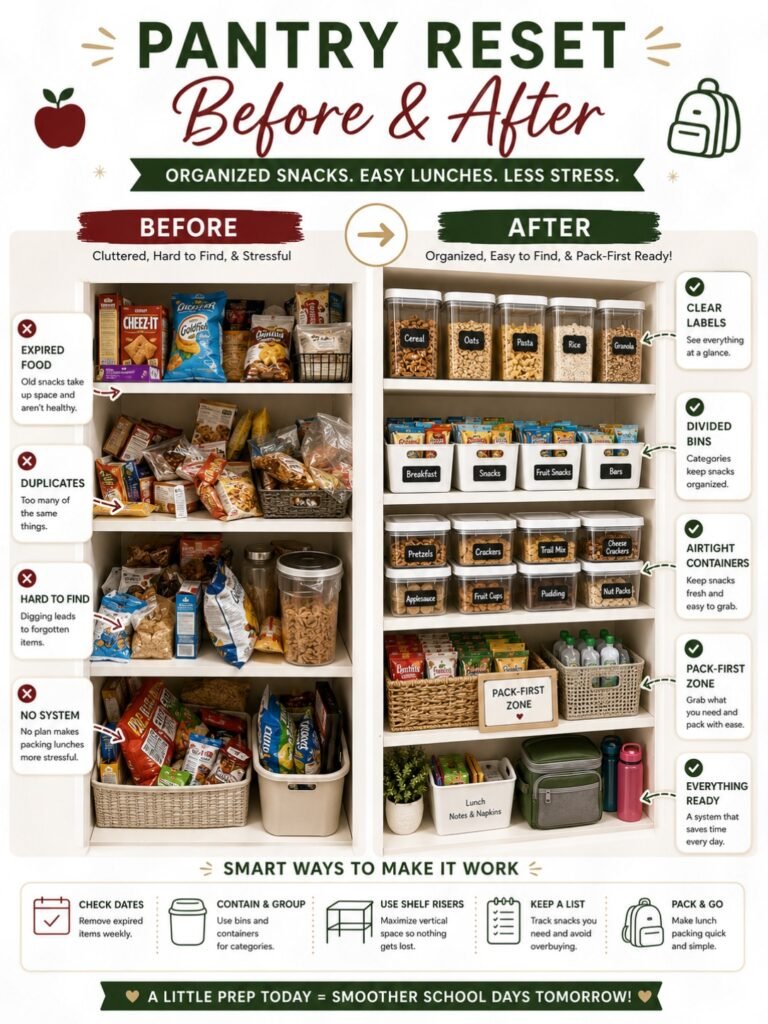
7. Use Airtight Containers for Snacks That Go Stale
Airtight containers can help with snacks that lose freshness after opening, but you do not need to decant everything. I only recommend using containers where they solve a real problem.
Good candidates include:
- Crackers
- Pretzels
- Cereal
- Granola
- Trail mix
- Cookies
- Dried fruit
- Snack mixes
- Rice cakes
- Bulk snacks
USDA FSIS explains in its boxed food storage guidance that foods like cereal and boxed dry goods have quality timeframes for pantry storage. FoodSafety.gov also recommends the FoodKeeper App to help people store food and use it while it is at its best quality.
Before buying airtight containers, check current price, size, lid seal, material, cleaning instructions, stackability, food-contact safety notes, shipping, and returns.
GloMiaFinds tip:
If you move food into an airtight container, label it with the food name and date from the original package. A pretty container is not useful if nobody remembers what is inside or when it was opened.
8. Create a “Pack First” Bin
A “pack first” bin is one of the best parts of a pantry reset before school because it helps reduce waste without making the system complicated.
Use this bin for:
- Snacks with the soonest dates
- Open boxes with only a few items left
- Single packs from bulk boxes
- Snacks that keep getting skipped
- Classroom-safe snacks that need to be used this month
Place the bin where it is easy to reach. If kids help pack snacks, keep it at a child-friendly height and make the label simple.
GloMiaFinds tip:
Call it “pack first,” not “old snacks.” The wording makes it feel useful instead of unappealing.
9. Make a Duplicate Purchase List
A pantry reset is not finished until it changes how you shop. Duplicate purchases are one of the biggest reasons school snack shelves get crowded.
After you organize the pantry, make a simple list of what you already have enough of.
Write down:
- Snacks you should not buy this week
- Items that need refilling soon
- Snacks your child stopped eating
- Snacks approved for school
- Classroom-safe options
- Bulk items already opened
- Foods in the “pack first” bin
Keep the list on your phone or inside the pantry door.
GloMiaFinds tip:
The goal of a pantry reset before school is not just a pretty shelf. It is fewer wasted snacks, fewer duplicates, and easier shopping.
10. Check School Snack and Allergy Rules Before Stocking Up
Before you buy a month of snacks, check your school’s snack rules. Some classrooms have allergy policies, packaging rules, no-candy rules, or restrictions on homemade food.
The CDC’s food allergies in school toolkit includes resources to help schools manage food allergies. HealthyChildren.org’s guide to managing food allergies at school also explains that food sharing or trading can create risks for children with food allergies.
Check for:
- Nut-free rules
- Classroom allergy notes
- Snack time rules
- Packaging rules
- Refrigeration availability
- Individual packaging requirements
- Homemade snack rules
- Food sharing rules
GloMiaFinds tip:
Do not bulk-buy school snacks until you know the classroom rules. A good deal is not useful if the snack cannot go to school.
Easy Pantry Zones for School Snack Season
Lunchbox Zone
Keep grab-and-pack items together. This can include crackers, granola bars, applesauce pouches, fruit cups, popcorn packs, dried fruit, and small treats.
Classroom-Safe Zone
Use this area for snacks that follow school or classroom rules. Label it clearly if certain items are nut-free, gluten-free, dairy-free, or allergy-aware according to your child’s needs and school policy.
After-School Zone
This can hold snacks that are easier to eat at home, such as cereal, pretzels, crackers, fruit cups, snack mixes, and items that need a bowl or plate.
Backup Breakfast Zone
Keep oatmeal packets, cereal bars, shelf-stable breakfast items, and quick grab-and-go options here.
Parent Zone
This is for snacks you do not want disappearing into lunchboxes. Keeping them separate prevents confusion.
Refill Zone
Use this for bulk bags, unopened boxes, and backup items. Refill smaller bins from here instead of mixing everything together.
What to Toss, Keep, Use Soon, or Donate
Toss
Toss damaged, stale, unsafe, pest-exposed, moisture-exposed, or unwanted open food.
Keep
Keep safe, useful snacks that fit your school rules and family routine.
Use Soon
Use snacks with closer dates, partial boxes, open bags, or items that keep getting pushed aside.
Donate
Donate unopened, safe, acceptable packaged foods if your local food pantry takes them. Check donation rules first because each organization may have its own guidelines.
Simple School Snack Packing System
Once your pantry is reset, build a quick snack-packing routine.
Try this:
- Choose from the “pack first” bin.
- Add one item from the lunchbox zone.
- Check the classroom-safe label if needed.
- Refill the bin when it gets low.
- Update the shopping list before buying more.
HealthyChildren.org explains in its guide to choosing healthy snacks for children that snacks can support a child’s overall healthy eating plan when chosen thoughtfully.
The Academy of Nutrition and Dietetics also notes in When Should My Kids Snack? that snacks can help children stay focused and keep hunger at bay.
GloMiaFinds tip:
The best snack system is one your family can repeat on a tired school morning.
Common Mistakes to Avoid
Buying Containers Before Measuring
Measure your shelves before buying bins, risers, or containers. Pantry supplies that do not fit become clutter.
Decanting Everything
Airtight containers are helpful for some open snacks, but every item does not need to leave its original package.
Hiding Date Information
If you pour snacks into containers, keep the food name and date information visible.
Mixing School Snacks With Treats
If everything is in one bin, the easiest snacks may disappear first.
Keeping Snacks Nobody Eats
If a snack has been ignored for months, stop rebuying it.
Ignoring School Allergy Rules
Always check school and classroom policies before stocking up.
Overfilling Bins
A bin that is too full becomes hard to use. Leave space to see and grab.
Forgetting the Shopping List
A pantry reset before school should help you shop better. Keep a simple list of what you already own.
Quick Pantry Reset Checklist
Use this checklist for a simple pantry reset before school.
- Empty one snack zone at a time.
- Check dates and packaging.
- Toss unsafe, stale, or damaged food.
- Label open dates when helpful.
- Group snacks by purpose.
- Use divided bins for small snacks.
- Add shelf risers where items disappear.
- Use airtight containers for snacks that go stale.
- Create a “pack first” bin.
- Check school snack and allergy rules.
- Make a duplicate purchase list.
- Measure before buying organizers.
- Keep the system easy to maintain.
FAQ
What is a pantry reset before school?
A pantry reset before school is a simple cleanout and organization routine that helps you remove expired or stale food, group school snacks, avoid duplicate purchases, and make lunchbox packing easier.
How do I reset my pantry before school snack season?
Start with one snack zone, check dates and packaging, toss unsafe or stale food, group snacks by purpose, add date labels, use divided bins, add shelf risers where needed, and store open snacks in airtight containers when they need freshness protection.
What pantry snacks are easiest to pack for school?
Easy school snacks include crackers, granola bars, applesauce pouches, fruit cups, pretzels, popcorn packs, dried fruit, cereal bars, and shelf-stable snack packs. Always check your school’s allergy and snack policies first.
How do I stop buying duplicate snacks?
Group similar snacks together, use clear bins, keep unopened backups in one refill zone, label “pack first” items, and keep a quick shopping list of what you already have.
Should I use airtight containers for school snacks?
Use airtight containers for opened snacks that go stale quickly, such as crackers, pretzels, cereal, granola, dried fruit, and snack mixes. Keep the food name and date information visible.
Are shelf risers useful in a pantry?
Yes. Shelf risers help you see back-row snacks, cups, cans, packets, and small boxes so food does not disappear behind taller items.
What are divided bins good for?
Divided bins are helpful for granola bars, pouches, small snack bags, fruit cups, crackers, and classroom-safe snacks. They keep small items from turning into a messy pile.
How often should I reset the school snack shelf?
Do a larger reset before school starts, then do a quick check every one to two weeks. Refill, rotate, and remove stale or unwanted snacks.
Should kids have their own snack bin?
A kid-accessible snack bin can work well if it includes parent-approved choices and clear rules. Keep school snacks separate if they need to last through the week.
How do I organize allergy-safe snacks?
Keep allergy-safe or classroom-approved snacks in a clearly labeled zone. Always follow your child’s school policy and read labels carefully before packing snacks.
Conclusion
A pantry reset before school is one of the easiest ways to make school mornings less chaotic. It helps you clear expired or stale food, avoid duplicate purchases, and make snacks easier to pack.
I recommend starting small: clear one shelf, check dates, group snacks by purpose, add visible labels, use divided bins for grab-and-pack items, add shelf risers where things disappear, and use airtight containers only where they solve a freshness problem.
Once your pantry reset before school is done, snack packing feels calmer, shopping becomes more accurate, and the whole school routine starts with less clutter.
Sources
- FDA: How to Cut Food Waste and Maintain Food Safety
- FDA: Tips to Reduce Food Waste
- USDA FSIS: Food Product Dating
- USDA FSIS: Shelf-Stable Food Safety
- USDA FSIS: How Long Can You Keep Canned Goods?
- USDA FSIS: How Long Can You Store Boxed Dated Foods?
- FoodSafety.gov: Keep Food Safe and FoodKeeper App
- CDC: Food Allergies in School Toolkit
- HealthyChildren.org: Managing Food Allergies at School
- HealthyChildren.org: Choosing Healthy Snacks for Children
- Academy of Nutrition and Dietetics: When Should My Kids Snack?