

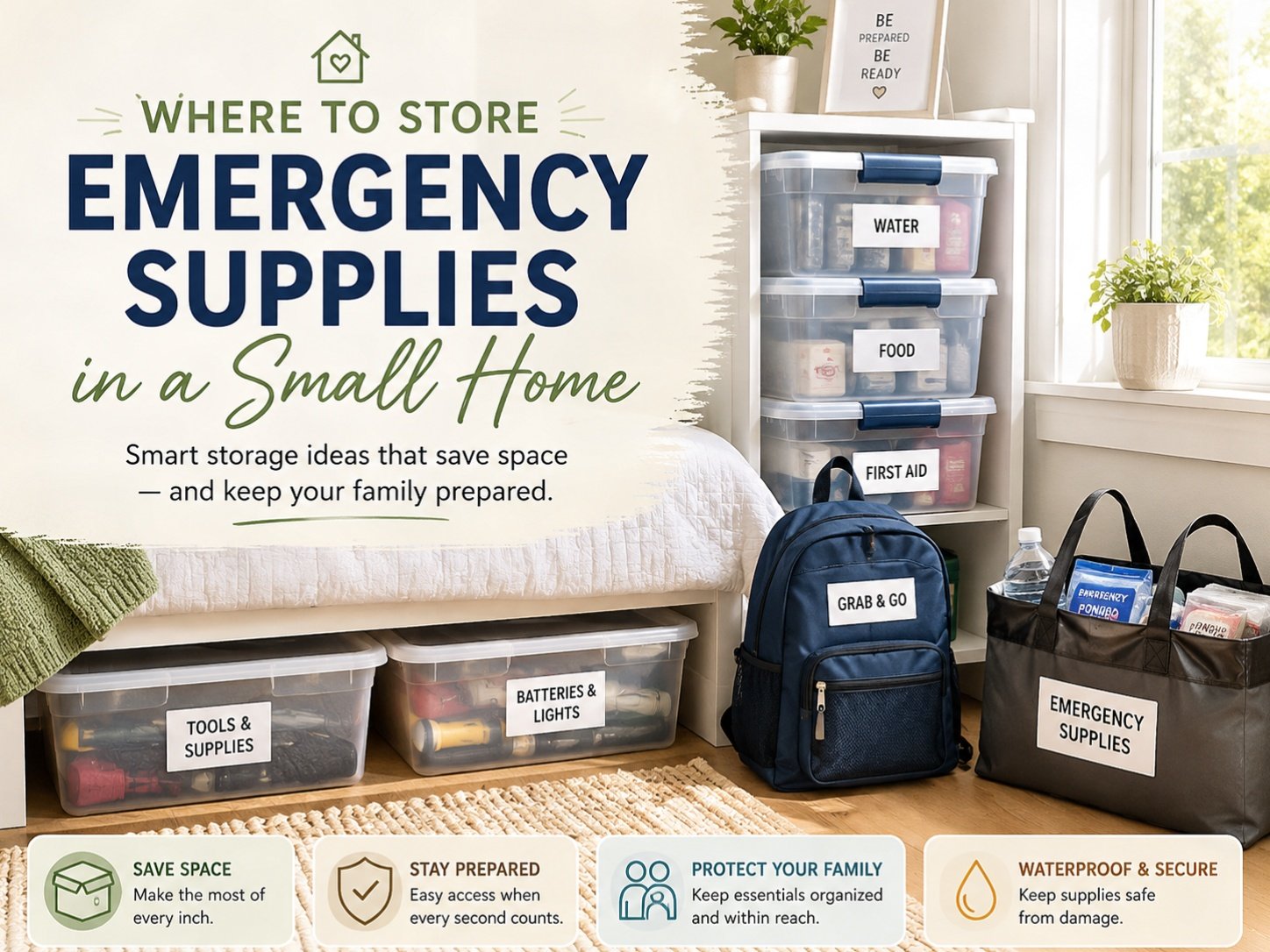
Where to store emergency supplies in a small home can be frustrating when you already have limited closets, narrow cabinets, and barely enough room for everyday items.
I understand the problem. You may have the flashlight, first aid kit, batteries, bottled water, food, medications, and important documents ready, but no practical place to keep everything. If the emergency kit is buried too deeply, split into random drawers, or stored somewhere damp and hard to reach, it may not help when you need it.
The best solution is not always one large emergency bin. In a small home, I recommend using a simple storage system: one grab-and-go backpack, one home supply container, one water storage area, and a few backup items placed where they make sense.
In this guide, I will walk through where to store emergency supplies in a small home using under-bed bins, stackable containers, grab-and-go backpacks, and waterproof totes without turning your space into clutter.
Why Emergency Supply Storage Matters in a Small Home
Emergency supplies need to be easy to find, easy to carry, and protected from damage.
The American Red Cross survival kit guidance recommends keeping supplies in an easy-to-carry emergency preparedness kit that can be used at home or taken with you if you must evacuate. The Red Cross also lists basics like water, nonperishable food, a flashlight, a battery-powered or hand-crank radio, extra batteries, first aid supplies, medications, sanitation items, personal documents, chargers, emergency contact information, cash, blankets, and maps.
That does not mean everything has to fit in one bag. In a small home, it usually works better to separate supplies by purpose:
- Grab-and-go items for evacuation
- Stay-at-home supplies for power outages or severe weather
- Water and food storage in a cool, safe area
- Important documents in a waterproof folder or pouch
- Personal needs like medications, pet supplies, baby supplies, or medical items
When you organize this way, your emergency supplies are easier to reach and easier to maintain.
1. Use an Under-Bed Bin for Your Main Home Kit
An under-bed bin is one of the best places to store emergency supplies in a small home because it uses space that often goes unused.
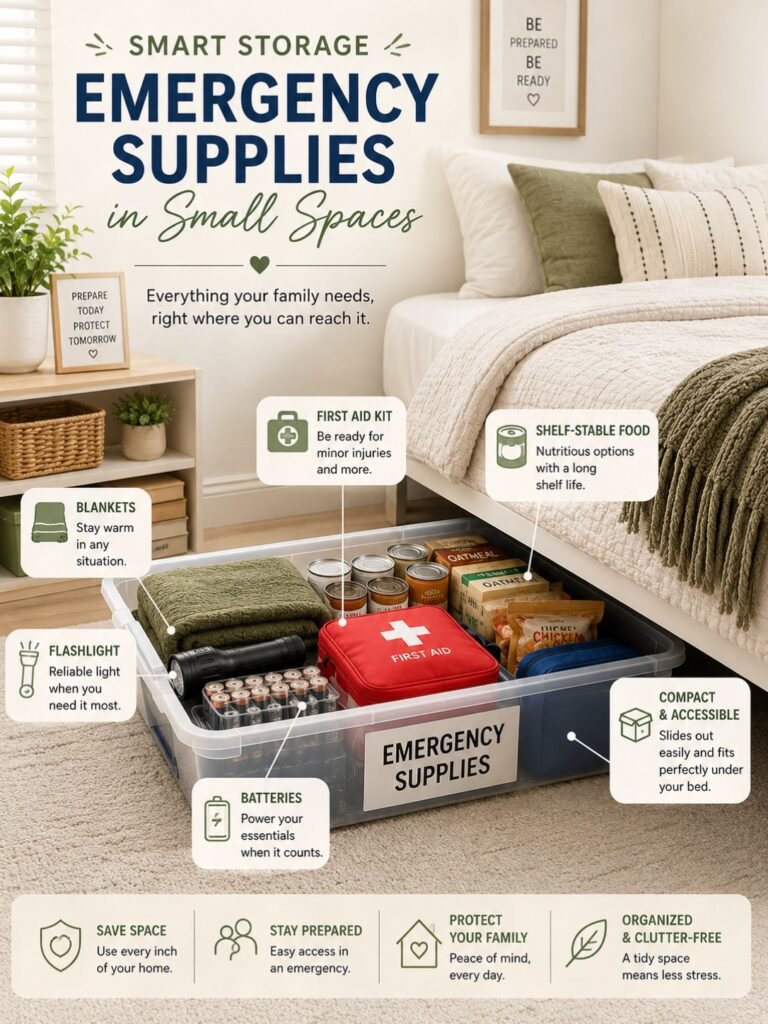
I like this option for apartment bedrooms, small guest rooms, kids’ rooms, and homes without a real storage closet. A shallow under-bed bin can hold flashlights, batteries, shelf-stable food, first aid supplies, hygiene items, emergency blankets, gloves, masks, and backup chargers.
What to Store Under the Bed
Use this space for items you do not need every day but still want to access quickly.
Good under-bed emergency supplies include:
- Flashlights
- Extra batteries
- First aid kit
- Emergency blankets
- Work gloves
- Masks
- Hygiene wipes
- Small tool kit
- Battery-powered radio
- Copies of emergency contact information
- Shelf-stable snacks or food pouches
The FoodSafety.gov disaster food guidance recommends emergency foods that have a long storage life, require little or no cooking, and do not require refrigeration. That makes an under-bed bin useful for compact, shelf-stable food, as long as the area is clean, dry, and not exposed to heat.
What to Check Before Buying an Under-Bed Bin
Look for:
- Low height that fits under your bed
- Clear sides or a large label area
- A secure lid
- Wheels or handles if the bin is heavy
- Durable plastic
- Enough length for bulkier items
I recommend labeling the outside clearly with “Emergency Supplies” so no one mistakes it for seasonal storage.
2. Keep a Grab-and-Go Backpack Near the Exit
A grab-and-go backpack is essential because some emergencies may require you to leave quickly.
This does not need to hold every supply you own. It should hold the items you would want if you had to walk out the door fast.
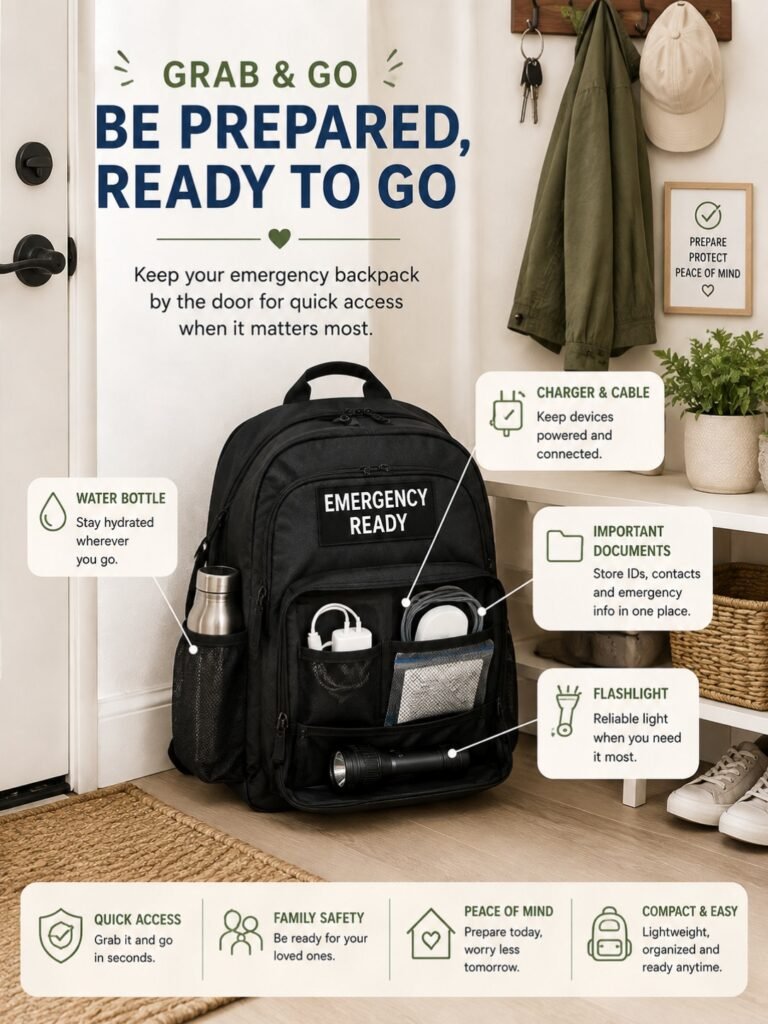
The American Red Cross emergency kit list includes evacuation basics such as water, food, flashlight, radio, extra batteries, first aid kit, medications, personal documents, phone chargers, emergency contacts, cash, an emergency blanket, and maps.
Best Places to Keep a Grab-and-Go Backpack
In a small home, I would consider:
- Entry closet
- Coat hook by the door
- Shelf near the front door
- Bedroom closet floor
- Mudroom bench
- Hallway cabinet
- Behind the bedroom door
Do not hide this backpack behind heavy bins or high on a shelf. The whole point is speed.
What to Look for in a Grab-and-Go Backpack
Choose a backpack with:
- Comfortable straps
- Multiple compartments
- Water-resistant material
- Reflective details if possible
- Side pockets for water bottles
- A size you can actually carry
A very large backpack can be tempting, but if it becomes too heavy, it will not be practical.
3. Use Stackable Containers in a Closet
Stackable containers are helpful when floor space is limited but vertical space is available.
If you have one small closet, use it wisely. Instead of one huge bin, use two or three stackable containers by category.
For example:
- Bin 1: Food and cooking basics
- Bin 2: Light, power, and tools
- Bin 3: Hygiene, first aid, and personal supplies
This makes it easier to pull only the container you need.
Closet Storage Tip
Keep the heaviest container on the bottom. Store the grab-and-go backpack separately or on top where it is easy to reach.
I also recommend using clear bins or large printed labels. In an emergency, you do not want to open five identical boxes to find batteries.
4. Store Water in a Cool, Safe Spot
Water is usually the hardest emergency supply to store in a small home because it is bulky and heavy.
The CDC emergency water storage guidance recommends storing at least 1 gallon of water per person per day for 3 days. CDC also says unopened commercially bottled water is the safest and most reliable source of water in an emergency.
For small homes, the key is spreading water in smart places rather than stacking everything in one awkward corner.
Good Water Storage Spots in a Small Home
Consider:
- Bottom of a pantry
- Floor of a coat closet
- Under a sturdy bench
- Laundry closet floor
- Under a bed in low containers
- Bottom shelf of a utility cabinet
- A waterproof tote in a garage or storage closet if temperatures are safe
The CDC water storage tips recommend keeping water containers in a cool place, away from direct sunlight, and away from toxic substances like gasoline or pesticides.
That means you should avoid storing emergency water next to paint, solvents, fuel, pesticides, or cleaning chemicals.
5. Use a Waterproof Tote for Moisture-Prone Areas
A waterproof tote is useful if your only storage options are a garage, basement, laundry area, shed, or other space that may be exposed to moisture.
I would not put every emergency item in a moisture-prone area, but waterproof totes can help protect items like:
- Ponchos
- Work gloves
- Flashlights
- Batteries in sealed packaging
- Emergency blankets
- Tarps
- Duct tape
- Hygiene supplies
- Pet supplies
- Extra socks
- Copies of documents in a waterproof pouch
The FoodSafety.gov emergency food storage guidance says food should be stored in a cool, dry, dark place and protected from rodents and insects, and it recommends waterproof, airtight containers for foods stored in paper cartons or boxes.
Waterproof Tote Buying Tip
Look for:
- Latching lid
- Gasket seal if possible
- Strong handles
- Stackable shape
- Clear label area
- Durable plastic
- Size you can still lift when full
A waterproof tote is only practical if you can move it.
6. Use the Top Shelf for Lightweight Backup Supplies
The top shelf of a closet can work for lightweight items that are not needed immediately.
I would not store your main emergency kit up high because it may be hard to reach quickly. But top shelves can be useful for overflow supplies.
Good top-shelf items include:
- Extra paper goods
- Emergency blankets
- Extra masks
- Spare hygiene items
- Backup clothing
- Lightweight ponchos
- Extra pet supplies
- Empty water containers
Keep heavy water, tools, and large food bins lower. In a rushed situation, pulling a heavy container from above shoulder height is not ideal.
7. Store Important Documents in a Waterproof Pouch
Emergency documents should be protected and easy to grab.
The American Red Cross survival kit list recommends including copies of personal documents such as medication lists, pertinent medical information, proof of address, home deed or lease, passports, birth certificates, and insurance policies.
In a small home, I recommend keeping document copies in a waterproof pouch inside your grab-and-go backpack or in the top section of your main emergency bin.
What to Include in the Document Pouch
Consider copies of:
- IDs
- Insurance information
- Medical information
- Medication list
- Emergency contacts
- Pet vaccination records
- Birth certificates
- Lease or proof of address
- Important account numbers
- Local paper map
Keep sensitive information secure. If you store copies digitally, use password protection and a backup plan that does not depend only on internet access.
8. Create a Mini Kit for the Car, If You Have One
If you have a car, it can give you a little more storage flexibility.
A car kit should not replace your home emergency supplies, but it can hold useful backup items like:
- Flashlight
- Blanket
- First aid supplies
- Water
- Nonperishable snacks
- Phone charger
- Jumper cables
- Work gloves
- Poncho
- Small tool
- Local map
Be careful with heat-sensitive items. Water, food, batteries, and medications may not store well in very hot or freezing vehicles. Check labels and replace items as needed.
For small homes, a car kit can reduce pressure on indoor storage, but it should never be the only place you keep essential supplies.
9. Use a Small Rolling Cart for People Who Need Easy Access
If someone in your household has mobility challenges, medical needs, or trouble lifting bins, a small rolling cart may be more practical than a deep closet or under-bed container.
A narrow cart can fit in:
- Laundry area
- Hallway closet
- Bedroom corner
- Pantry side wall
- Utility room
- Entry area
Use the top shelf for daily or urgent items, such as medications, chargers, a flashlight, and a document pouch. Use lower shelves for food, water, hygiene items, and backup supplies.
This is not the prettiest storage option, but it can be very functional. Emergency storage should work for the people who live in the home.
Best Emergency Storage Setup for a Small Home
If I were setting up emergency supplies in a small home, I would use this simple system:
- Grab-and-go backpack: near the main exit
- Under-bed bin: main home kit
- Stackable closet containers: backup food, tools, hygiene, and first aid
- Water storage: low, cool, dark, and away from chemicals
- Waterproof tote: moisture-prone storage or garage supplies
- Document pouch: inside the backpack or main kit
This system keeps emergency supplies organized without forcing everything into one giant container.
Product Pieces to Consider
This article has a product angle, but I recommend choosing storage pieces based on your space, household needs, and what you can actually lift and access. Before buying, check the current price, dimensions, weight capacity, lid style, material, shipping details, and return policy.
Under-Bed Bins
Best for: Small homes with limited closet space.
Problem they solve: They use hidden space for supplies you want nearby but not visible.
What to check before buying:
- Height clearance under the bed
- Lid security
- Wheels or handles
- Plastic durability
- Clear sides or label space
Stackable Containers
Best for: Closets, pantry floors, and utility cabinets.
Problem they solve: They make vertical storage more useful and help separate supplies by category.
What to check before buying:
- Stack stability
- Lid strength
- Size when full
- Whether you can access lower bins easily
- Label area
Grab-and-Go Backpacks
Best for: Evacuation supplies.
Problem they solve: They keep urgent items portable and easy to carry.
What to check before buying:
- Comfortable straps
- Water-resistant fabric
- Compartments
- Weight when packed
- Side pockets
- Reflective details
Waterproof Totes
Best for: Garages, basements, laundry areas, and moisture-prone spaces.
Problem they solve: They help protect supplies from moisture, dust, pests, and spills.
What to check before buying:
- Latching lid
- Gasket seal
- Strong handles
- Stackable shape
- Size when full
- Whether it is easy to label
Common Emergency Supply Storage Mistakes to Avoid
Storing Everything in One Heavy Bin
A huge bin may look organized, but it can be hard to move. Use smaller containers by category instead.
Hiding the Kit Too Well
If the kit is behind holiday decorations, tools, luggage, and boxes, it is not emergency-ready.
Storing Water Near Chemicals
The CDC water storage guidance recommends keeping water away from toxic substances such as gasoline or pesticides. Do not store water next to paint, solvents, fuel, or strong cleaning products.
Forgetting to Rotate Food and Water
The FoodSafety.gov disaster guidance recommends checking expiration dates on canned foods and dry mixes, using and replacing food before expiration, and replacing other stored water every 6 months.
Using Containers That Are Too Big to Carry
A container is not practical if you cannot lift it. Smaller bins are usually better for small homes.
Not Labeling Supplies
Clear labels help everyone in the household find what they need quickly.
A Simple Small-Home Emergency Storage Checklist
- Choose one grab-and-go backpack location near an exit.
- Choose one under-bed bin or closet bin for the main home kit.
- Store water in a cool, dark, low place away from chemicals.
- Use stackable containers to separate food, tools, hygiene, and first aid.
- Keep important documents in a waterproof pouch.
- Label every container clearly.
- Put the heaviest supplies on low shelves.
- Check food and water dates on a regular schedule.
- Make sure everyone in the home knows where the supplies are.
- Keep the kit easy to reach, not buried behind storage.
FAQ
Where should I store emergency supplies in a small home?
The best places to store emergency supplies in a small home are under the bed, in a closet, on a low pantry shelf, near the main exit, in a waterproof tote, or in stackable containers. Keep a grab-and-go backpack near the door and heavier supplies low and easy to reach.
Should emergency supplies be in one container?
Not always. In a small home, it often works better to use one grab-and-go backpack and a few smaller containers by category. This makes supplies easier to store, lift, rotate, and find.
Can I store emergency supplies under the bed?
Yes, under-bed storage can work well for emergency supplies if the area is clean, dry, easy to access, and clearly labeled. It is especially useful for first aid supplies, flashlights, batteries, blankets, hygiene items, and compact shelf-stable food.
Where should I store emergency water?
Store emergency water in a cool place away from direct sunlight and away from toxic substances. The CDC emergency water storage guidance recommends at least 1 gallon of water per person per day for 3 days.
Are waterproof totes good for emergency supplies?
Yes, waterproof totes are useful for supplies stored in garages, basements, laundry areas, or other moisture-prone spaces. Choose a tote with a latching lid, strong handles, and a size you can still lift when full.
What should go in a grab-and-go backpack?
A grab-and-go backpack should include urgent portable items like water, food, flashlight, batteries, first aid supplies, medications, phone charger, emergency contacts, cash, copies of documents, map, and personal needs. The American Red Cross survival kit guidance provides a helpful basic supply list.
Conclusion
Where to store emergency supplies in a small home comes down to access, safety, and smart use of space.
I recommend keeping one grab-and-go backpack near the exit, one under-bed bin or closet bin for the main home kit, stackable containers for backup supplies, and water in a cool, low, safe place away from chemicals. Waterproof totes can also help if your only storage option is a basement, garage, laundry area, or other moisture-prone space.
The goal is not to make your small home feel packed with emergency gear. The goal is to create a system you can actually reach, carry, maintain, and trust when it matters.
Organize Your Emergency Supplies →