

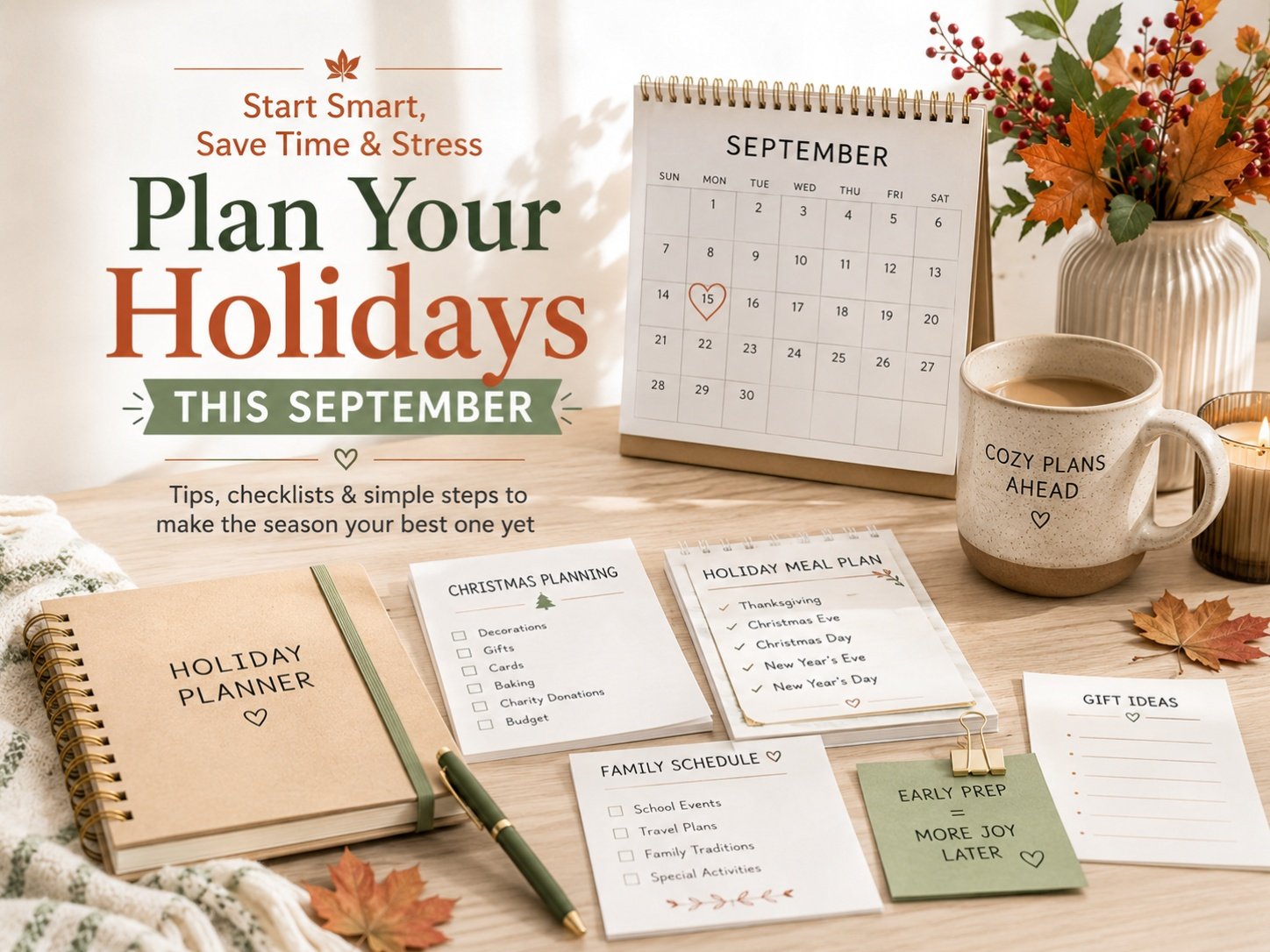
Planning for Christmas in September may sound early, but I think it is one of the smartest ways to make November and December feel lighter.
This is not about buying Christmas products months in advance or rushing into the holiday season before fall has even started. It is about removing the pressure that usually piles up later. By the time December arrives, people are often juggling work deadlines, school events, family plans, food prep, travel details, decorating, cleaning, hosting, budgeting, and emotional expectations all at once.
September gives you breathing room.
Instead of trying to do everything during the busiest part of the year, you can make small decisions now. You can reset your calendar, plan your routines, check household supplies, organize recipes, update addresses, think through travel, and decide what kind of holiday season you actually want.
In this guide, I will walk through why planning for Christmas in September can reduce your November and December workload without turning your home into a Christmas store.
Why Planning for Christmas in September Works
Planning for Christmas in September works because it separates decision-making from deadline pressure.
Most holiday stress does not come from one task. It comes from too many tasks arriving at the same time. The American Psychological Association’s holiday stress survey found that nearly 9 in 10 U.S. adults said concerns such as money, missing loved ones, and family conflict caused stress during the holiday season. The same survey reported that about 41% of adults said their stress increases during the traditional holiday season.
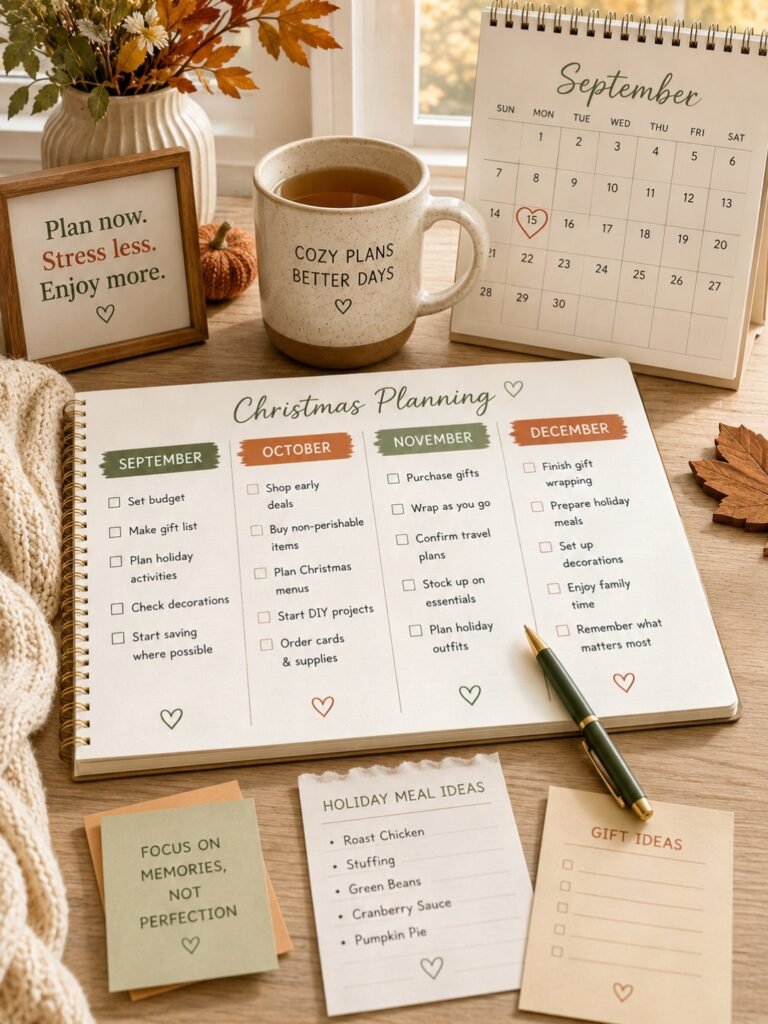
That is why I like a September approach. You are not trying to create a perfect Christmas. You are spreading out the thinking, planning, and organizing before the holiday rush begins.
A good September Christmas plan helps you answer three simple questions:
- What matters most this year?
- What can I decide early?
- What can I remove, simplify, or delegate before December?
When those answers are clear, the rest of the season becomes easier to manage.
1. September Lets You Decide What Kind of Christmas You Want
The first reason planning for Christmas in September helps is that you can choose the tone of the season before everyone else’s expectations take over.
Do you want a quiet Christmas? A family-focused Christmas? A simple home-centered Christmas? A travel Christmas? A hosting year? A no-hosting year? A budget-conscious year? A slower holiday with fewer commitments?
These decisions are easier in September because you are not already exhausted.
What to Reset Now
Ask yourself:
- What felt too stressful last year?
- What did I actually enjoy?
- What do I not want to repeat?
- What traditions still matter?
- What can be simpler this year?
- Who needs to be involved in the planning?
This is the part people often skip. They jump straight into tasks, then realize later that the whole season feels heavier than they wanted.
Planning for Christmas in September gives you time to set the tone first.
2. You Can Reduce Calendar Overload Before It Starts
November and December calendars fill quickly.
School events, work parties, church programs, travel dates, family dinners, neighborhood gatherings, volunteer commitments, and end-of-year deadlines can all land in the same few weeks.
A September calendar reset helps you protect your energy before your schedule gets crowded.
What to Put on the Calendar Now
Start with known dates:
- School breaks
- Work deadlines
- Travel windows
- Family gatherings
- Religious services
- School performances
- Hosting dates
- Meal prep days
- Decorating day
- Card or message deadline
- Rest days
I recommend blocking rest days before the calendar fills. If every open weekend becomes available to everyone else, December can feel like a marathon.
3. You Can Spread Out Household Prep
A Christmas home reset does not need to happen in one stressful December weekend.
September is a good time to look at the home routines that always become harder later: laundry, guest bedding, pantry habits, fridge space, bathrooms, entryways, lighting, and storage.
This is not a cleaning checklist. It is a workload checklist.
Household Prep to Start Early
Think through:
- Where guests will sleep if you host
- What linens need washing before the season
- Whether the entryway can handle coats and shoes
- Whether pantry shelves need space for holiday cooking
- Whether the freezer has room
- Whether serving dishes are easy to reach
- Whether outdoor lights or timers need checking
- Whether your regular cleaning routine needs to shift before guests arrive
Small resets in September can keep December from becoming a last-minute home rescue project.
4. You Can Make Food Planning Less Stressful
Food is one of the biggest hidden holiday workloads.
Even if you are not hosting a huge Christmas meal, December usually brings more food decisions: school treats, office snacks, family breakfasts, travel meals, freezer meals, potluck dishes, holiday desserts, and special dinners.
The USDA FSIS turkey thawing guidance says refrigerator thawing requires about 24 hours for every 4 to 5 pounds of turkey in a refrigerator set at 40°F or below. That is a perfect example of why food planning matters. Some holiday food tasks are not difficult, but they do require time.
The FDA’s safe buffet guidance also recommends planning food service carefully when entertaining, including preparing small platters ahead and replacing serving dishes with fresh ones during a gathering.
What to Plan in September
You do not need to finalize the whole menu yet. Start with a simple food framework:
- Will you host any meals?
- What meals felt too hard last year?
- What dishes can be simplified?
- What can be made ahead?
- What freezer meals would help in December?
- What baking traditions matter most?
- What pantry staples do you always run out of?
- What food safety timing do you need to remember?
I recommend writing a short “holiday food notes” page now. It can save you from reinventing the entire menu later.
5. You Can Build a Realistic Budget Before December Pressure
A September Christmas plan gives you time to think clearly about money.
This does not mean buying gifts early. It means deciding what the season can realistically include before you are surrounded by holiday pressure.
The American Psychological Association’s holiday stress survey found that money concerns were one of the stressors adults reported around the holiday season. That makes early budgeting less about restriction and more about peace of mind.
Budget Areas to Think Through
Consider:
- Travel
- Hosting
- Food
- Holiday cards
- Postage
- Donations
- Events
- Outfits
- School activities
- Family experiences
- Home supplies
- End-of-year bills
I recommend choosing a total holiday number first, then dividing it by category. That is much easier than saying yes to everything and dealing with the total later.
6. You Can Handle Travel and Family Conversations Earlier
Travel plans can become stressful when everyone waits too long to talk about them.
September is a calmer time to start the conversation. You can ask who is hosting, who is traveling, what dates are realistic, whether anyone needs lodging, and what expectations should be adjusted this year.
This is especially helpful if your family has complicated schedules, blended households, long drives, flights, caregiving needs, or young children.
Family Planning Questions
Ask:
- Who is hosting this year?
- Are we traveling or staying home?
- What dates are realistic?
- Are there budget limits?
- Does anyone need help with transportation?
- Are there health, mobility, or accessibility needs?
- What traditions need to change this year?
- What boundaries need to be clear earlier?
In my experience, the earlier these conversations happen, the less emotional pressure they carry.
7. You Can Reset Your Mailing and Communication List
Holiday cards, packages, invitations, and family updates often become last-minute because the contact list is outdated.
September is a good time to update addresses, phone numbers, email lists, and family group chats.
This is not about sending Christmas cards in September. It is about removing the messy prep work before the season gets busy.
What to Update
Check:
- Mailing addresses
- Names and spellings
- New babies
- New marriages
- Recent moves
- Work addresses if needed
- Email addresses
- Group chat members
- Family photo folders
- Card list from last year
You can also decide whether cards are worth doing this year. If they are not, give yourself permission to skip them or simplify them.
8. You Can Make Space for Rest Before the Holiday Season
One of the best reasons to start planning for Christmas in September is that it protects rest later.
Holiday planning often steals evenings and weekends in November and December. If you make small decisions now, you can leave more room for actual enjoyment later.
The CDC’s sleep guidance recommends going to bed and waking up at the same time every day, keeping the bedroom quiet and relaxing, and turning off electronic devices at least 30 minutes before bedtime.
That matters during the holidays because routines can easily fall apart. Late nights, extra events, travel, and emotional stress can make December feel heavier.
Rest Planning Ideas
In September, decide:
- Which weekends should stay open
- What nights are protected family nights
- What traditions can be shorter
- What tasks can be done on weekdays
- What can be delegated
- What can be skipped
- What bedtime routines need protecting in December
Rest does not happen by accident during a busy season. It needs space on the calendar.
9. You Can Check Safety and Seasonal Home Details Early
Christmas safety checks are easy to forget until the decorations are already out.
September is a good time to check the basics without pressure: smoke alarms, extension cords, outdoor outlets, timers, batteries, emergency supplies, and the condition of older holiday lights.
The U.S. Fire Administration holiday fire safety guidance notes that a dry Christmas tree can burn very hot and very fast, and it recommends keeping trees at least 3 feet away from heat sources such as fireplaces, radiators, space heaters, candles, and heat vents.
This does not mean you need to decorate early. It means you can avoid discovering a safety issue the day you are trying to put everything up.
What to Check Before the Season
Look at:
- Smoke alarms
- Carbon monoxide alarms
- Flashlights
- Batteries
- Outdoor outlets
- Extension cords
- Timers
- Tree stand if you use a real tree
- Storage bins
- Broken decorations
- Old lights
- Entryway lighting
- Guest room safety needs
This kind of planning is not glamorous, but it can save a lot of December frustration.
10. You Can Decide What to Simplify Before You Feel Guilty
September gives you emotional distance.
By December, it is easy to keep traditions because you feel guilty changing them. In September, you can think more honestly.
Maybe you do not need to bake six kinds of cookies. Maybe you do not need to host two separate meals. Maybe the family photo card can become a simple digital message. Maybe the elaborate Christmas morning breakfast can become one favorite dish. Maybe the full-house decorating plan can become one cozy room.
What You Can Simplify
Consider simplifying:
- Meals
- Decorating
- Cards
- Travel
- Hosting
- Traditions
- Gift exchanges
- School commitments
- Baking
- Guest prep
- Event attendance
I recommend choosing one thing to make easier this year before the holiday season starts. That one decision can reduce more stress than you expect.
A Simple September Christmas Planning Guide
If you want to start planning for Christmas in September without overdoing it, use this simple weekly plan.
Week 1: Decide the Feeling
Choose three words for the kind of Christmas you want.
Examples:
- Calm, cozy, simple
- Family-focused, meaningful, slow
- Joyful, organized, low-pressure
- Traditional, warm, manageable
These words become a filter for later decisions.
Week 2: Review Last Year
Write down:
- What worked
- What felt stressful
- What cost more than expected
- What you want to repeat
- What you want to stop doing
- What can be delegated
Week 3: Build the Calendar
Add known dates, then block rest days.
This is one of the most important September tasks because it protects your future energy.
Week 4: Create the Workload List
Make a list of holiday tasks, then sort them into four categories:
- Do now
- Do in October
- Do in November
- Do in December
This keeps every task from landing in the same month.
What Not to Do in September
A September Christmas plan should make life easier, not heavier.
Do Not Turn September Into December
You do not need to decorate, host, or act like Christmas has already arrived.
Do Not Buy Things Just Because They Are Available
This article is not about early shopping. Planning is not the same as purchasing.
Do Not Create an Overly Detailed Schedule
The goal is a flexible plan, not a rigid holiday binder you will never use.
Do Not Ignore Fall
September can prepare you for Christmas while still letting you enjoy autumn.
Do Not Plan Alone If the Holiday Affects Everyone
If other people share the workload, involve them early. A plan only works if the right people know about it.
Common Christmas Planning Mistakes to Avoid
Waiting Until November to Talk About Hosting
Hosting affects food, cleaning, travel, sleeping arrangements, and schedules. Decide early if possible.
Keeping Traditions That No Longer Fit
A tradition should support the season, not drain it.
Forgetting the Hidden Work
Christmas workload includes laundry, dishes, fridge space, childcare, pet care, guest towels, trash pickup, batteries, and calendar coordination.
Trying to Make Every Weekend Festive
Too many events can make the season feel rushed. Protect quiet time.
Not Writing Things Down
A plan in your head is easy to lose. A short written note can save a lot of mental energy.
FAQ
Why is September a good month to start planning for Christmas?
September is a good month to start planning for Christmas because it gives you time to make calm decisions before November and December become busy. You can plan routines, food, travel, calendars, household prep, and rest days without deadline pressure.
Is September too early to think about Christmas?
No, September is not too early if you are planning rather than rushing the season. You do not need to decorate or buy products. You are simply reducing later workload.
What should I plan for Christmas in September?
Plan your calendar, hosting expectations, travel conversations, budget categories, food framework, home routines, mailing list, rest days, and safety checks.
How does early Christmas planning reduce stress?
Early planning reduces stress by spreading decisions over more time. The American Psychological Association’s holiday stress survey found that many adults experience increased stress during the holiday season, so removing decisions earlier can make the season feel more manageable.
Should I start buying Christmas gifts in September?
Not necessarily. This guide is not about buying Christmas products early. You can plan your budget, list, calendar, and workload without purchasing anything.
How do I avoid making Christmas planning feel overwhelming?
Keep the September plan small. Choose the tone of the season, review last year, add known dates to the calendar, and make a simple task list for October, November, and December.
Conclusion
Planning for Christmas in September is not about skipping fall or turning the season into a long shopping project.
It is about reducing the November and December workload before it starts. When you make calm decisions early, you give yourself more space later for family, rest, food, traditions, and the moments that actually matter.
I recommend starting with the simplest step: decide what kind of Christmas you want this year. Then build a calendar, talk through expectations, plan food and routines, check household needs, and choose one thing to simplify.
A calmer Christmas usually starts before December.
Start Your Christmas Planning Reset →