

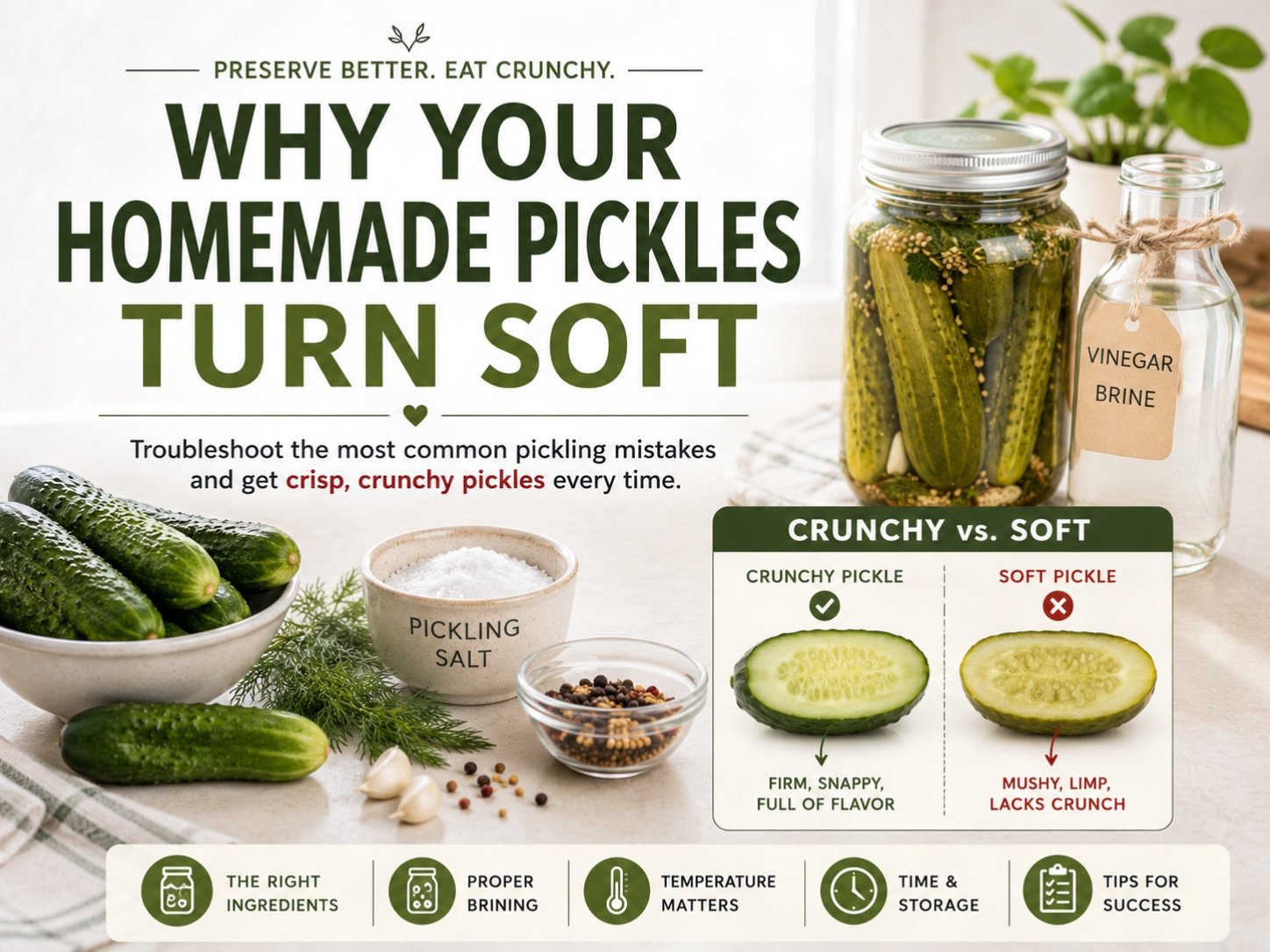
Homemade pickles turn soft for a few common reasons, and most of them happen before the jar ever goes into storage.
Sometimes the cucumbers were too old. Sometimes the blossom end was not removed. Sometimes the brine was too weak, the pickles were overprocessed, or the cucumbers sat too long before pickling. In fermented pickles, temperature, brine strength, and microbial activity can also affect texture.
I know how disappointing it feels to open a jar of homemade pickles and find soft, limp slices instead of that crisp bite you expected. The good news is that soft pickles are usually preventable when you start with fresh cucumbers, follow a tested recipe, use the right vinegar and salt, trim the blossom end, and process or ferment carefully.
In this guide, I will explain why homemade pickles turn soft instead of crunchy, how to prevent it, and when soft pickles may be a safety concern.
Why Homemade Pickles Turn Soft
Homemade pickles turn soft when the cucumber structure breaks down during preparation, fermentation, processing, or storage.
The National Center for Home Food Preservation’s pickled food troubleshooting guide lists several causes of soft or slippery pickles, including poor-quality cucumbers, not removing the blossom end, not using enough salt or vinegar, scum yeast during fermentation, and improper heat processing.
That is why pickle crunch starts with the basics. You need good cucumbers, correct acidity, clean equipment, proper timing, and a research-tested recipe.
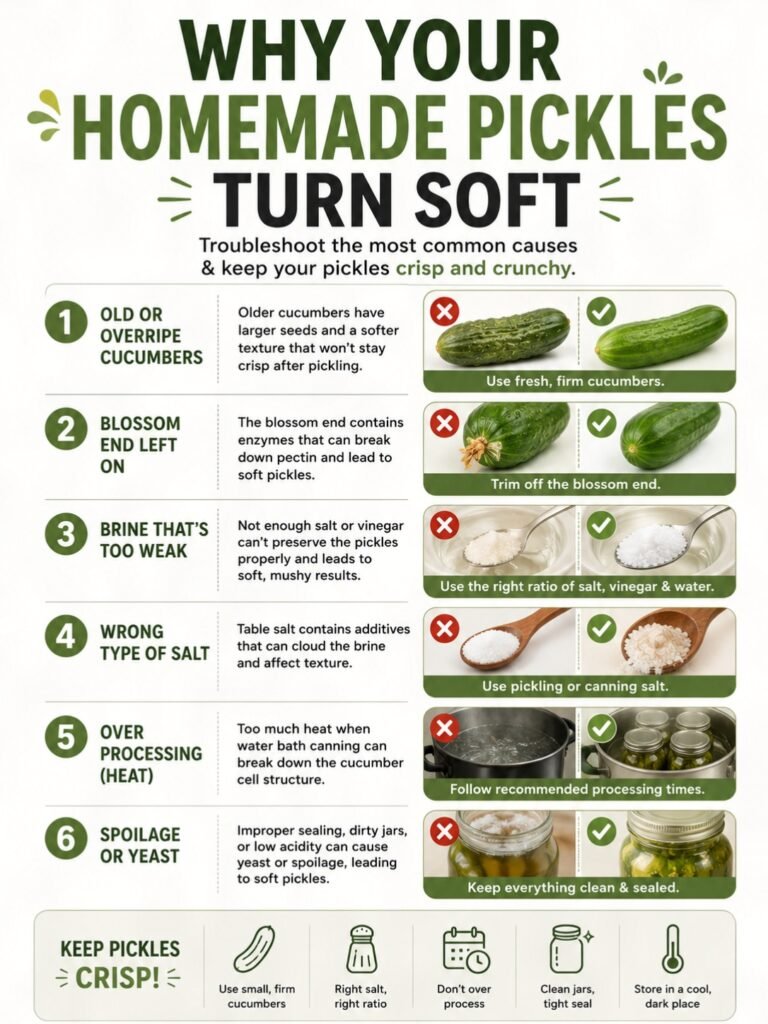
A soft pickle is not always unsafe, but soft, slippery, slimy, moldy, foul-smelling, or suspicious pickles should not be eaten. The Colorado State University Extension guide to making pickles says soft, slippery, or slimy pickles are spoiled and should be destroyed so people or animals cannot eat them.
1. The Cucumbers Were Not Fresh Enough
Fresh cucumbers make better crunchy pickles.
Cucumbers lose quality quickly after harvest. If they sit too long before pickling, they can lose firmness and moisture. That can lead to softer, shriveled, hollow, or less crisp pickles.
The University of Maine Cooperative Extension’s crunchy pickle tips recommends using fresh pickling cucumbers within 24 hours of picking for the crunchiest results.
How to Fix It Next Time
Use cucumbers as soon as possible after harvest or purchase.
Look for cucumbers that are:
- Firm
- Small to medium in size
- Fresh-looking
- Free from soft spots
- Not yellowing
- Not waxed
- Not overgrown
Pickling cucumbers usually work better than large slicing cucumbers because they tend to have thinner skins, smaller seed cavities, and a firmer texture.
2. The Blossom End Was Not Removed
This is one of the most common reasons homemade pickles turn soft.
The blossom end is the end opposite the stem. It can contain enzymes that soften cucumbers during pickling. If you leave that end on, your pickles may lose crunch as they sit.
The National Center for Home Food Preservation’s general pickling guidance says blossoms may contain an enzyme that causes excessive softening of pickles and recommends removing a 1/16-inch slice from the blossom end before pickling. The Penn State Extension quick-process pickle guide gives the same 1/16-inch blossom-end trimming guidance.
How to Fix It Next Time
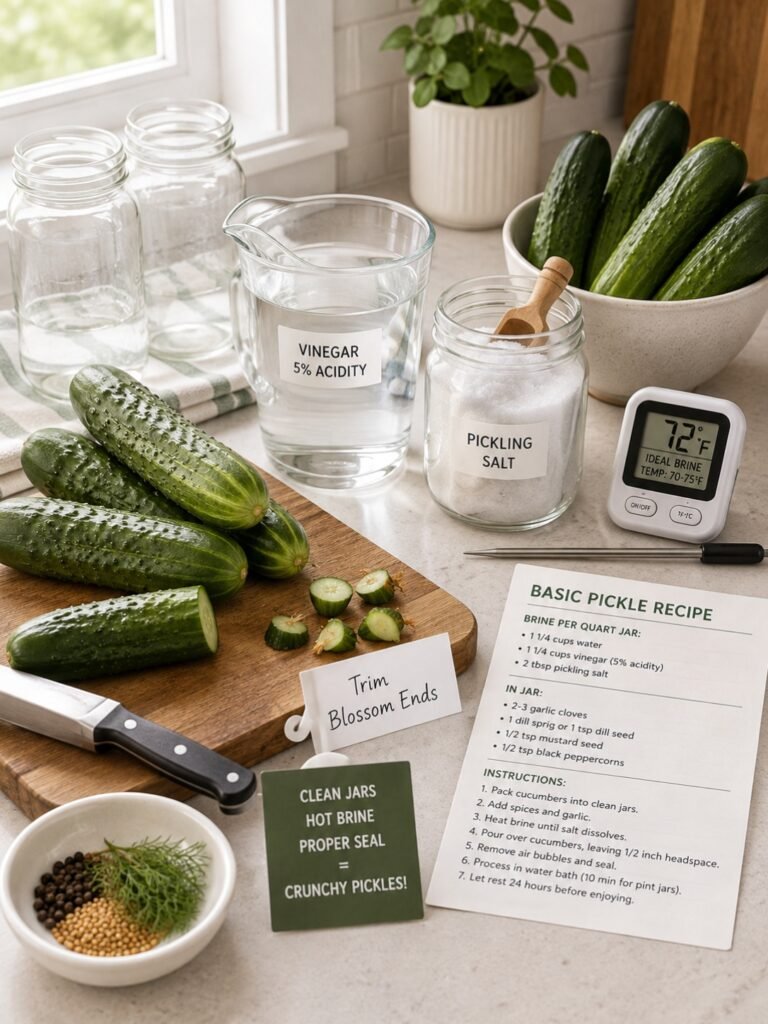
Trim a thin slice from the blossom end of every cucumber before pickling.
If you are not sure which end is the blossom end, trim both ends. It is a small step, but it can make a big difference in pickle texture.
3. The Brine Was Too Weak
Pickles need the right balance of vinegar, salt, water, and vegetables.
If the brine is too weak, the pickles may soften and become unsafe. This is especially important for canned pickles because acidity helps control harmful microorganisms.
The National Center for Home Food Preservation’s pickling guidance warns not to alter vinegar, food, or water proportions in a recipe and not to use vinegar with unknown acidity. Its USDA Complete Guide to Home Canning page also emphasizes that acidity is important to both safety and texture in pickled products.
How to Fix It Next Time
Follow a tested recipe exactly.
Do not guess with:
- Vinegar amount
- Water amount
- Salt amount
- Vegetable amount
- Jar size
- Processing time
Use vinegar with the acidity required by the recipe. Many tested pickling recipes call for vinegar labeled 5% acidity, but always follow the recipe you are using.
4. The Wrong Salt Was Used
Salt affects more than flavor in pickling. It can also affect texture and fermentation.
For fermented pickles, salt concentration helps control the fermentation process. For quick pickles, the right salt helps keep the brine clear and consistent.
The Oregon State University Extension pickle fact sheet explains that pickling and canning salt is pure granulated salt without anti-caking agents or iodine. The University of Maine Cooperative Extension preserving pickle tips also recommends canning and pickling salt for a consistent final product.
How to Fix It Next Time
Use the salt called for in the tested recipe.
For many home-canned and fermented pickle recipes, that usually means canning or pickling salt. Avoid swapping in reduced-sodium salt, table salt, or salt substitutes unless the recipe specifically allows it.
5. The Pickles Were Overprocessed or Overheated
Heat can soften cucumber texture.
Processing is important for safe shelf-stable pickles when a tested canning recipe calls for it, but too much heat or too long in the canner can reduce crunch.
The National Center for Home Food Preservation’s general pickling guidance notes that cucumber pickle firmness can be improved by processing cucumber pickles for 30 minutes in water at 180°F. The Illinois Extension pickling FAQ also mentions 180°F low-temperature pasteurization as a way to improve firmness when it is allowed by the recipe.
How to Fix It Next Time
Use the processing method and time listed in your tested recipe.
Do not shorten processing time for safety, but also do not process longer than needed. If a tested recipe gives a low-temperature pasteurization option, follow the temperature and timing carefully.
A thermometer matters here. Guessing the water temperature can lead to underprocessing or overheating.
6. Fermentation Temperature Was Too Warm
Fermented pickles are more sensitive to temperature than many beginners realize.
If fermentation is too warm, texture can suffer. If the brine is too strong or too weak, fermentation can also go wrong.
The National Center for Home Food Preservation’s fermented pickle troubleshooting guide lists high fermentation temperature, improper brine strength, and excessive delay before brining among the problems connected to soft, hollow, shriveled, or poor-quality fermented pickles.
How to Fix It Next Time
Follow the tested fermentation recipe closely.
Pay attention to:
- Salt concentration
- Fermentation temperature
- Brining time
- Keeping cucumbers submerged
- Removing surface scum when directed
- Using clean equipment
- Storing finished pickles properly
Fermented pickles are simple, but they are not random. The brine, temperature, and timing all matter.
7. The Cucumbers Were Too Large or Overmature
Large cucumbers are more likely to become soft, seedy, or hollow.
Overmature cucumbers may look usable, but they often have larger seed cavities and a less firm texture. They are usually better for relish than whole or spear pickles.
The Penn State Extension quick-process pickle guide recommends using odd-shaped and more mature cucumbers for relishes and bread-and-butter-style pickles.
How to Fix It Next Time
Use smaller, firm cucumbers for crunchy dills and spears.
Save larger or oddly shaped cucumbers for:
- Relish
- Bread-and-butter pickles
- Sliced refrigerator pickles
- Chopped pickle recipes
- Quick-use pickles
Matching the cucumber to the recipe helps prevent disappointment.
8. The Pickles Needed a Firming Agent, but the Basics Still Matter
Firming agents can help, but they are not a substitute for a tested recipe.
The most common modern firming option is food-grade calcium chloride, often sold as a pickle crisp product. It can help improve texture when used according to directions.
The Penn State Extension crispy pickles guide notes that if good-quality ingredients and up-to-date methods are used, firming agents are not necessary, but calcium chloride products can be used to improve firmness. The Clemson Extension pickle basics guide also describes calcium chloride pickle crisp as a safe option when used according to manufacturer instructions.
How to Fix It Next Time
Use calcium chloride only as directed.
Do not rely on firming agents to fix poor-quality cucumbers, weak brine, unsafe ingredient changes, or overprocessing. They can support crunch, but they cannot correct an unsafe recipe.
9. The Pickles Spoiled
Sometimes homemade pickles turn soft because they are spoiled.
This is the most important point in the whole guide. Soft texture alone may be a quality issue, but soft and slippery pickles are a warning sign.
The National Center for Home Food Preservation’s pickled food troubleshooting guide says soft or slippery pickles should not be eaten if spoilage is evident. The Colorado State University Extension guide is even more direct: soft, slippery, or slimy pickles are spoiled and should be destroyed.
Signs Pickles May Not Be Safe
Do not eat pickles if you notice:
- Slimy texture
- Slippery surface
- Mold
- Bad smell
- Gas bubbles in canned pickles that should not be fermenting
- Leaking jar
- Bulging lid
- Broken seal
- Very cloudy liquid with other spoilage signs
- Mushy texture with off odor
When in doubt, throw it out. It is not worth the risk.
How to Make Crunchier Homemade Pickles Next Time
If homemade pickles turn soft in your kitchen, use this reset plan for your next batch.
Start With the Right Cucumbers
Use fresh pickling cucumbers, preferably within 24 hours of harvest or purchase.
Trim the Blossom End
Remove at least 1/16 inch from the blossom end of every cucumber.
Follow a Tested Recipe
Use research-based recipes from the National Center for Home Food Preservation, USDA, Ball, or a university extension source.
Use the Right Vinegar
Use the vinegar acidity required by the recipe. Do not dilute or change the vinegar-water ratio.
Use Pickling Salt When Required
Use canning or pickling salt when the recipe calls for it.
Keep Cucumbers Cold Before Pickling
If you cannot pickle immediately, refrigerate cucumbers until you can.
Do Not Overprocess
Process exactly as directed. If a tested low-temperature pasteurization option is provided, follow it carefully with a thermometer.
Consider Calcium Chloride
Use a food-grade calcium chloride pickle crisp product if desired, but only according to directions.
Store Properly
Store finished jars according to tested recipe instructions. Check seals, label jars, and watch for spoilage signs.
Quick Troubleshooting Guide
Pickles Are Soft but Smell Normal
This may be a quality issue caused by old cucumbers, blossom-end enzymes, overprocessing, or poor texture. Still inspect carefully before eating.
Pickles Are Soft and Slippery
Do not eat them. Soft and slippery pickles can indicate spoilage.
Pickles Are Hollow
This can happen when cucumbers are too mature, brining is delayed, fermentation is too rapid, or brine strength is off.
Pickles Are Shriveled
This can happen when cucumbers are placed in a brine or syrup that is too strong at the start, when cucumbers are overcooked, or when cucumbers are poor quality.
Pickle Liquid Is Cloudy
Cloudiness can have several causes. In fermented pickles, some cloudiness may be normal. In fresh-pack canned pickles, cloudiness can signal spoilage or ingredient issues. Check the recipe and inspect for other spoilage signs.
Common Pickle Mistakes to Avoid
Using Grocery Store Slicing Cucumbers
They can work for some quick refrigerator pickles, but they are not always ideal for crunchy canned or fermented pickles.
Skipping the Blossom-End Trim
This tiny step helps prevent enzyme-related softening.
Changing the Vinegar Ratio
This can affect both safety and texture.
Guessing Processing Time
Use the processing time in the tested recipe and adjust for altitude when required.
Letting Cucumbers Sit Too Long
Fresh cucumbers give the best texture.
Using Random Online Recipes
Pickling is not the place to improvise with acidity or processing. Use tested recipes.
Eating Pickles That Seem Spoiled
Soft, slimy, moldy, leaking, foul-smelling, or suspicious pickles should be discarded.
Food Safety Note
Homemade pickles are preserved by acid, salt, heat processing, fermentation, refrigeration, or a combination of these methods depending on the recipe.
Because acidity matters for safety, do not change vinegar, water, salt, vegetable amounts, jar size, or processing method unless a trusted source says the substitution is safe.
The National Center for Home Food Preservation’s USDA home canning guidance explains that acidity in pickled products is important to safety as well as taste and texture.
This article is for general education. For canning and fermentation, use a current tested recipe from a research-based source.
FAQ
Why do homemade pickles turn soft instead of crunchy?
Homemade pickles turn soft because of old cucumbers, blossom-end enzymes, weak brine, wrong salt, overprocessing, warm fermentation, overmature cucumbers, or spoilage. The National Center for Home Food Preservation troubleshooting guide lists several of these issues as causes of soft pickles.
Can I still eat soft homemade pickles?
Maybe, but inspect them carefully. Soft texture can be a quality issue, but soft, slippery, slimy, moldy, foul-smelling, or leaking pickles should not be eaten. The Colorado State University Extension pickle guide says soft, slippery, or slimy pickles are spoiled and should be destroyed.
How do I keep homemade pickles crunchy?
Use fresh pickling cucumbers, trim the blossom end, follow a tested recipe, use the correct vinegar and salt, avoid overprocessing, keep fermented pickles at the right temperature, and consider calcium chloride if the recipe allows it.
Does cutting off the blossom end really matter?
Yes. The National Center for Home Food Preservation says blossoms may contain an enzyme that causes excessive softening, and it recommends removing a 1/16-inch slice from the blossom end.
Is pickle crisp the same as pickling lime?
No. Pickle crisp products are usually calcium chloride. Pickling lime is calcium hydroxide and requires careful soaking and rinsing if used in a tested recipe. The Penn State Extension crispy pickles guide explains that calcium chloride products can improve firmness, while good ingredients and up-to-date methods are still the foundation.
Why are my fermented pickles soft?
Fermented pickles may turn soft because of improper brine strength, fermentation temperature, delay before brining, scum yeast, poor-quality cucumbers, or spoilage. Use a tested fermentation recipe and keep cucumbers submerged.
Conclusion
Homemade pickles turn soft instead of crunchy when something goes wrong with cucumber quality, preparation, brine strength, fermentation, processing, or storage.
I recommend starting with the simplest fixes first. Use fresh pickling cucumbers, trim the blossom end, follow a tested recipe exactly, use the right vinegar and salt, avoid overprocessing, and keep fermentation conditions steady.
Most pickle texture problems are preventable. But if your pickles are soft, slippery, slimy, moldy, or smell wrong, do not try to save them.
A crunchy pickle starts before the jar is sealed.
Make Crunchier Pickles →
Sources
- National Center for Home Food Preservation: Causes and Possible Solutions for Problems With Pickled Foods
- National Center for Home Food Preservation: Causes and Possible Solutions for Problems With Fermented Pickles
- National Center for Home Food Preservation: General Information on Pickling
- National Center for Home Food Preservation: USDA Complete Guide to Home Canning
- University of Maine Cooperative Extension: Tips for Making Crunchy Homemade Pickles
- Penn State Extension: Let’s Preserve, Quick Process Pickles
- Penn State Extension: Crispy Pickles
- Oregon State University Extension: Pickle Fact Sheet
- Colorado State University Extension: Making Pickles
- Clemson Extension: Pickle Basics