


If your house feels colder in fall, you are not imagining it. As outdoor temperatures drop, small drafts, weak insulation, cold windows, and uneven heating become much easier to notice.
In my experience, a chilly home is usually not caused by one major issue. It is often a mix of small problems that let warm air escape and cold air sneak inside. The good news is that many of these problems are simple to fix before winter sets in.
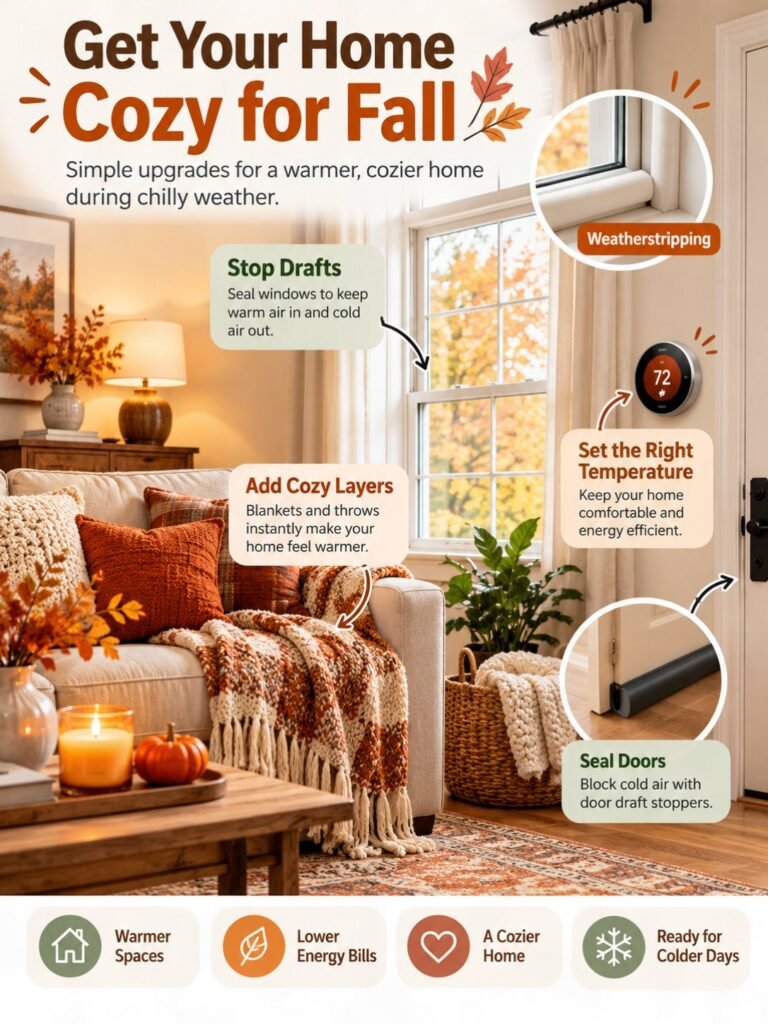
Why Your House Feels Colder in Fall
1. Drafts Become More Noticeable
Fall weather often brings cooler air and stronger winds, which can make hidden drafts easier to feel. Common drafty areas include windows, exterior doors, attic hatches, baseboards, outlets, and gaps around pipes.
According to ENERGY STAR, sealing air leaks and adding insulation can improve home comfort and energy efficiency. This is why draft sealing is one of the first things I recommend checking when a home starts feeling colder in fall.
2. Your Attic Insulation May Be Too Low
Warm air rises, so the attic is one of the most important areas to inspect. If your attic insulation is thin, uneven, damp, or compressed, your home may lose heat faster than it should.
ENERGY STAR explains that a well-sealed and properly insulated attic can reduce air leaks, improve comfort, and help heating and cooling systems work more efficiently.
3. Cold Windows Can Make Rooms Feel Chilly
Even when windows are closed, older windows or poorly sealed window frames can make a room feel colder. You may notice cold air near the frame, condensation, or a chilly feeling when sitting close to the window.
A simple way to check is to run your hand around the window frame on a windy day. If you feel moving air, that area may need caulk, weatherstripping, or another simple seal.
4. Your Heating System May Need Basic Maintenance
When fall arrives, your heating system starts working more often. If the filter is dirty, vents are blocked, or ducts are leaking, your home may not warm evenly.
The U.S. Department of Energy recommends checking heating filters regularly and using ceiling fans correctly in winter to help circulate warm air.
Simple Ways to Fix a Cold House in Fall
Seal Drafty Windows and Doors
Start with the easiest areas first. Use weatherstripping around doors and apply caulk around window frames where you see gaps.
Check these areas:
- Exterior doors
- Window frames
- Attic hatches
- Basement rim joists
- Gaps around pipes and wires
- Fireplace dampers
Small gaps may not look serious, but several small leaks can make your whole house feel colder.
Improve Attic Insulation
If your attic insulation looks low or uneven, it may be worth improving. ENERGY STAR estimates that homeowners can save an average of 15% on heating and cooling costs by air sealing and adding insulation in attics, floors over crawl spaces, and accessible basement rim joists.
I would start with the attic because it is often one of the most practical places to improve comfort before winter.
Use Curtains to Hold Warmth
Open curtains during sunny parts of the day to let natural warmth in. Close them at night to help reduce the chill from cold glass.
This is a simple habit, but it can make bedrooms and living rooms feel more comfortable without adjusting the thermostat.
Check Vents, Filters, and Ducts
Make sure furniture, rugs, or curtains are not blocking your vents. Then check your HVAC filter. A dirty filter can reduce airflow and make your heating system work harder.
If your home uses forced-air heating, duct leaks can also affect comfort. ENERGY STAR notes that properly sealed ducts can help improve comfort, energy efficiency, and safety.
Reverse Your Ceiling Fan
Many ceiling fans have a reverse setting. In colder months, running the fan slowly clockwise can help push warm air down from the ceiling.
The U.S. Department of Energy notes that ceiling fans can help circulate warm air during winter when used correctly.
Common Mistakes to Avoid
One common mistake is turning the thermostat higher without fixing drafts. This may make your home warmer for a short time, but it does not solve the reason your house feels colder in fall.
Another mistake is ignoring blocked vents. Even a well-working heating system may struggle if warm air cannot move freely through the room.
You should also avoid using unsafe appliances for heat. Ovens, grills, and outdoor heating equipment should never be used as home heating sources.
FAQ
Why does my house feel colder in fall?
Your house may feel colder in fall because drafts, poor insulation, cold windows, blocked vents, dirty filters, or leaky ducts become more noticeable as outdoor temperatures drop.
What is the fastest way to make a cold room warmer?
The fastest fixes are sealing obvious drafts, closing curtains at night, unblocking vents, replacing a dirty filter, and adding rugs to cold floors.
Should I call a professional?
If your home has uneven temperatures, high heating bills, old insulation, or strong drafts, a professional energy audit can help identify the biggest problems.
Conclusion
When your house feels colder in fall, start with simple fixes before assuming you need major repairs. Seal drafts, check your attic insulation, replace dirty filters, clear vents, use curtains wisely, and make sure warm air can move through your home.
A few small changes can make your home feel warmer, more comfortable, and better prepared for winter.
Sources
- ENERGY STAR, “Why Seal and Insulate?”
https://www.energystar.gov/saveathome/seal_insulate/why-seal-and-insulate - ENERGY STAR, “Well-Insulated and Sealed Attic”
https://www.energystar.gov/products/energy_star_home_upgrade/attic_insulation - ENERGY STAR, “Methodology for Estimated Energy Savings”
https://www.energystar.gov/saveathome/seal_insulate/methodology - ENERGY STAR, “Benefits of Duct Sealing”
https://www.energystar.gov/saveathome/heating-cooling/duct-sealing/benefits - U.S. Department of Energy, “5 Tips to Help You Save on Energy Bills This Winter”
https://www.energy.gov/articles/5-tips-help-you-save-energy-bills-winter